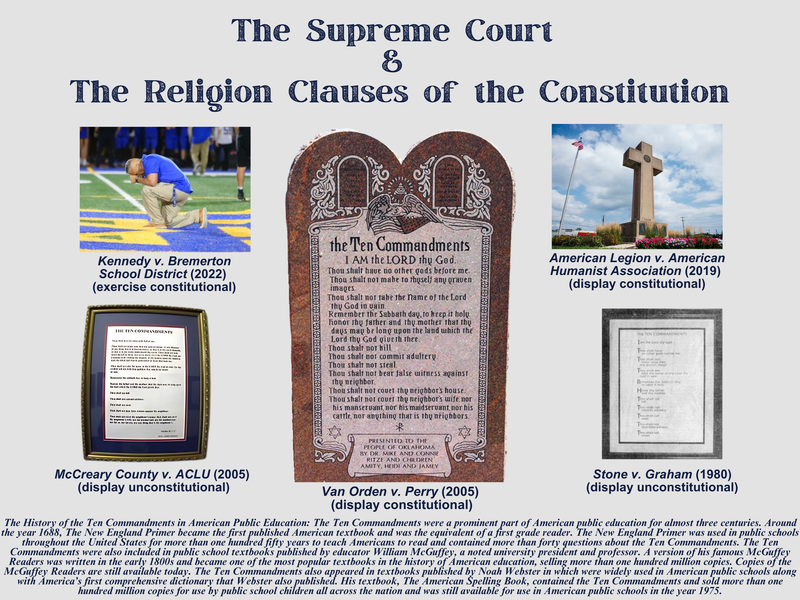

The Louisiana Attorney General's Office is providing guidance to the state's school districts to begin complying with a new state law requiring public schools to display the 10 Commandments despite a federal judge ruling the law unconstitutional.
In that guidance issued on Friday, Attorney General Liz Murrill says that the law, House Bill 71, "follows a long American tradition of recognizing" foundational documents of the United States, which she says includes the Christian religious directives. Murrill also notes that the law allows school districts to determine "the nature of the display."
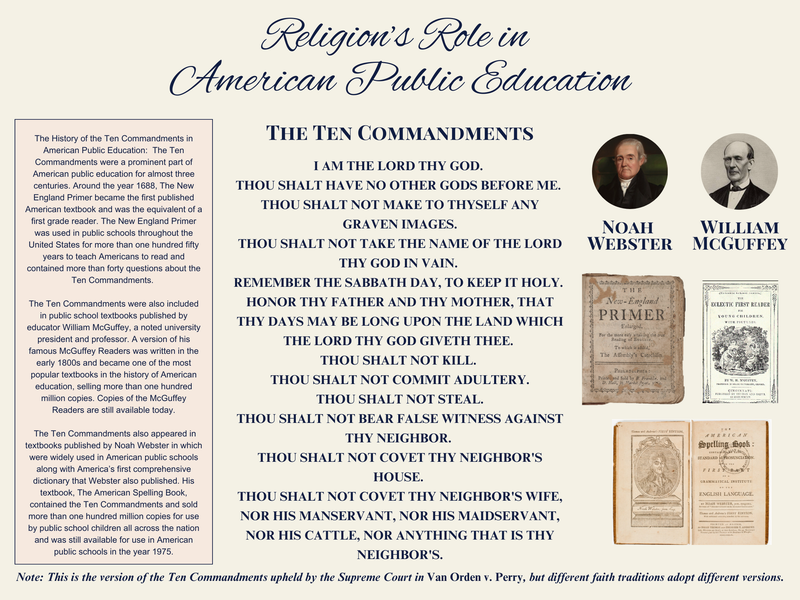
On November 12, Baton Rouge federal Judge John deGravelles ruled House Bill 71 to be "unconstitutional on its face." In his decision, deGravelles said that the law has an "overtly religious" purpose and rejected the state's claim that the Decalogue's historical significance allows government officials to mandate public schools to display the religious document. A week later, the Fifth Circuit Court of Appeals rejected the state's request to stay deGravelles's ruling. However, state officials contend that deGravelles's decision impacts only the five school districts that are defendants in the case and that the law can be imposed in the state's 67 other districts.
The Fifth Circuit will hear the case on January 23.
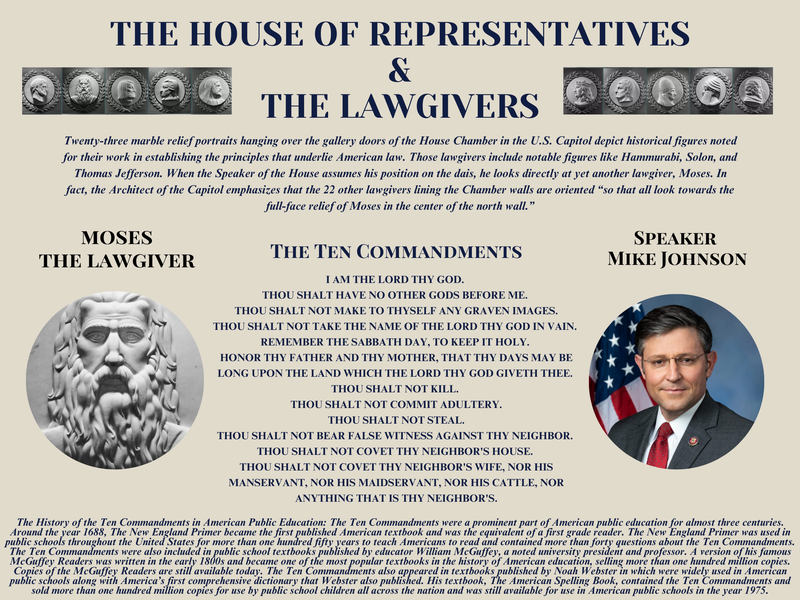
"For the past several months, my office has defended H.B. 71 in federal court against challenges that H.B. 71 violates the First Amendment," Murrill wrote in a statement that accompanied the guidance issued by her office. "Throughout that process, we have tested several potential H.B. 71 displays to determine a constitutionally sound implementation plan for our schools. We have also heard the best counterarguments that potential challengers can offer. And now, we have prepared a straightforward implementation plan: (a) a concrete recommendation school governing authorities should follow in implementing H.B. 71; (b) four specific H.B. 71 displays that authorities should approve; and (c) a draft resolution that authorities
may adopt to implement this guidance."
Under the Attorney General's Office's guidance, schools may select one of four displays created by the Attorney General's Office provided that the "displays themselves or funding for the displays are donated." The displays must be no smaller than 11 inches by 14 inches and 18 inches by 24 inches. The displays, Murrill writes, must be displayed on "any classroom wall other than behind the teacher's desk, podium, or location from which a teacher ordinarily delivers instruction." Lastly, the guidance states that schools should "seek to place its displays among others reflecting educational content," such as the Declaration of Independence or other documents significant in American history.
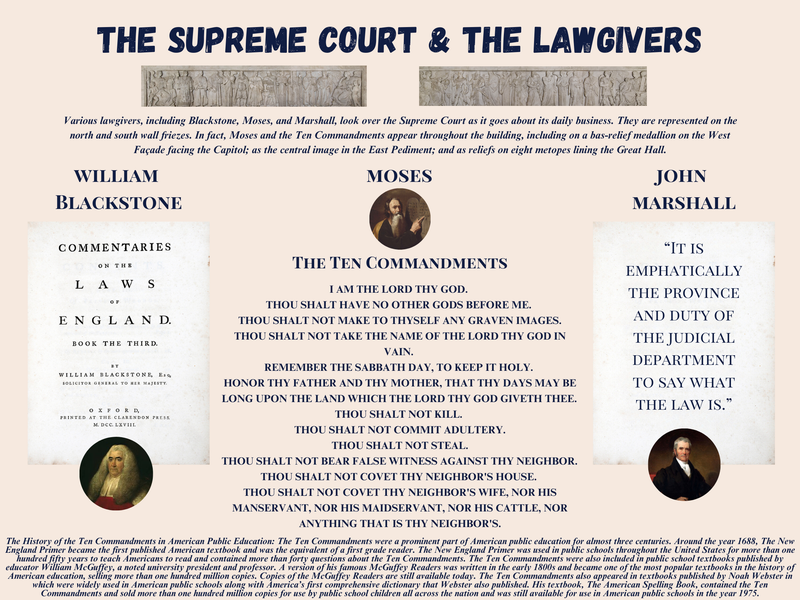
In 1980, the United States Supreme Court ruled a similar Kentucky law to be unconstitutional because it did not have a secular legislative purpose.