


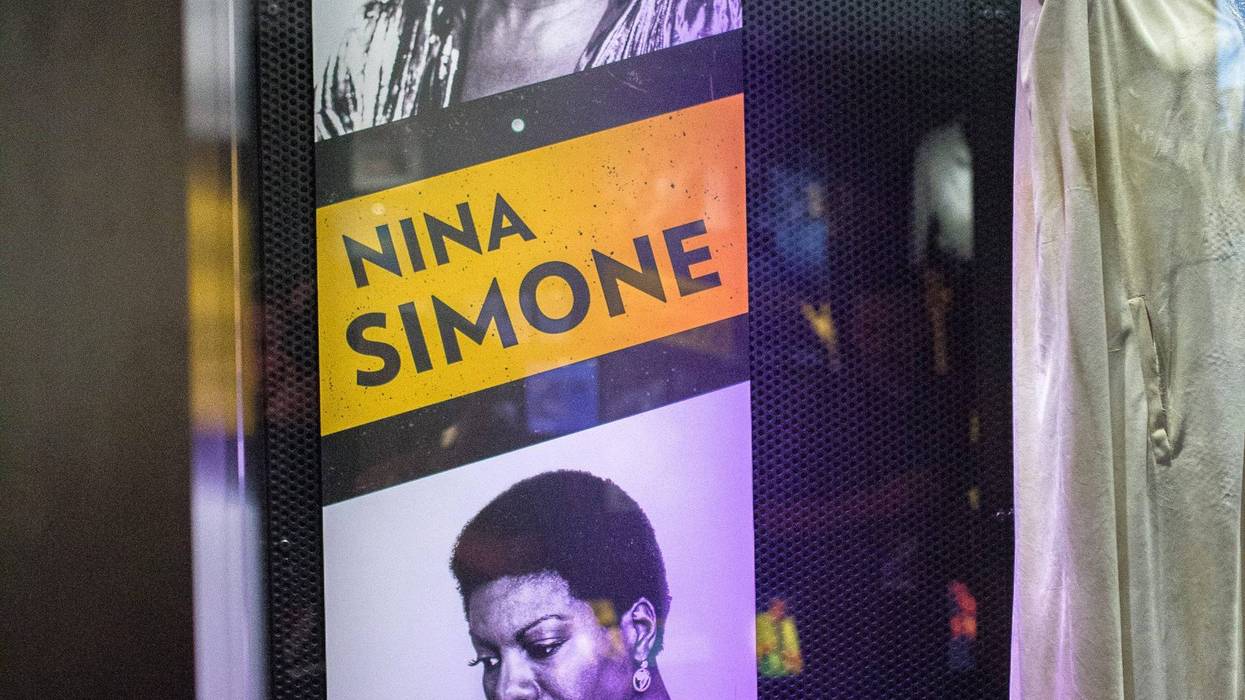

Nina Simone was a jazz singer, pianist, songwriter, and civil rights activist who blended gospel, blues, folk, pop, and classical styles. She was born Eunice Kathleen Waymon in 1933 in Tryon, North Carolina, and her mother encouraged her musical pursuits, but disapproved of nonreligious music.
Simone graduated from Allen High School for Girls and earned a scholarship to the Juilliard School in New York City and worked as an accompanist and piano teacher to support herself and her dream of becoming a concert pianist. She applied to the prestigious Curtis Institute of Music in Philadelphia but was denied entry due to her race.
In 1954, Nina Simone began playing piano and singing at the Midtown Bar and Grill in Atlantic City, New Jersey. She adopted a stage name, Nina, so her mother wouldn't discover her working in a bar and signed with Bethlehem Records and released her debut album, Little Girl Blue, in 1958. Simone's version of "I Loves You, Porgy" from the musical Porgy and Bess became a Top 20 hit in 1959, and she decided to move to New York to capitalize on her success. She had become popular on the cabaret and festival circuits around New York City and continued to release albums throughout the decade.
Simone was billed as a jazz vocalist, but rejected the label, identifying as a folk singer with a style that incorporated blues, gospel, and pop. She mixed with artists and intellectuals in Greenwich Village and took part in a 1961 African Society of African Culture conference, leading to her involvement in the Civil Rights Movement.
In 1991, Simone published her autobiography, I Put a Spell on You. In 2003, the Curtis Institute of Music named her an honorary doctor in music and humanities. In 2008, Rolling Stone named Simone to its list of the 100 Greatest Singers of All Time, and in 2018, she was inducted into the Rock & Roll Hall of Fame. She left a profound mark on American music, with singers such as Aretha Franklin, Rufus Wainright, and Roberta Flack citing her as an important influence.