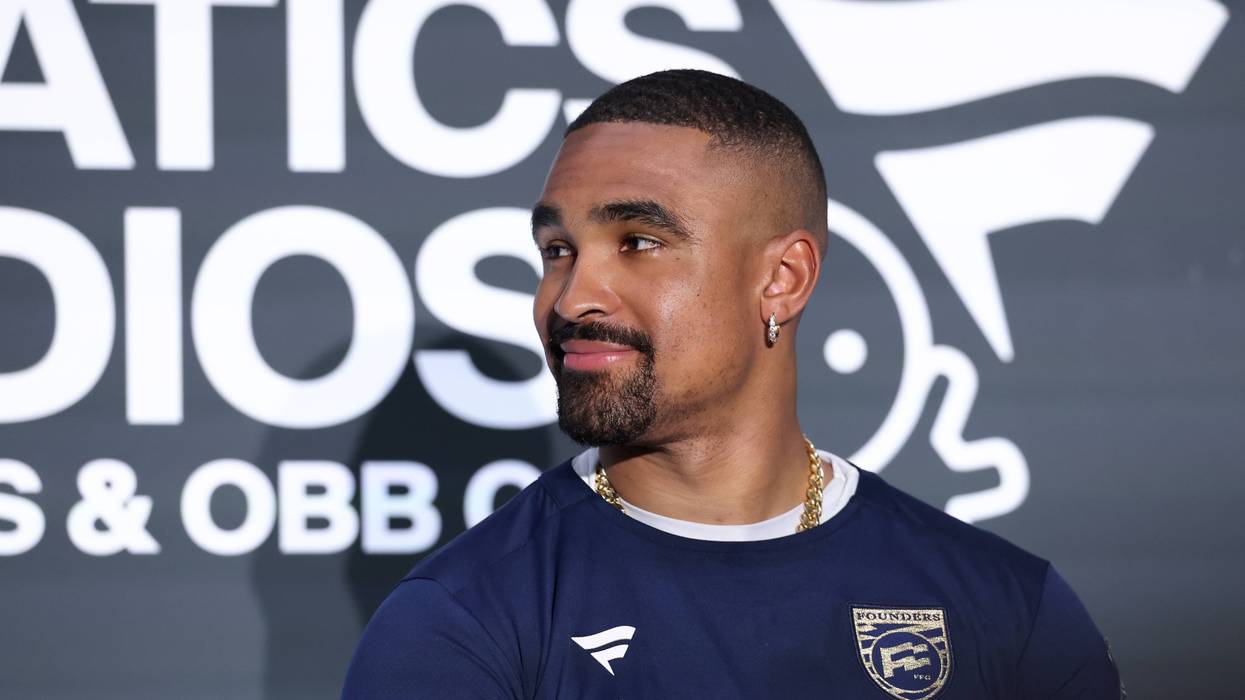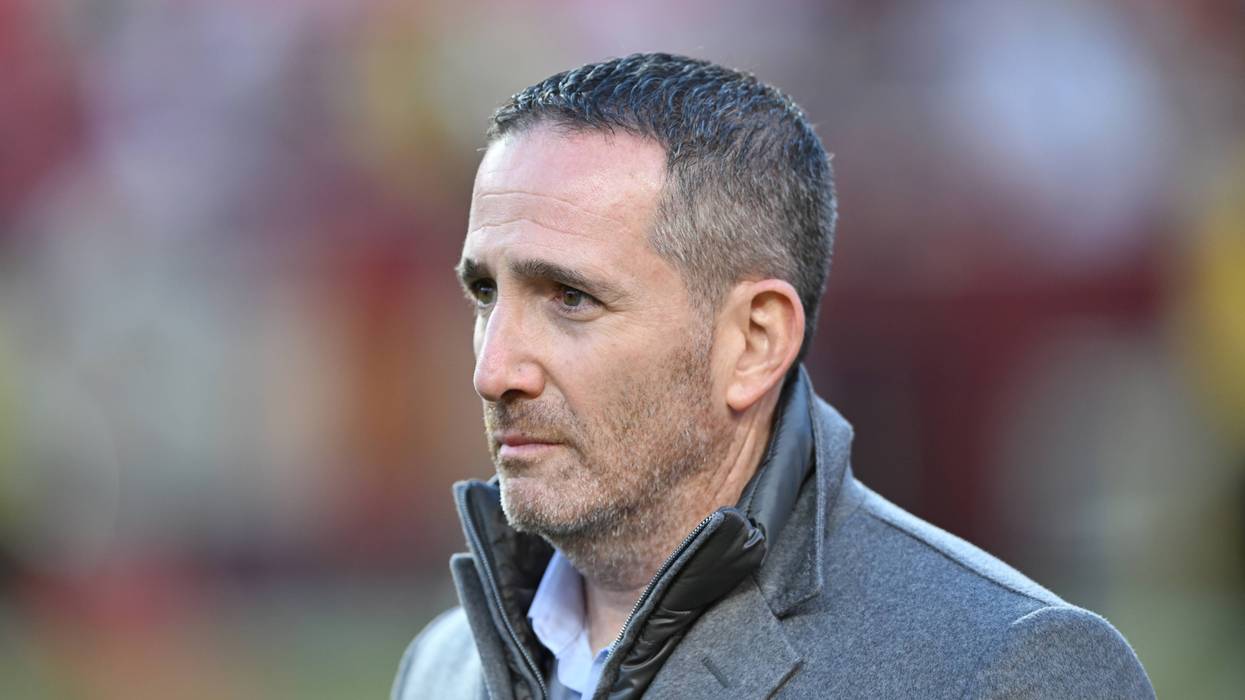


Jake Rosenberg, the Eagles Vice President of Football Administration, is Howie Roseman's salary cap guru.
When the team signs a player to a contract everyone celebrates as team friendly, or makes a move to create more cap space, it is usually Roseman and Rosenberg doing the bulk of the work to get it done.
Recently, Rosenberg spoke on the Eagles' official team podcast, breaking down the team's current salary cap situation. According to OverTheCap.com, which Rosenberg referenced on the podcast, the Eagles have around $24.7 million in current salary cap space, but are projected to be around $50 million over the cap in 2021.
Rosenberg gave an extremely informative and well-explained answer when asked about the team's current salary cap situation, and is a must for all fans to read when understanding why the Eagles either do-or-don't make moves:
"Those sites are accurate enough. I think that they do a great job, Over The Cap… I think I gave them a shoutout last time, they really do a great job in trying to understand the nuances and really help just everybody out there understand some of the more detailed oriented aspects, and they are really trying to get everything right, in terms of their contracts. There are certain details that they are not privy to, and not to their own fault, but it is good enough to understand generally where teams are. Our cap is good. I definitely would use caution when the only thing that you look at is what a teams cap space is in a given moment in time and use that as a barometer of how active they could be this season or something like that. I would just say the real approach would be to look at it over a multi-year period probably, and the fact that you are able to carry space from year into the next, really brings a limitation on being able to look at it in the one moment in time type of thing. For us, I think we talked about this last time, we had been preparing for the last league year (2020) for several years, so we were creating extra space with the idea that we would be just rolling it forward because we might need it in 2020 with last league year rules. So if all you did was look in 2018 at any given moment how much space we had, or all you looked at in a given moment in 2019 at how much space we had and said 'Oh, the Eagles can afford to sign such-and-such a player', well technically that is true, there is more strategy involved. It is not just that simplistic of an issue, or of an analysis. I think that we are always in the business of trying to win and trying to win a championship. We are not trying to take years off and we are not trying to reset the table or anything like that. So we are managing every decision that we make, we are looking at a multi-year period and just understand what does this get us in the short term, and how does it effect us in the long term, and we are going to do our best to manage that way, and always, if we have anything to do about it, keep ourselves in a position to compete for championships."
The answer really applies to the Eagles' currently salary cap situation. The Eagles, as mentioned above, have around $24.7 million in salary cap space, which is the fifth-most in the NFL. They have enough money right now to pull off a trade for Yannick Ngakoue or to sign Jadaveon Clowney.
The cap space they have, however, is critical for next offseason. With the team projected to be around $50 million over, that $24.7 million of cap space from this season nearly cuts that $50 million number in half. That doesn't mean the Eagles won't make any more moves, but it does mean that any move they do make has to be one they really feel will help them in 20202 — because it will make their salary-cap situation more difficult in 2021. You can read a detailed breakdown of the Eagles' salary cap situation here.
Rosenberg was also asked about how the massive contract the Eagles signed Carson Wentz to last season impacts the Eagles ability to put a roster around him. Wentz signed a four-year, $128 million deal that makes his cap hit go from $18.6 million in 2020 to $34.6 million in 2021.
"I don't know if it's hampered us. We talked about the planning side of things, I mean we were planning for this for a long time as far as Carson's contract. We had planned from a negation standpoint, a structure standpoint, and from a team-building perspective we were also planning for it and understood what it meant to have a quarterback on a market-adjusted deal rather than a rookie deal. I think within the system, within the CBA and the way the cap is managed, you do have flexibility and you have the ability to structure deals in different ways and be creative, and that is really the challenge," Rosenberg said. "I think that is one of the best things about the task that we all have every day. You have this salary cap, you have this fixed number and you are just trying to allocate that in the way you think gives you the best chance of winning games, and winning a championship. I don't think you would say 'A,B and C are different as a result of us having a quarterback that is no longer on a rookie deal, I think that is our job, is to figure it out. Howie says it all time — 'Just figure it out'. It is not enough to just throw up your hands and say we have a problem here. No, what is the solution, let's figure it out and let's move on."
While there is no doubt that Wentz's massive cap hit impacts what the Eagles can do, Rosenberg's answer makes it clear they have been planning to have his big cap hit for some time, and have planned accordingly.