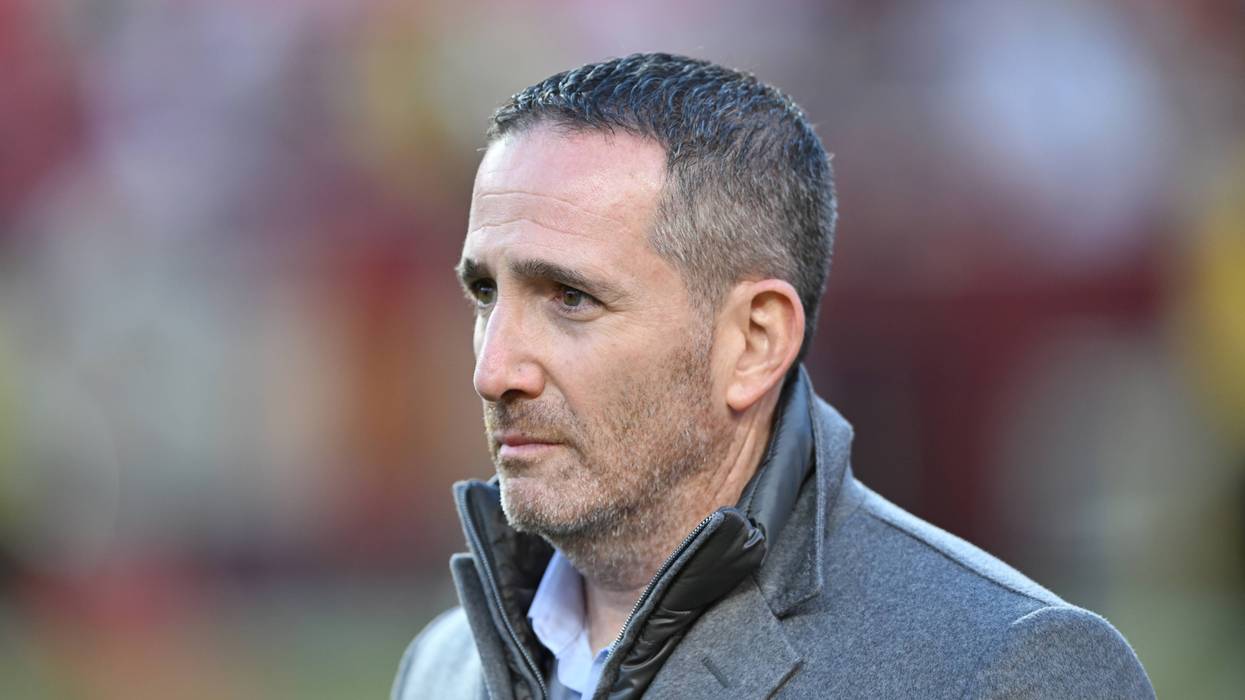


"Guess what guys? We got a running back. We draft running backs in Philadelphia."
The opening line from Howie Roseman on Friday night was a joke, but the message was clear — finally, the team has invested an actual valuable resource in a running back.
The Eagles selected Penn State running back Miles Sanders with the 53rd overall pick in the 2019 NFL Draft, the first time the team has selected a running back in the second round since 2009. The pick then? LeSean McCoy. The spot selected? No. 53.
Have the Eagles found their next franchise running back?
Here is a look at some of the pros-and-cons with Sanders:
PROS:
Tough runner: Sanders is not the biggest back at just 5-foot-11, 211 pounds, but he does an excellent job staying up after contact. Of all the running backs in this year's draft, Sanders was ninth in yards-after-contact, averaging 3.5 yards after his initial hit. That is just 0.1 yards fewer than Josh Jacobs from Alabama averaged after contact. Sanders doesn't exactly run people over, but he does do an excellent job maintaining his balance after contact. He averaged his highest yards-per-carry right up the middle of the field, 6.6 yards-per-carry, as opposed to running to the sidle lines.
Fresh legs: Among the top running back prospects in this year's draft, Sanders easily has the least amount of work on his legs, as he touched the ball just 299 times at Penn State. To put that in perspective, Florida Atlantic running back Devin Singletary touched the ball 764 times. In a league where running backs aren't viewed as players that can have long, successful careers, the lack of touches Sanders got in college should help him have a longer career in the NFL.
Compliments Howard: The Eagles like to use a running back by committee approach. Sanders should fit right in. Although they are different style of players in some ways, Sanders and Howard are similar in others. Both do their best work between the tackles. Both are strong in pass protection (although Howard is better). Both have limited reps in the passing game. With Howard and Sanders, the Eagles have two very solid, young running backs with plenty of upside.
CONS:
No elite skill: Sanders appears to be good at a lot of things, not elite at any. He does not have breakaway speed. He is tough, but not especially elusive. His vision, per multiple scouting reports, leaves a lot to be desired. He struggled with fumbles throughout his career. Sanders was productive, but to excel in the NFL he is going to need an elite skill. It isn't clear what that is.
Unproven receiver: Sanders projects as a better receiver in the NFL than he was in college, but as of now that is just a projection, as Sanders got very limited reps in the passing game at Penn State. Sanders ran a route 210 times in college, catching only 32 passes. He dropped three of the 34 passes thrown his way last season, per Sports Info Solutions. That is roughly 10%. Sanders could turn into a threat out of the backfield, but he doesn't seem to check the box off right away for a playmaking receiver at running back.
Limited tape: The flip side of Sanders not having a lot of mileage on his legs is that there isn't a ton of tape out there on him. Sanders really only played for Penn State for one season, totaling only 56 carries his first two years there. The most valuable thing a scout can have when projecting what a player will be is a large sample size of tape to look at. Sanders is a little harder to project because of his lack of playing time.