


It's going to be weird seeing the league leader in home runs belt 18 to 22 home runs, as opposed to Pete Alonso's 53 from 2019. But first basemen still figure to be a large portion of the leaders. It's a position that's all about power, and that's not going to change for a while, pandemic or not. In the ever-changing game of baseball, first base has stayed largely the same in terms of the characteristics that make for a good first baseman.
That's not to say that first basemen are exclusively power hitters. But when you think of the real prototypes at first -- Jim Thome, Mo Vaughn, and Jason Giambi come to mind -- you think of the tall, brutally strong power hitters that clear the bases and generate a ton of run production for their teams.
The bulk of the guys on this list are renowned for their offense over other aspects of the game, but defense and base running ability are still taken into account. The group of elite first basemen is fairly fixed, as well. You'll see many familiar faces near the top of this list. But the new generation of first basemen also has a strong showing, and guys like Spencer Torkelson should be on here before too long.
Here are the top 10 first basemen heading into the 2020 MLB season.
Note: Cody Bellinger included in our top 10 outfielders. All stats from Baseball Reference, Fangraphs (WAR) and MLB's Baseball Savant.
10. Luke Voit, New York Yankees
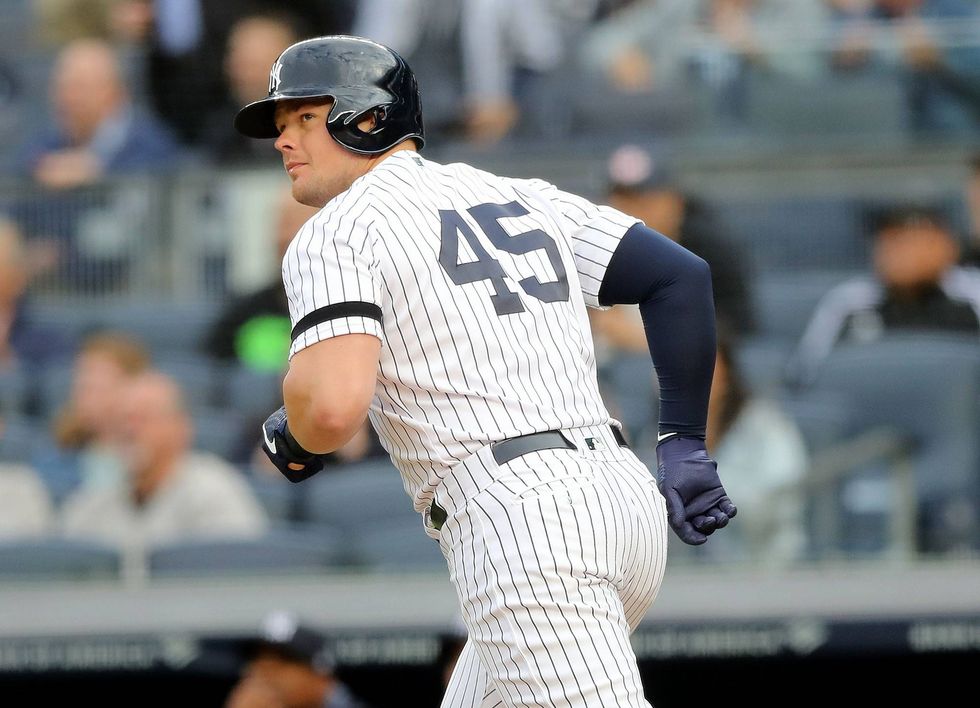
2019: 21 HR, .842 OPS, 1.7 WAR
Before the All-Star break in 2019, Voit was having a phenomenal year. In fact, he had a solid case to be the starting first baseman in the Midsummer Classic. Just look at how similar his stats were to the eventual starter, Carlos Santana:
Voit: 17 HR, 50 RBI, .901 OPS, .348 BABIP, .381 wOBA
Santana: 19 HR, 52 RBI, .958 OPS, .311 BABIP, .398 wOBA
BABIP: Batting average on balls hit in play. For more info, check it out on FanGraphs
wOBA: Weight on-base average. For more info, check it out on FanGraphs
Santana was the better overall performer, but Voit wasn't far off. In fact, he led by a significant margin in one of the more significant analytical figures, BABIP. Though nothing can be completely derived from one statistic alone, a higher BABIP that Voit was grooving the ball at a preferred launch angle and exit velocity.
In the first half of 2019, Voit was second among first basemen in both BABIP (behind Michael Chavis) and line drive percentage (behind Freddie Freeman). Unfortunately, core injuries derailed his promising year and forced him to miss significant time in the second half. With major injuries already concerning the Yankees before the hiatus bailed them out, his health and productivity will be very important pieces to the team's offensive success.
9. Rhys Hoskins, Philadelphia Phillies
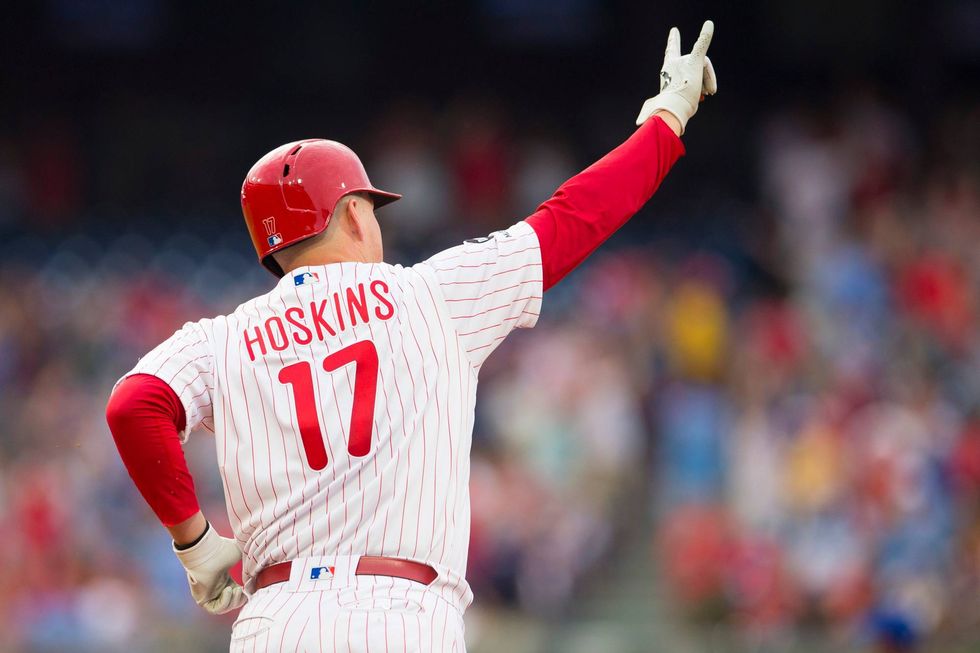
2019: 29 HR, .819 OPS, 2.2 WAR
Pictures can often tell the whole story. Largely, this one does, in that Hoskins has disappointed since his record-breaking rookie season.
Rhys Hoskins' Season wOBA
 Rhys Hoskins' wOBA and wRC+ Career SplitsFangraphs
Key
wOBA: Weighted On-Base Average
wRC+: Weighted Runs Created Plus
What this image doesn't show is the breakdown of Hoskins' 2019 season. He slashed .263/.401/.530 in the first half, putting up solid power numbers (20 HR) and setting the tone for what could have been a near-40 home run season. His second half numbers did not replicate that tone. Hoskins slumped deeply throughout the summer and early fall, posting a .180/.318/.361 line and was third-to-last in the Fangraphs comprehensive OFF (offensive runs above average) metric.
So why is he in the top 10? Potential. We've seen the power that he possesses before, as shown by the left side of the graph. Even in the first half of 2019, Hoskins posted a wRC+ of 140, which Fangraphs determines as "Great" in their rankings scale (160 = Excellent, 140 = Great, 115 = Above Average, etc.). If you simply just take his home run numbers from early on in his career, you can see the pure power in his swing. At the time of his 50th career dinger, only six players had reached the mark sooner, including Mark McGwire, Aaron Judge and Ryan Howard. Not included are names like Barry Bonds, Hank Aaron and Ken Griffey.
It also doesn't hurt to mention that Hoskins posted the third-best BB% rate among eligible first basemen at 15.3%. His defense, though still pretty awful (-9.8 defensive runs above average), was a marked improvement over 2018's abysmal number (-18.1). Another stat that can be taken both positively and negatively is his average launch angle of 24.0. It was the highest in the big leagues by far, which pointed to both his power hitting ability and his frustrating tendency to pop out, often with straight-up skyrockets that never left the infield.
With Joe Girardi and a revamped lineup around him, the Phillies are hoping that Hoskins has a rebound season in store in which he could consistently produce in all 60 games.
8. Carlos Santana, Cleveland Indians
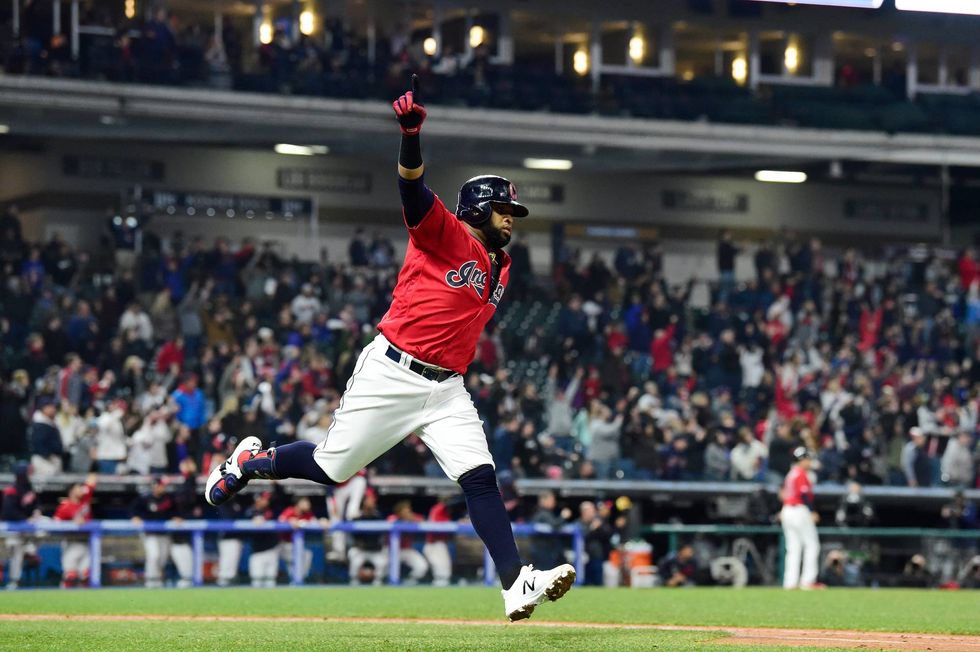
2019: 34 HR, .911 OPS, 4.4 WAR
Sometimes, a change of scenery is all you need. That's what RADIO.COM MLB insiders Tony Gwynn Jr. and Ben Davis had to say in an episode of last season's "Big Time Baseball" podcast, claiming that much of his success in 2019, compared to an ugly 2018, stemmed from his return to familiar surroundings in Cleveland.
The Cleveland crowd must have been happy to have him back in town, too, as he clobbered 34 home runs, drove in 110 runs and upped his .229/.352/.414 2018 line to .281/.397/.515. With a top-10 K% (just 15.7%) and BB% (15.7%), Santana showed his veteran poise and prowess at the plate with patience and a sharp eye, chasing outside pitches at a 21.2% clip (third-best among 1B).
Overall, no one really expected the breakout that Carlos Santana experienced in 2019 after such a long career of solid, but not exceptional play. It meant a lot for Santana to be nominated the starting first baseman at the All-Star game, and he looks to follow it up as one of the best first basemen in the AL.
7. Josh Bell, Pittsburgh Pirates
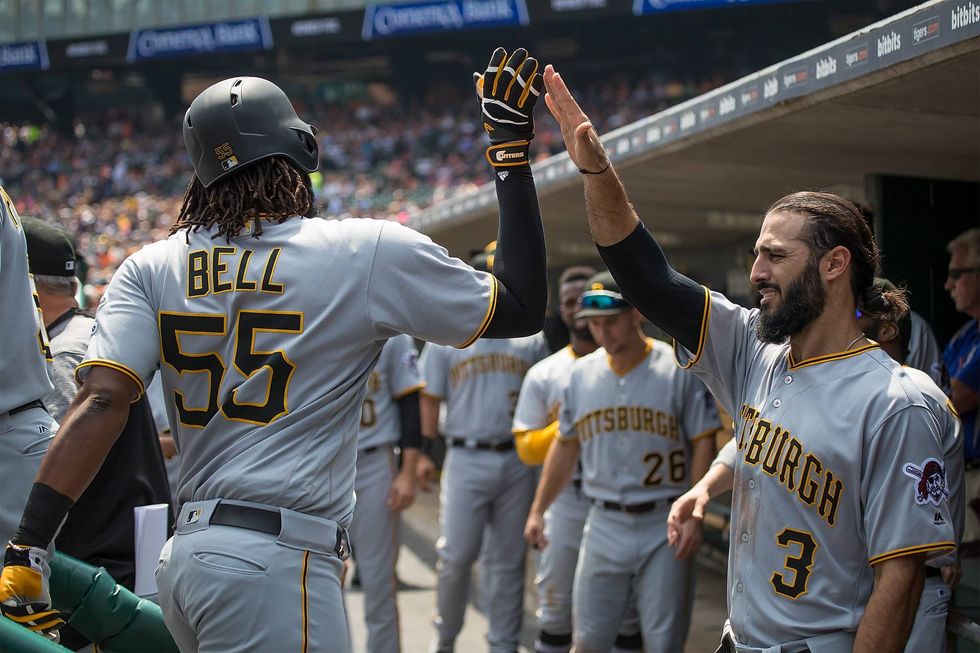
2019: 37 HR, .936 OPS, 2.5 WAR
A popular candidate to breakout in 2019, Josh Bell proved many experts correct by posting ridiculous first half numbers last season. He hit 27 home runs before the All-Star break, ranking fifth in the majors and trailing only Pete Alonso among first basemen. The other three guys that filled the void were MVP candidates Mike Trout, Christian Yelich and Cody Bellinger, placing Bell in elite company.
Though he cooled off quite a bit in the second half, Bell finished the season with a cumulative wRC+ of 135, ranking in the top five among first basemen. Pirates fans, whether at PNC Park or on the road, got used to seeing the towering fly balls that erupted off of Bell's bat.
After seeing a down year in 2018, the positive rebound and breakout for Bell in 2019 bodes well for his future. He's still only 27 and entering just his fifth year in the bigs, meaning there is still time for him to develop into a perennial 40 homer threat despite a potential hitch in that development in 2020.
6. Matt Olson, Oakland Athletics
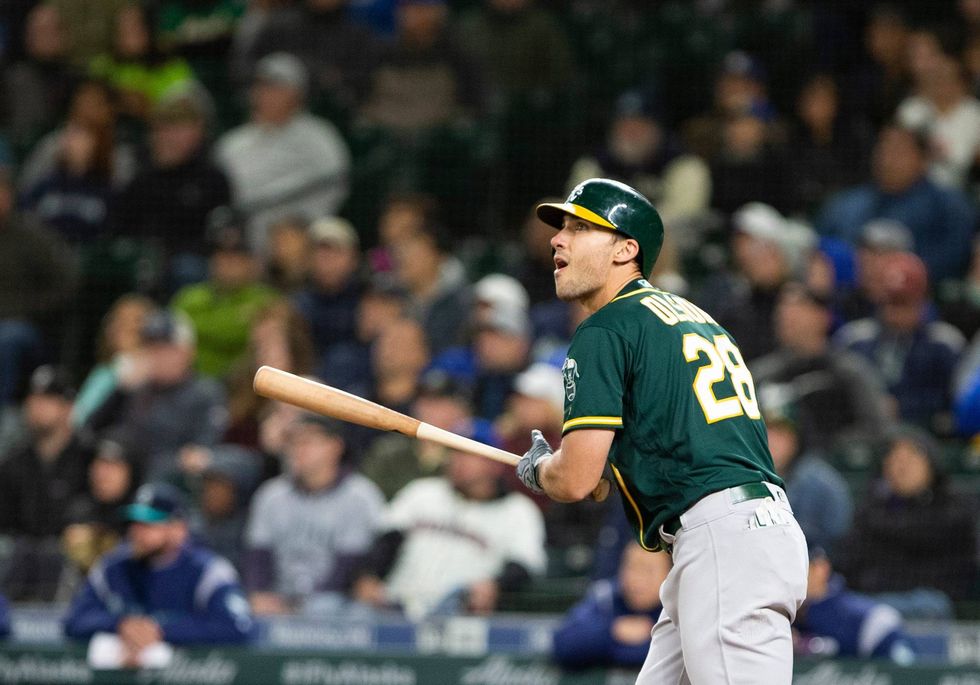
2019: 36 HR, .896 OPS, 3.9 WAR
A top 10 commendation for Matt Olson might not be good enough when the 2020 season is all said and done. He mashed 36 home runs last year in only 127 games of action, meaning that you could project 15 or so as a fairly conservative, lower-end projection for his 2020 total. Defensively, he's a deserving Gold Glove first baseman that led the position in defensive runs saved with 18.
His hard-hit percentage (Hard%) topped all eligible first basemen at 50.3% and was one of only nine >50% figures in all of baseball (min. 250 plate appearances). The players who appear on this list, for the most part, epitomize the pure power sources throughout Major League Baseball, including Aaron Judge, Nelson Cruz, Christian Yelich and Joey Gallo.
If not for his fairly one-dimensional offensive playstyle, Olson would probably be higher up on this list. However, you also must take into consideration that Olson doesn't add much on the basepaths and isn't the biggest threat to draw a walk: his 9.3 BB% is the lowest of all the first basemen on this list. If power is your thing, though, then watch out: Olson is the real deal.
5. Max Muncy, Los Angeles Dodgers
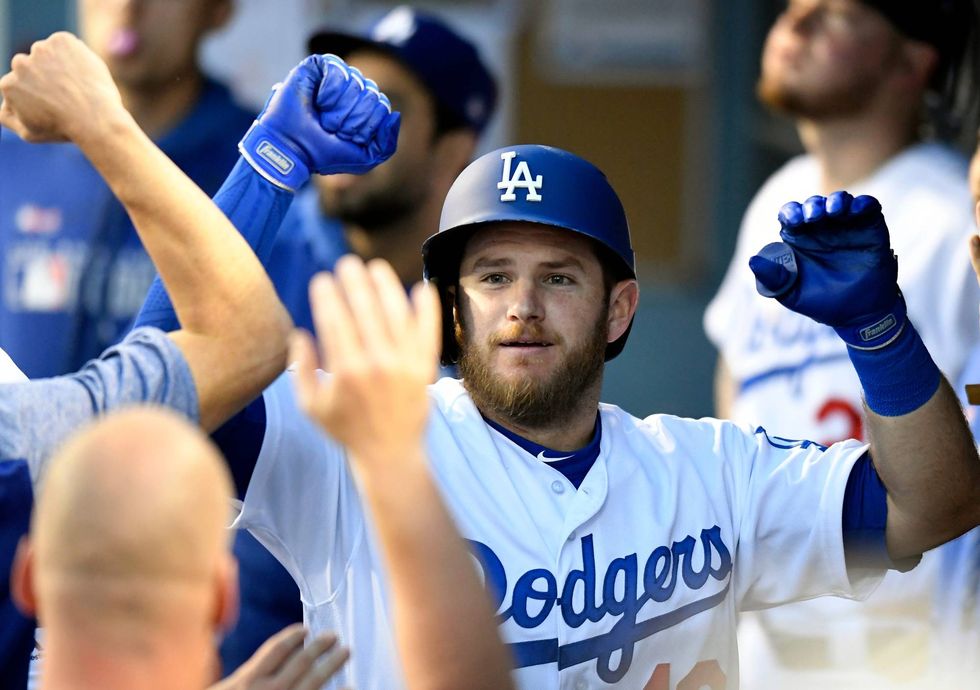
2019: 35 HR, .889 OPS, 4.8 WAR
Right behind Olson in ISO (the Fangraphs metric that isolates pure power statistics) is Max Muncy, the versatile infielder who actually played more games at second base than at first in 2019. However, given the ascension of Gavin Lux (as if the Dodgers needed another top position player rising through the ranks), Muncy will likely settle in at first base for the majority of the 2020 season.
What separates Muncy from your typical power hitting first baseman, though, is his ability to tear up the basepaths. He's not a speed demon by any means, but he still ranked first in the Fangraphs BsR (Base Running) metric by a solid margin. Muncy also ranked among the top-five defensive first basemen, contributing to his stellar WAR that tied with Pete Alonso for tops among the position.
With two straight seasons of 35 home runs under his belt and a much-improved lineup working around him and getting on base, he should be able to break into the teens in a 60-game season.
4. Paul Goldschmidt, St. Louis Cardinals
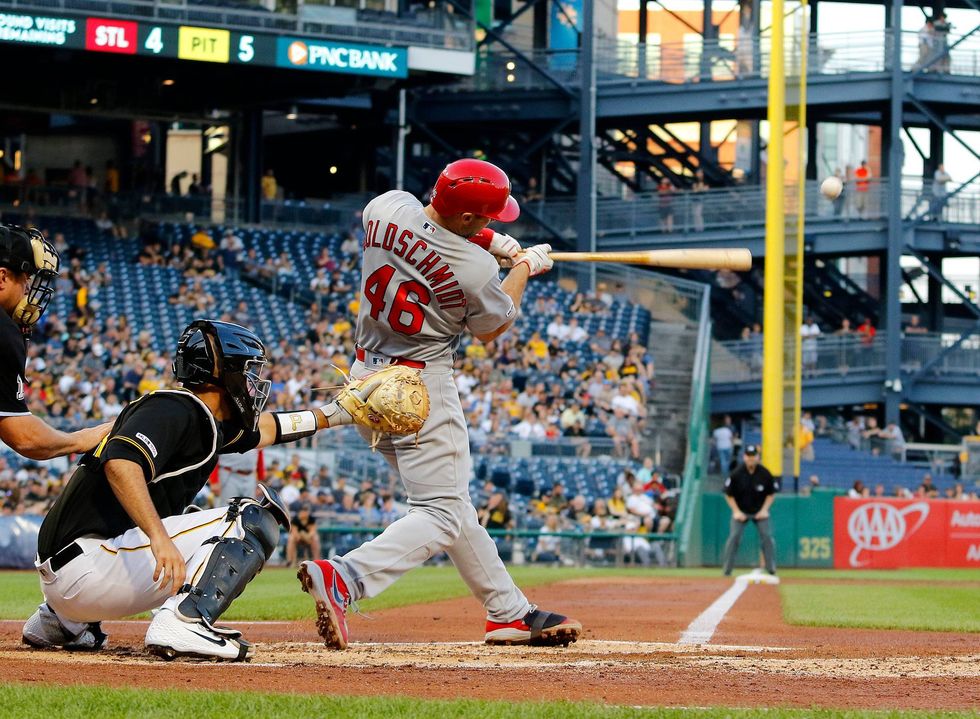
2019: 34 HR, .821 OPS, 2.9 WAR
If you use last year as the sole indicator of Goldy's performance, you wouldn't be impressed. That's because he had arguably the worst season of his illustrious big-league career, with a career-low 116 wRC+ that ranked just No. 17 among first basemen.
Still, he was one of 30 players last year to record 30 home runs, 90 RBI and 90 runs scored -- all in a down year. Those are numbers that most players strive to achieve as career bests. He's on the wrong side of 30, but only barely, meaning that he can still perform at a very high level and should be expected to positively regress.
He set his career high in Hard% last season but saw his BABIP drop by more than 50 percentage points. Bad luck seems to have hit Goldschmidt hard in his debut season in St. Louis, but fans shouldn't expect that trend to continue. If anything, fans may be pleasantly surprised when Goldschmidt completely blows what he did last year out of the water.
3. Anthony Rizzo, Chicago Cubs
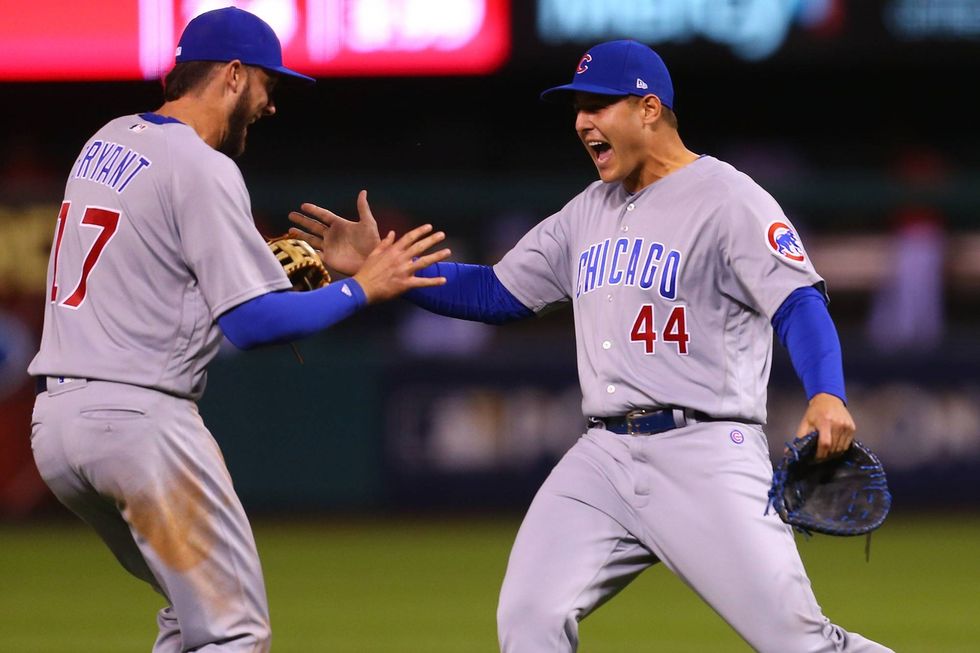
2019: 27 HR, .924 OPS, 4.0 WAR
Rizzo is in elite company based on his consistency. He may not challenge for the league lead in home runs, or in OPS or in any of the major offensive categories. But you can count on him to be a vital cog in the lineup year in and year out. He has five seasons of 25 HR, 90 RBI and an .800 OPS in the past six seasons, a feat accomplished by only five other players in all of baseball in that same time frame.
The 30-year-old occupies a unique mold that doesn't quite fit into the power hitter niche but serves a much wider purpose than a contact hitter like former Cub Mark Grace. Instead, Rizzo is a patient hitter who doesn't strike out a lot, hits with modest pop and does well in clutch situations, ranking second among all first baseman in the Fangraphs "clutch" metric.
Defensively, he's been named a Gold Glover in three of the past four seasons, something that isn't valued as heavily at first base but should still warrant recognition. Whether it's the offensive consistency or the defensive reliability, Rizzo figures to anchor the Cubs lineup as a humble leader with the production to back up his role for 2020 and onward.
2. Pete Alonso, New York Mets
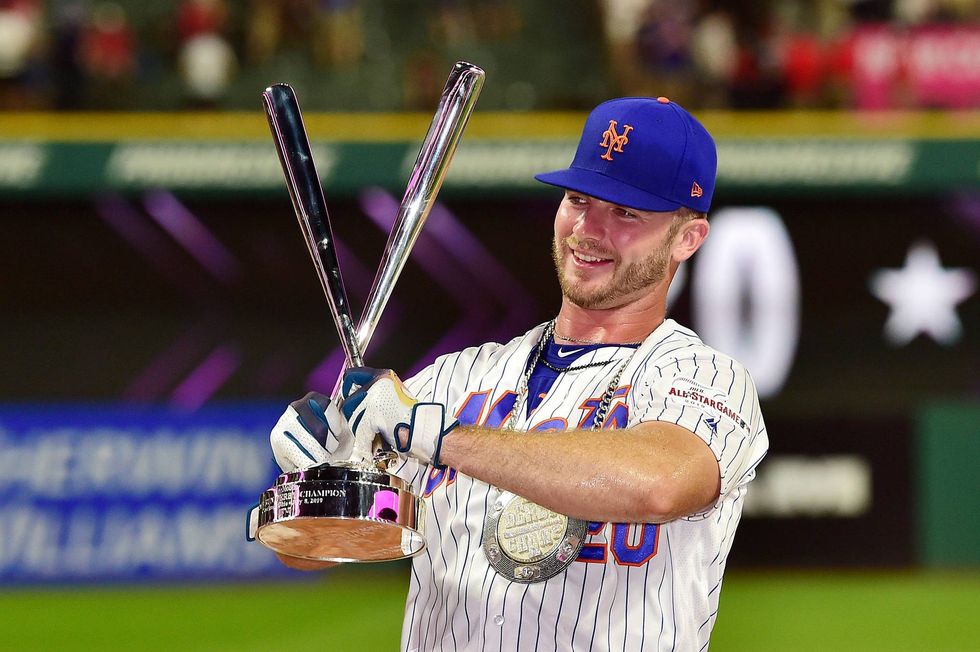
2019: 53 HR, .941 OPS, 4.8 WAR
Stat time!
Alonso's 53 home runs is the record for a rookie. His 120 RBI is the second-most for a rookie since 1950. He recorded just one of 14 seasons since 2000 in which a player has hit 50 home runs and driven in 120 runs, but half of those 14 were completed by suspected or confirmed steroid users. Alonso's barrels per plate appearance -- a metric that MLB.com defines as "batted-ball events whose comparable hit types (in terms of exit velocity and launch angle) have led to a minimum .500 batting average and 1.500 slugging percentage" -- ranked in the top 12 in MLB. He had the second hardest-hit ball in the entire league last year, a 118.3 mph screamer to dead centerfield.
Enough stats? While there's potential for Alonso to follow up his explosive rookie campaign with a less-stellar sophomore slump, as our fantasy baseball writer Jesse Pantuosco can potentially foresee, there's no reason to expect him not to deliver the same type of power and excitement to the Big Apple as he did in 2019. The future is bright for the Polar Bear.
1. Freddie Freeman, Atlanta Braves
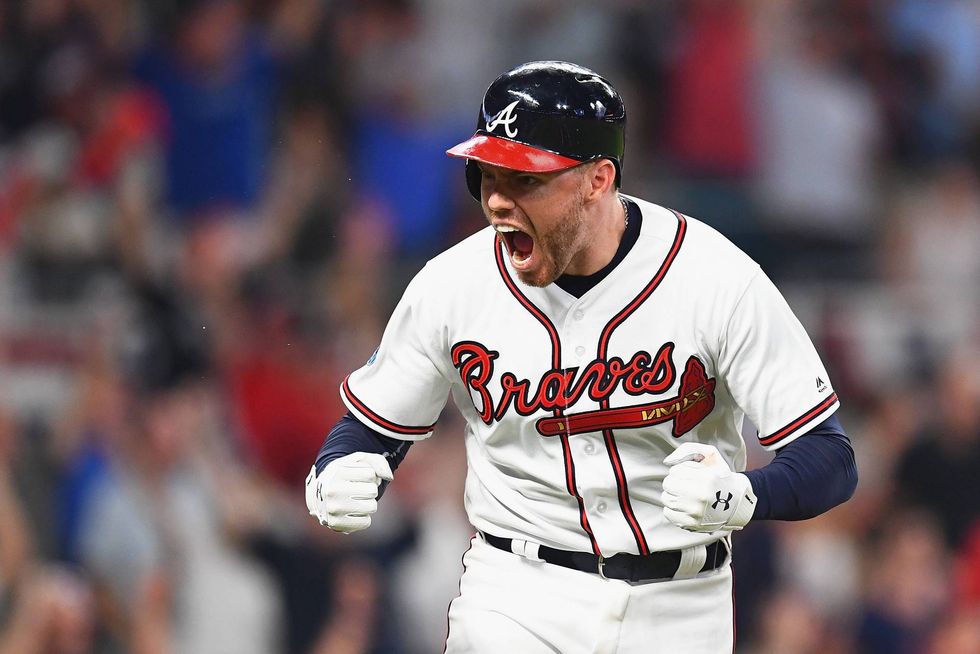
2019: 38 HR, .938 OPS, 4.0 WAR
We knew Freeman had power throughout his career, but we didn't expect this kind of power. After having one of his best seasons to date in 2018, where his power numbers were down (34 HR in 2016 → 23 in 2018) but he led the league in hits and doubles, Freeman's trajectory seemed to be heading in the direction of a 20-25 home run, high-average veteran first baseman. That was before he reset his career high with 38 bombs and 121 RBI to go along with his third .900 OPS in the prior four seasons.
Freeman pounds the ball, registering a top-five Hard% at the position (46.8%) and pacing the first basemen with a line drive percentage of 27.5%. He has a great eye, placing in the top-12 among first basemen in both BB% and K%. He's in the top three within the position in both Fangraphs Off. metric (Offensive Runs Above Average) and wOBA.
Though his power numbers are hard to predict given the oscillation in home run totals from year to year, most projection models on Fangraphs have him as a lock for 30 home runs and 100 RBI per 162 games. You can't ask for much more than that out of your everyday first baseman, and the combo of Freeman and Ronald Acuna, among other pieces, is a reason why the Braves can be seen as the team to beat in the competitive NL East.
LISTEN NOW on the RADIO.COM App
Follow RADIO.COM Sports
Twitter | Facebook I Instagram