
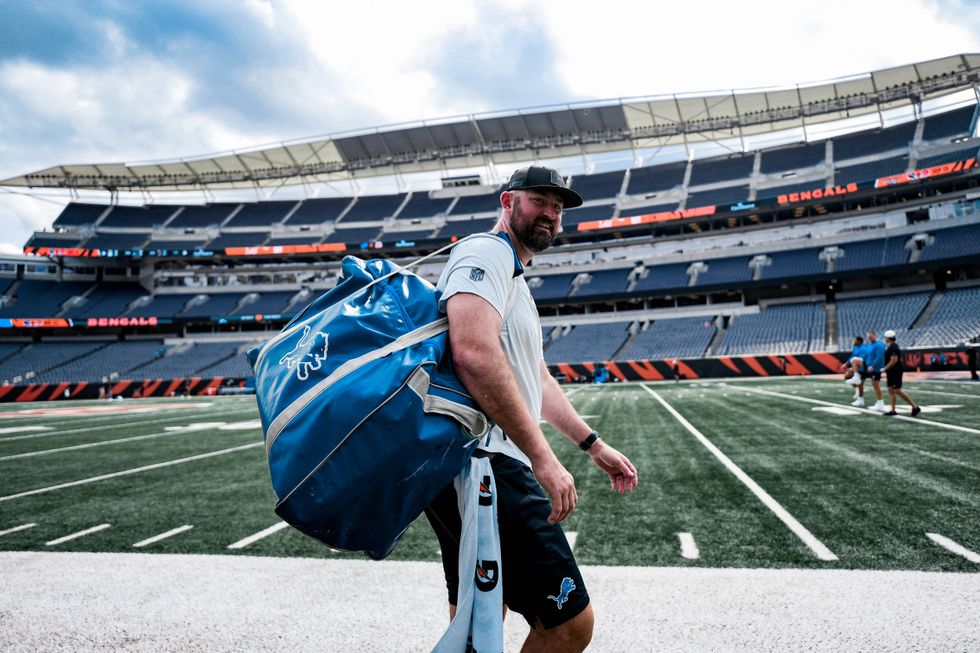
The lights are on in the garage of Dan Skipper’s house at 5:40 a.m. the day after the Lions’ second preseason game. The neighborhood that abuts a golf course about 40 minutes west of Detroit is otherwise dark on this Sunday morning. From the garage comes the unmistakable rasp of a saw. Skipper is fashioning a hunk of white oak into a fireplace mantle for the family home where he’s recently settled with his wife and their three kids, five-year-old twin boys and a daughter who’s soon to be two. They rented in the Detroit area during Skipper’s transient days as a player. Now they’re putting down roots. Dan Skipper, the 6’10 offensive tackle cut 23 times by seven different teams over a nine-year NFL career, is now Coach Skip, offensive assistant for the Detroit Lions.
Skipper has a few projects to get done at the house before it really feels like home. That might take a while: his hands are full in Allen Park. Today, like most days, Skipper will arrive at the Lions’ facility a little after 6. He’ll punch player grades into Microsoft Excel from their preseason win over the Commanders. He’ll have an offensive meeting for two hours, then a staff meeting for two more. Then two hours of meetings with the players — in Skipper’s case, with the offensive linemen. Then some collaboration with the front office as the Lions begin to put together their 53-man roster, then “other duties as assigned,” Skipper says with a smile, still a swing tackle/jumbo tight end at heart.
There’s also a practice plan to put together for the week, and film to break down of the Lions’ upcoming opponents. The Colts are the first priority. The Saints, looming in the season-opener, might be the bigger one. Skipper will sift through tape to label different quarterback pressures and run schemes, outlining each team’s defensive identity. This is the front-end of game-planning.
As a player on this quiet August morning, Skipper would still be sleeping. He’d rise after the sun, see his family over breakfast, hit the facility for a lift and some meetings, and be home by the early afternoon. “As a player,” he says, “I would have been in here four or five hours. As a coach, I’ll put in four or five hours before lunch.” He greets the grind with a grin.
What fuels this giant? Coffee, for one. Skipper drinks it canned out of the fridge, on tap over ice, or straight from the espresso machine, all at his fingertips in the Lions’ facility. He drains the iced coffee that I bring us from Dunkin on this morning like a warmup lap. When I tell him that he’s on that Dan Campbell caffeine plan, Skipper says, “Sh*t, I’m blowing him out of the water right now. I go straight cold brew. Four shots in the morning.” But coffee just turns on the brain. Football is in their bones.
 Detroit Lions
Skipper started playing the game when he was six, raised outside Denver. He didn’t stop until the end of last season at the age of 31, rendered almost immobile by battered discs in his back. He can recite the teams he played for like the names of his children, in order of his arrival (and dismissal): “Dallas, Detroit, Denver, New England, Houston, Vegas, Indy.” He can tell you how many times he was cut, released or waived. Thinking back to his NFL debut, rushed into action for the Lions after right tackle Rick Wagner was injured in a game against the Steelers on Sunday Night Football in 2017, Skipper can still hear Matthew Stafford in the huddle, before fourth and goal from the 1: “He looks at me and says, ‘Just don’t get beat inside.’ I said, ‘Alright!’ Kicks it back and then takes off downhill, scrambles short of the end zone, we lost. We scored all field goals. Bud Dupree off the edge.”
Skipper did his job on the play, as he did throughout his career. He's in love with something that didn't always love him back. He spent six years in the NFL before starting a game. He was told over and over that he wasn’t good enough, both here and elsewhere. The only ‘no’ he ever accepted came from his body: “When the wheels are off, sometimes you gotta know when to find a hook,” he says. “At some point I’ll get it fixed, but at this point I still have a pretty f**ked-up back.”
It was not only time to retire when last season ended, but the right time. The rest of the old guard on Detroit’s once-vaunted offensive line had also moved on, from Frank Ragnow to Taylor Decker to Graham Glasgow. Skipper just decided to move back in. He signed up for longer hours and lighter pay and an even less glamorous football life than the one he had known, with barely a blink and a family vacation last winter to Mexico. As we turn off the winding, leafy streets of his neighborhood toward the freeway, following the headlights of his old Dodge Ram to maybe the most familiar destination of his life — 222 Republic Drive — it begs a most fundamental question: Why?
Skipper sighs, but not wearily. There’s just so much to say, and only so many ways to convey it: “That’s a good question,” he says. “I think football has been such a huge part of my life for so long, it’s almost, like, all you know at times. My entire adult life has been spent around football season. I think it would be pretty jarring to just remove that completely. That’s a big part of it.” So is the rush of competition, even from the sidelines. There are voids to fill, and loyalties to oblige. Really, there is a soul to nourish.
“I also am a firm believer that if you get any itch to coach or (stay in the game), you need to hop right in,” Skipper says. “Because the longer you take off, the further back you have to go.”
Skipper started getting the inkling a few years ago. His own coaches could see that he was meant for this profession. He was both a student and a steward of the game. He’d often stay back after practice to work with his younger teammates. Lions O-line coach Hank Fraley remembers watching Skipper help undrafted rookie Matt Nelson make the transition from defensive end to offensive tackle in 2019, “even though those two were competing to be the same jumbo guy” in Detroit’s offense. Nelson spent the next five years with the Lions, while Skipper bounced back and forth between stints with the Patriots, Texans, Raiders and Colts.
Dan Campbell is entering year six leading the Lions. Four years ago, Campbell told Skipper, “Listen, I’m not saying you’re done — that’s not what this is — but one day when you decide you’re done, let’s talk. Because you’re going to be a hell of a coach.” As a player, Skipper reminded Campbell of himself. Campbell carved out 10 years in the NFL as a blocking tight end, the final three of those with the Lions until his own body told him no. He stuck around not by sticking out, but refusing to stand down. Their shared experience is part of the reason that Skipper’s career kept calling him back to Detroit.
“He was a much better player than me,” Skipper says. “Let’s not get that twisted. But just the type of job he did, grind every day, pretty thankless at times, you’re always right on the cusp, just trying to do things right, I think he respect that. He said it, he’s like, ‘Man, you’re like my beat-up old farm truck. It ain’t pretty, it don’t look good, but it works most of the time!’”
Skipper accepts this comparison with a laugh, before adding in all seriousness: “That’s the thing: never catch yourself being consistent. Just try to be consistent every day.”
A smile creases Campbell’s face when he recalls the moment they met. It was within the first couple months of Campbell’s hiring in 2021. He was at the facility in the old draft room watching film of prospects with Brad Holmes — “Back then it was just this cave we had, with one little TV on the wall,” says Campbell — when they were told that Dan Skipper was there to meet them. They knew of him in the simplest terms, a behemoth of an offensive tackle who had toiled on the practice squad.
“He opens the door, and this dude is enormous. He has to bend down to come through the door, like, whoa!” Campbell says. “You meet him and he’s one of those guys from afar — he’s such a giant, and his demeanor, and the way that he played — sometimes you have the sense that if you don’t know him, he’s just this meathead. And he was so far from that.”
Of course, you might make the same assumption about Campbell. Skipper laughs and admits, “The one asscheek and three toes (speech) was a little crazy. But from that first OTAs you’re like, oh sh*t, this guy — he’s actually about it. Because a lot of people come in and just beat you down about ‘the f**king last guy,’ yada yada yada. He didn’t even mention the past. It was, ‘Hey, this is us, we’re here, we’re going.’
“And then all the time and real conversations we had of, ‘Here’s the big picture, here’s where you fall, need you here, don’t need you here,’ he is who he is, and he’s consistent. I think that’s one of those things that’s rare in this day: I’m gonna tell you, and I’m gonna keep it real.”
Though he came and went over the next several years, Skipper slowly became a fixture in Detroit’s offensive line room. And the O-line, under Fraley, morphed into a freight train. It fueled the Lions’ rise from afterthoughts to juggernauts, and nearly powered them to the Super Bowl in 2023. It personified their style of play: fast, physical, relentless.
After doing a lot of manual labor throughout high school — moving hay, painting, scraping fences — Skipper says he learned pretty early in life “that I don’t want to be on the working end of a shovel all the time.” Is he sure? As the Lions were gaining steam behind their offensive line, it was Fraley who said, "We're just shoveling the coal, man. We're down there in that engine room, working, sweating and grinding." This is where Skipper belongs.
“He’s got everything you wanted in a player, but the stuff that you’re like, this guy can be a coach,” says Campbell. “His intellect, man, his football intelligence, his awareness, his savviness, his understanding of how to play with people’s emotions across from him. He knew how to play the chess game, and he understood his own limitations. The guy is wired for coaching, because he’ll do the dirty work. He was a grunt his whole freaking career, so coaching? He doesn’t have any problem with that.
“I think some of the best coaches are guys that aren’t super talented, because I know from my own career, you have to know all the tricks of the trade and you better be on it because if you’re not, it’s going to be hard for you to have success.”
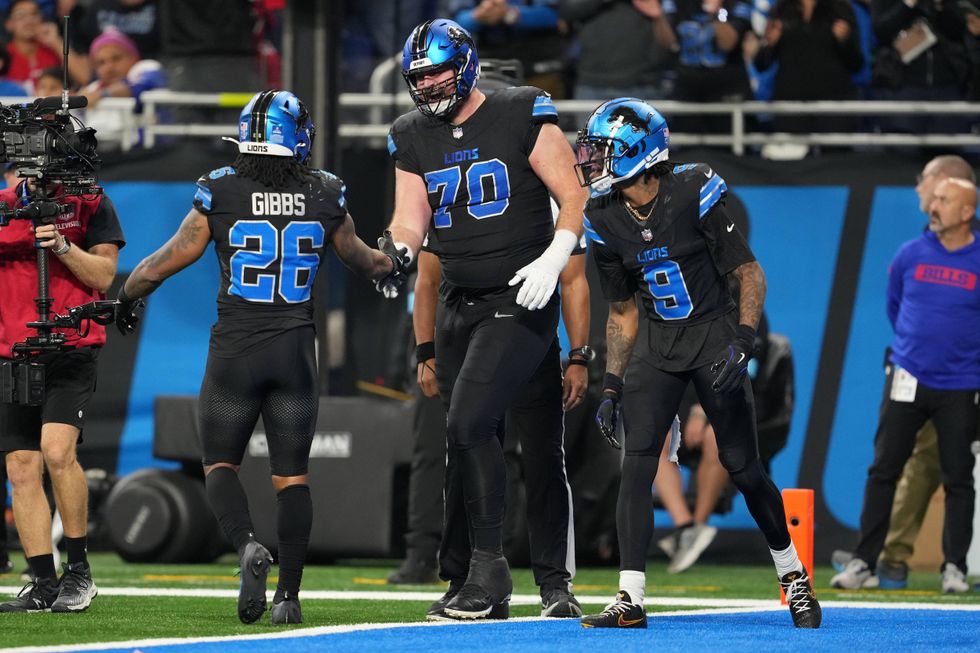 Photo by Nic Antaya/Getty Images)
When Skipper officially decided to change lanes this offseason, he was looking everywhere for openings. The Lions, at the time, didn’t have one. Skipper was “calling every coach I knew,” he says, some of whom he had played for, others he had just met in passing. It was uncomfortable for a guy who’s not one for self-promotion. He went to the Senior Bowl as a volunteer coach, partly to network. Campbell encouraged Skipper to “see what’s out there,” and said, “Just call me if anything comes up.” He figured he might have a need under Fraley as he reassembled his offensive staff, on the heels of a disappointing season.
First he hired a new offensive coordinator in Drew Petzing. When he later promoted former assistant offensive line coach Steve Oliver to tight ends coach, Campbell called Skipper and said, “Hey man, you want this or not? Because it’s your job if you want it.” Campbell laid out the demands, the salary and a fair warning that the hours would erase most of his time at home during the season. He encouraged him to “talk it over with Mack,” Skipper’s wife Mackenzie.
“It’s going to be hard,” Campbell told him. “But you personally, you’ll kill it.”
With Mackenzie’s support, Skipper says the decision was “a no-brainer.” His brain has been in overdrive since.
He arrived in February and was thrust into pro scouting ahead of free agency. Suddenly, he had 30 or 40 targets to evaluate on the offensive line, which meant grinding some 200 games of film. Then came his first major project in Excel, a comprehensive self-scout of the 1,000-plus plays the Lions ran on offense last season. Then he plunged into college scouting, which sometimes meant projecting a natural left tackle as a center in the NFL: “How the f**k do you do that?” Skipper laughs. The combine was a whirlwind unto itself.
Skipper shares a windowless office with offensive quality control coach Justin Mesa. They lovingly call it The Cave. Late one evening in March, Skipper looked up from the three computer screens and the TV at his desk and realized he hadn’t seen the sun all day. Then he looked down at his watch “and I had, like, 700 steps by 7 p.m. — like, what the f**k? I’ve watched how much film today??”
On the other side of the draft, new responsibilities came with OTAs. In some ways it was familiar for Skipper to dive back into the playbook. In others it was entirely foreign, from learning the route trees of receivers and the quarterback’s reads to dissecting coverages and formations in the passing game. Playing is understanding and executing an assignment. Coaching is coming up with solutions to problems on said assignment that don’t yet exist, and then being able to present “the how’s and the why’s” to the players.
At home, Skipper is in the midst of some substantial renovations. He’s taking out carpet, replacing floorboards, installing new cabinets, in some ways gutting the place and starting over. His new job, he says, is like working construction, “and every two months you go to a different trade.”
“One month you’re a plumber and then they’re like, ‘Hey, now you’re the electrician.’ OK, you’ve lived in a house your whole life, so you sort of know how electrical works. But then you pull the drywall back and you’re like, wait, how does this really work? Then two weeks later, ‘Oh yeah, now you’re the HVAC guy. Hey, we need a sprinkler system.’ OK, it’s plumbing, but it’s not the same. OK, the sprinkler system is done, ‘Hey, go throw that roof up.’”
They say in football that the low man wins. In coaching, he also loses sleep. After the first 100-play scrimmage of training camp, someone has to chart those plays and submit the data into the system. “Well, there’s a night,” says Skipper. After the first preseason game, someone has to break down the runs and figure out how to organize the cut-ups. If you’re not careful, there’s another night. Skipper has approached his new career the same way he did his old one, “let’s learn the job above me and the job below me.”
Except, “well, there is no job below me right now,” he says with a laugh.
During a normal day in camp, Skipper aims to be home by 8 to be with his kids for bedtime. Then he heads down to the basement and hooks his computer into a recently-installed projector to work on any number of tasks. Recently, he’s been drawing digital cards for a test the Lions give their offensive linemen, where the blocking assignments are removed from each run play and the players have to fill them in. Well, each assignment has multiple lines, each line has multiple stems, and Skipper is learning to use this software on the fly.
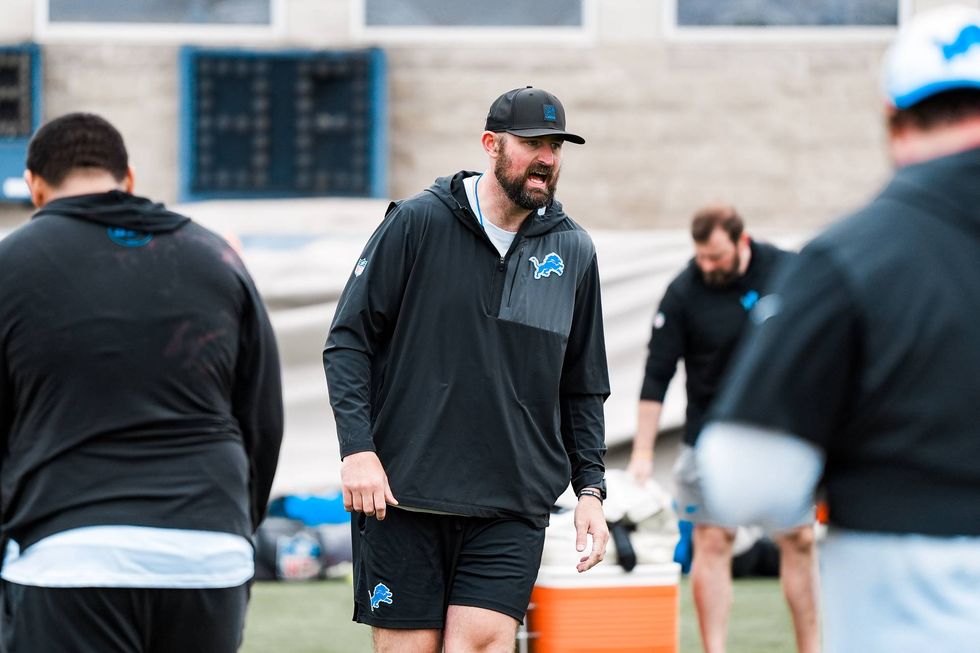
In his playing days, Skipper was known to spark fights in practice when temperatures rose in training camp. These days, “I’ve had a couple nice fights with the printer.” If the second floor of the Lions’ facility is breaking out in laughter, there’s a good chance that Skipper is trying to print in Excel.
“I need this copied and flipped, and it’s on regular paper and it needs to be on yardstick, and then magnified to 11 x 17, and formatted properly, and now the columns are too wide,” Skipper says, his blood pressure starting to spike. “I’ll be just mother-f**king the thing. I’m afraid to hit it because I know how expensive they are and I don’t feel like buying a new one. But I’ve definitely had some choice words for it. We’re on a little bit better terms now.”
Mesa chuckles and says, “Man versus machine, and support role versus printer, has always been a battle, at least in my experience.”
“I don’t think he gives himself enough credit, though,” Mesa adds. “He’s fairly tech savvy. He’s pretty sharp. We do player rankings throughout camp and our system was a little bit archaic before in terms of inputting the data manually and then having to go back and redo the rankings each time.”
Skipper has devised a new system with the help of AI and Microsoft Co-Pilot that interprets fresh data and spits out updated rankings. It immediately eliminated an hour of busy work from the process.
“He needs to give himself a little bit more credit,” says Mesa, “or maybe he doesn’t want the world to know that Big Dan Skipper actually knows his way around AI.”
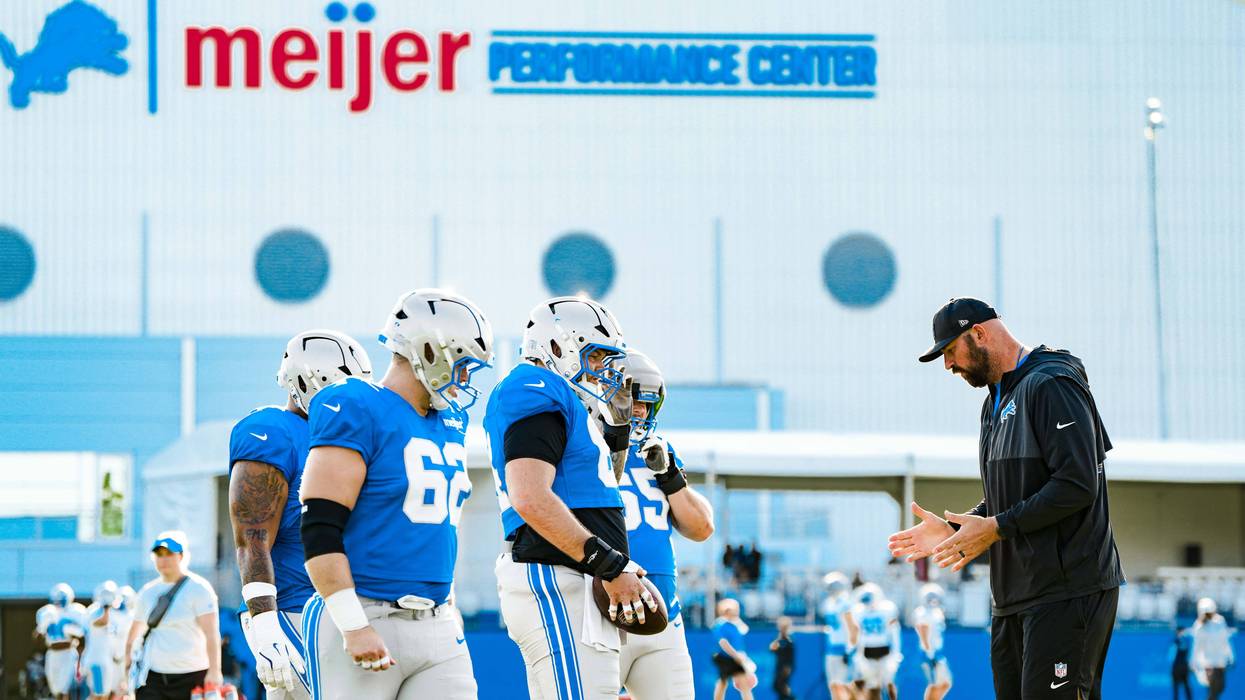
On the field, Skipper is in his element. He’s intense and demanding and extremely thorough. In the meeting room, he strikes a more conversational tone. Back in the spring, Fraley had Skipper run something the Lions call “center-quarterback school,” knowing the players would benefit from hearing a different voice. In camp, Fraley put him in charge of the individual drills for the offensive linemen. And “indy,” says Skipper, “should be the hardest part of practice” to the point that the players are relieved when it’s over.
“Because we’ve stressed you mentally and physically,” he says. “It’s not just a warm-up, f**k-around period.”
It did take a minute for his former teammates to view him as a coach. When Skipper gets after them for something, they can’t help but needle him a bit in response: “Alright, Coachhhh.” (“Like, that’s right!” Skipper laughs. “Get your pads down, dammit!”) But they listen to him because they know how much he’s learned, and because “there’s a passion about it for him to do things right,” says Mesa. “His experience of playing is invaluable for those guys. The players respect him. They really love him. He’s the kind of coach that can get on you hard, and they can let it pass and he can let it go.”
For Skipper, the most rewarding part of coaching is seeing something click for a player. The Lions are counting on second-year guard Tate Ratledge to take a big step this year after a strong finish to his first season. He was on his heels early in camp in his reps against Alim McNeill. Skipper gave Ratledge some pointers on blocking down on a 2i (a DT lined up on his inside shoulder): “Close the distance, don’t step back on him. Take your left foot, post it down, throw your hands. Don’t just sit back and clamp him. And then if he makes an outside move, great, you’ve got all this time to let him travel, but you shut down the immediate threat inside.”
“Next thing you know, he does it,” says Skipper, “and has a lot of success doing it. That was a cool little deal.”
Sometimes the coaching is more psychological. Other times more mental. The Lions are asking rookie Blake Miller to step in and stabilize the tackle spot across from Penei Sewell. He’s had an up-and-down camp, exposed at times by Aidan Hutchinson. Uncertainty can be crippling for a young player, especially in a complex offense like Detroit’s. Skipper has gone “above and beyond,” says Miller, to ensure the rookie has a grasp on his assignments, even if it means “explaining the same play to me four different times until it hits my head the right way.”
“And he understands what it’s like to be a player, it’s still fresh in his mind. There’s days where you doubt yourself a little bit and on those days, he’s been there for me and really emphasized to me, ‘Hey, you can do this. I see it in you.’ That’s been great to have to build back the confidence on days that you’re a little down,” says Miller.
Skipper considers his coaching style a blend of white-hot intensity and level-headed instruction. He counts four of his former coaches as his most influential. There’s Sam Pittman, his first offensive line coach at Arkansas, “funny as the day is long,” attune to each of his players’ specific needs, the kind of coach you “didn’t want to let down.” There’s Kurt Anderson, his second offensive line coach at Arkansas, a master of techniques. There’s Dante Scarnecchia — “Scar,” says Skip — the legendary offensive line coach with the Patriots whose fire-breathing style “changed my life, and kept me in the league” during Skipper’s brief stint in New England in 2019.
“It toughened me up,” says Skipper. “It made me grow up. I didn’t know I needed it, but I needed it — just the consistency of expectation. Like, ‘This is the expectation. You will do this, everyone else will do this, you will fall in line or I will just absolutely unleash on you,’ every day, every time, and it doesn’t matter who you are, if you’re the starting left tackle or the 14th guy on the practice squad. I would say Scar is one of my bigger influences from the perspective of, keep the standard the standard — right, wrong or indifferent. Little different coaching style than I think most people would choose, if they got to pick. But I think it’s necessary, at points.”
“And then obviously,” says Skipper, “Hank. He is a savant. You know he’s smart when you’re a player. Then you go upstairs and you’re like, ‘Holy s**t.’”
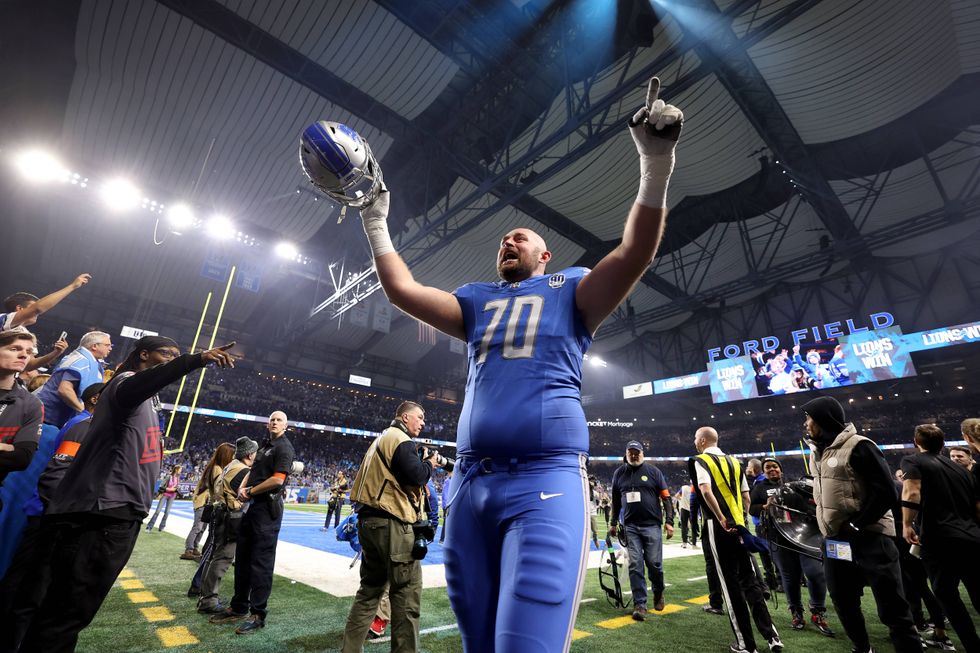 (Photo by Gregory Shamus/Getty Images)
Like white oak, Skipper burns hot. Unlike white oak, it doesn’t take much to get him going. There used to be a sign in the Lions’ facility, Campbell says with a laugh, that tracked Days Since The Last Skipper — that is, a Skipper skirmish in practice. He often puked in the locker room after games from the extreme emotional come-down. As a coach, he’s made a point to “regulate my emotions” and operate at a steady 7 instead of swinging wildly from 1 to 10. The only things that really trigger him “are effort, being lackadaisical, and acting like you don’t give a f**k.”
“I firmly believe that everyone here cares,” Skipper says. “You wouldn’t do this s**it if you didn’t care. But everything needs to matter. Everything we do, we do for a purpose. When we act like it doesn’t matter, like, ‘Ahh, it’s alright, next snap’ — no. That bothers me.”
The Lions ran out of snaps last season. Their signature strength turned into a liability after the departures of Ragnow and Kevin Zeitler and the physical declines of Decker and Glasgow. Behind a diminished offensive line, the Lions didn’t run the ball with the same authority. They didn’t protect Jared Goff with the same precision. They failed to punish their opponents the way they had in the past, as they fell from first to last in the NFC North. They were swept by the Packers and Vikings.
A few coaches and a couple players are trickling into the Lions’ facility when we pull into the parking lot a quarter after 6. Skipper backs into a spot and turns off his truck. He’s explaining his bond with Detroit, how he sees some of himself in “the turnaround of like, you’re beaten down for so long, and then a couple good things start to happen and it’s like, ‘OK, we’re comin.’ His stubborn persistence has endeared him to these people. He’s a worker. He’s been a cult hero since winding up on the wrong end of an officiating fiasco in Dallas late in the 2023 season. Skipper, Fraley and Mesa couldn't go anywhere in Indianapolis during this year's combine without Lions fans stopping them to ask Skipper for pictures and autographs, says Mesa. Skipper obliged every request.
”This city, man, they have accepted me with open arms. They rally around you, lift you up, keep you in check when you need it,” Skipper says. “It’s just a really special place. So, just trying to push every day, to make it mean something.”
This season will be defined by whether or not the Lions can reclaim the trenches. The other pieces are in place, especially on offense. But the offensive line has to be the engine. This mission resonates deeply with Skipper, who says, “Oh man, it’s personal. We ran this building for a long time. Our crew. You look back to the 15-2 team, ain’t no one left. Like, you got Penei. He’s the only starter left.”
“Yeah, it ain’t lost on us that this team will go as we go. We got great players all around the field. But if we screw up, ain’t no one coming to save us. It’s not like, defensively, you blow a coverage, Hutch can go get a sack. If we miss a linebacker in protection, Jared’s getting smoked. We don’t block the point, run’s dead. What are you gonna tell Jah when there’s two guys in the backfield? I’m not gonna call it pressure, but the expectation that perfection is the standard, and giving it everything you can to get as close as you can to that, that’s what matters.
“But yeah, we know. We know that it’s going to take absolutely everything to get there. And whoever’s in the room at the end of this (camp), it’s going to take every bit of everything they’ve got.”
Campbell isn’t hiding from this, either. It’s partly why he was so eager to bring Skipper aboard, “to have a guy who’s been through it with us and knows what it should look like, and somebody that can really supplement what Hank is teaching,” he says. But Campbell is quick to maintain perspective: the Lions were fortunate to have had so much experience and talent on the offensive line at the same time. When it aged, regression was inevitable.
“What we’ve got now, I think, are guys that in time can become those things. We’re still young in areas, but I love where we’re going,” says Campbell.
He believes in Miller, who’s made of the right stuff. He sees a possible pillar in Ratledge. He knows Cade Mays — the center of Detroit’s offseason plan — will be back in time, and he’s confident Juice Scruggs will hold down the middle in the meantime. The biggest remaining question is at left guard, “whether that’s Mahogany or Bartch or somebody else,” says Campbell. The competition remains open.
Campbell was encouraged by what he saw in the final practice of camp. The run blocking was solid and the pass protection was sharp, as the first-team offense moved up and down the field. It doesn’t have to be as dominant as it was before. It just has to be better than it was last year. Campbell motions toward the field and says, “What you saw out here today, that’s all they gotta do, man. Just play clean. Freakin’ do your job, be on point, fight them a little bit and our quarterback will find the throws and our playmakers will make plays. That’s it. But we can’t have penalties, we can’t have (missed assignments), we can’t whiff, and we will be just fine.”
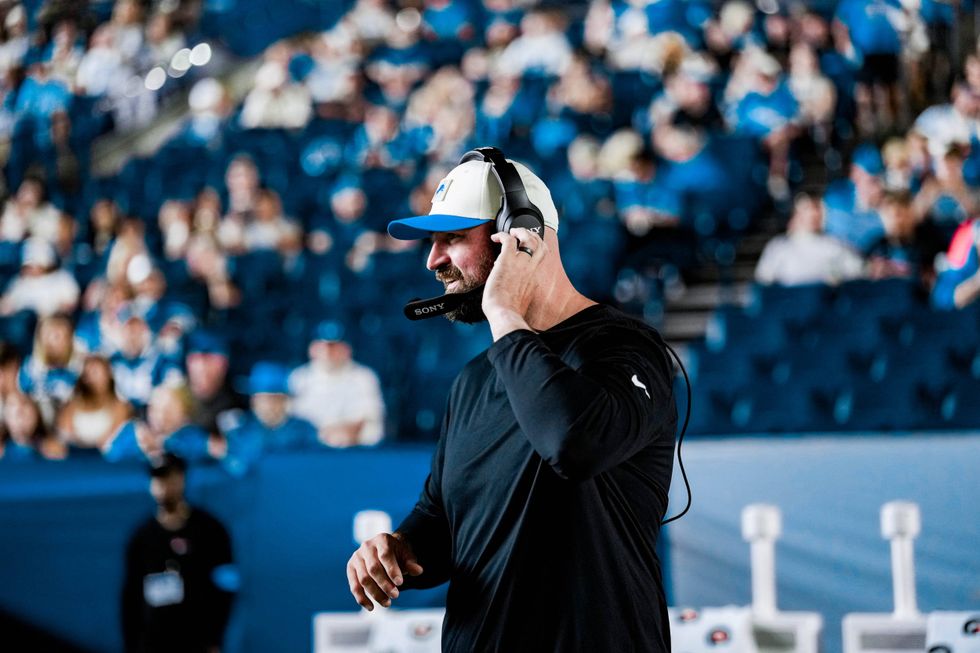 Detroit Lions
Both Campbell and Fraley see a future offensive coordinator in Skipper, perhaps even a head coach. Fraley, the Lions’ run-game coordinator in addition to O-line coach, says that Skipper “will be in this spot before he knows it. Sooner than later, I know that.” Coach Skip, they both say, is someone who can see the big picture, of an offense, of a locker room, of a team. His work ethic will fill in whatever blind spots exist. Asked about the future, Skipper acknowledges he has “aspirations to move higher, sure, absolutely.”
“Am I even close to considering the next step up right now? No. The David Blough rise — to go, in three years, from fresh off the field to offensive coordinator (of the Commanders at age 30) — I don’t see that in my future. Could it happen? Sure. Is that my goal today? No," Skipper says. "Right now I’m just trying to get my blitz tapes for New Orleans done properly, in the right order, with the right data input."
Some voids will never be entirely filled by coaching. That's the hardest part of stepping away. Skipper misses the freedom “of just going out and playing, letting it fly.” He admits to feeling “helpless” at times on gameday, wearing a headset on the sideline, seeing a pressure coming, and “just hoping your guys recognize it, communicate it and get it done.” He likens it to taking a test where you know the answers but don’t have a pencil: “Did you do a good enough job teaching someone the answers so they can go out and perform?” Playing is doing it yourself. Coaching is embracing the fact that no one can do it alone.
This is why Dan Skipper is Coach Skip, “to help our guys reach their potential, to be someone that cares enough to give them everything I’ve got every day, to try to get them to the next level.” And, perhaps, to get the Lions back to where they were.