


If the Red Wings are still rebuilding, they don't have an Opening Night roster that looks like it. If the Red Wings have set their sights on the playoffs, they're not exactly talking like a team that expects to get there. It leaves them in a strange place entering this season, loitering between two ways of life in the NHL.
It doesn't mean either is wrong. The Red Wings do have developing young talent on their roster in Moritz Seider, Lucas Raymond and Jake Walman. You could even place nine-year vet -- nine-year vet!! -- Dylan Larkin in this group. Indeed, if he's done developing, Detroit is in trouble. And the team does feel better about its chances in the East after adding another batch of proven players to the locker room. The Red Wings expect to improve this season.
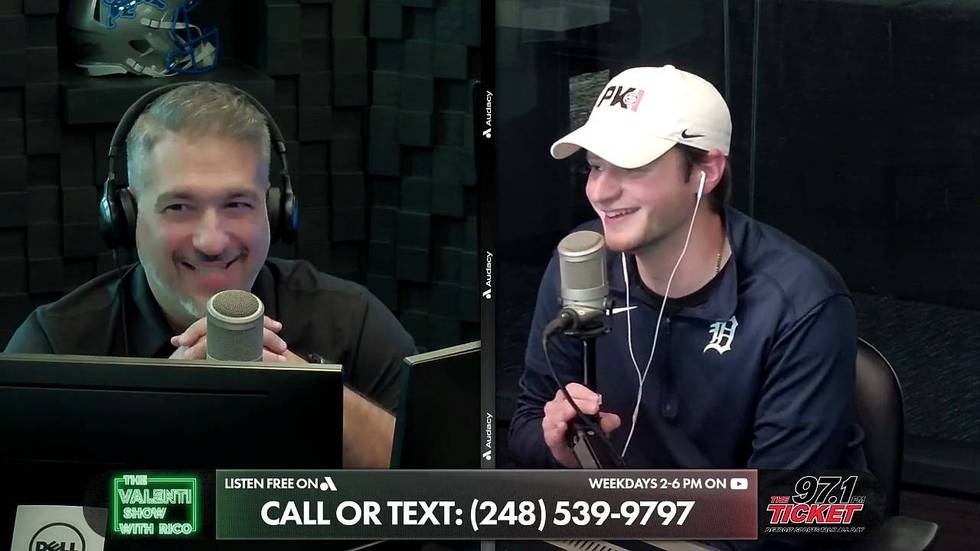
"We're deeper throughout," Derek Lalonde said Wednesday on 97.1 The Ticket. "Even talking in the office yesterday when these opening rosters came out, six players on our Opening Night last year are not even in the league right now. They're starting in the AHL, elsewhere or with us."
By our count, that number is actually four: forwards Adam Erne and Elmer Soderblom and defensemen Robert Hagg and Gustav Lindstrom. (The Wings might also have a freshly-signed $10 million defenseman starting in the press box, but we digress.) It nevertheless reflects growth in the team's baseline of talent, just not the sort of growth that fuels a future. The roster has been reshaped by veteran imports rather than rising prospects. Alex DeBrincat is the one arrival who alters the long-term outlook. You could make a case for J.T. Compher.
Steve Yzerman, to be clear, added vets as a way of shielding prospects from early exposure. In his own words, to "allow these younger players to develop and play at a reasonable pace, instead of just throwing them into the NHL and hoping they're OK." As Lalonde noted Wednesday, the Red Wings have more or less done the opposite in recent seasons without gaining much ground. Simon Edvinsson, Marco Kasper and Jonatan Berggren will start this season in Grand Rapids, and "no disrespect to Berggren," said Lalonde, "but he was forced to play for us last year where we were at."
"On this roster over the last three, four years, not only would those guys have been on the team, they would have been needed," said Lalonde. "And it's not good enough. Not in a bad way, it's just the reality of getting better."
But how much better? DeBrincat and others should help the Wings put more pucks in the net, which was their most pressing offseason need. Jeff Petry, Shayne Gostisbehere and Justin Holl, the free agent acquisition who's on the outside of the Opening Night lineup, should add punch to the blueline. Klim Kostin will add literal punches up front, a reflection of what looks like a more rugged group of forwards. All good signs. The Red Wings should certainly exceed last season's point total of 80 and could push 90 for the first time in eight years. That would put them in the playoff race.
"Last year going into the season, if you just looked at our roster, you could see the holes," said Lalonde. "I don't see those holes right now."
But Lalonde also talks about an "elephant in the room." It's actually outside the room: "No one -- and I mean no one -- has given us a chance to make the playoffs. There's not a single projection or a single expert out there who thinks we can. It's not a knock on our guys. The problem is our division and our conference." Lalonde said the Red Wings "just may be in a division with five or six of the top eight or nine teams in the entire league."
There are now two elephants in the room. And it's beginning to feel like the Red Wings are using one of them to hide, or to lower their own expectations. The Atlantic Division has some playoff mainstays and a good bit of top-tier talent -- show us a division that doesn't -- but it is far from the behemoth it was. It produced just two of the NHL's top 12 teams last season and three of its top 16, and the team at the very top just lost one of the greatest players in franchise history. And while it also features a few teams on the rise, aren't the Red Wings one of them? The Atlantic is no longer a barrier to success.
In the East, let's lock the Bruins, Maple Leafs, Lightning, Hurricanes, Devils and Rangers into playoff spots. But even those teams have flaws. Tampa, for example, might already be trending down and won't have Andrei Vasilevskiy for the first two months of the season. Perhaps this is exactly why the Red Wings are entering the year with a go-for-it roster, and maybe Lalonde is just using the nobody-believes-in-us mantra as a motivational tactic. But as we wonder what to make of the Red Wings this season, it's hard to know what they make of themselves.
"I get it," said Lalonde, "we're not star-laden like many teams in our division and conference. There's a reason no one's really giving us a chance. But you just want a chance, and I think we've done that. I think we're going to be right there, and now it's up to us to go do it."
That's spoken like a coach with more confidence. The reality is, as Lalonde likes to say, this is likely another bridge season for the Red Wings. They're waiting on a rising current in Grand Rapids, while trying to paddle upstream in Detroit. The hope is that those tides merge as the season progresses, and injuries will almost certainly lead to call-ups sooner than later. The question, as we drown in methaphors, is whether the Wings can do more than tread water.
They have attacked the last two summers like a team with playoff aspirations. They would be doing themselves a disservice this season to aim any lower. They have also emphasized the need to infuse the roster with young talent, and they won't have a single first- or second-year player on the ice when they start the season Thursday night. It leaves the Red Wings with two extreme outcomes in year five under Yzerman: they make the playoffs with a boost from their prospects, or they come up short while playing the vets.
The most likely outcome is something in the middle, where life is mushy and hard to define.