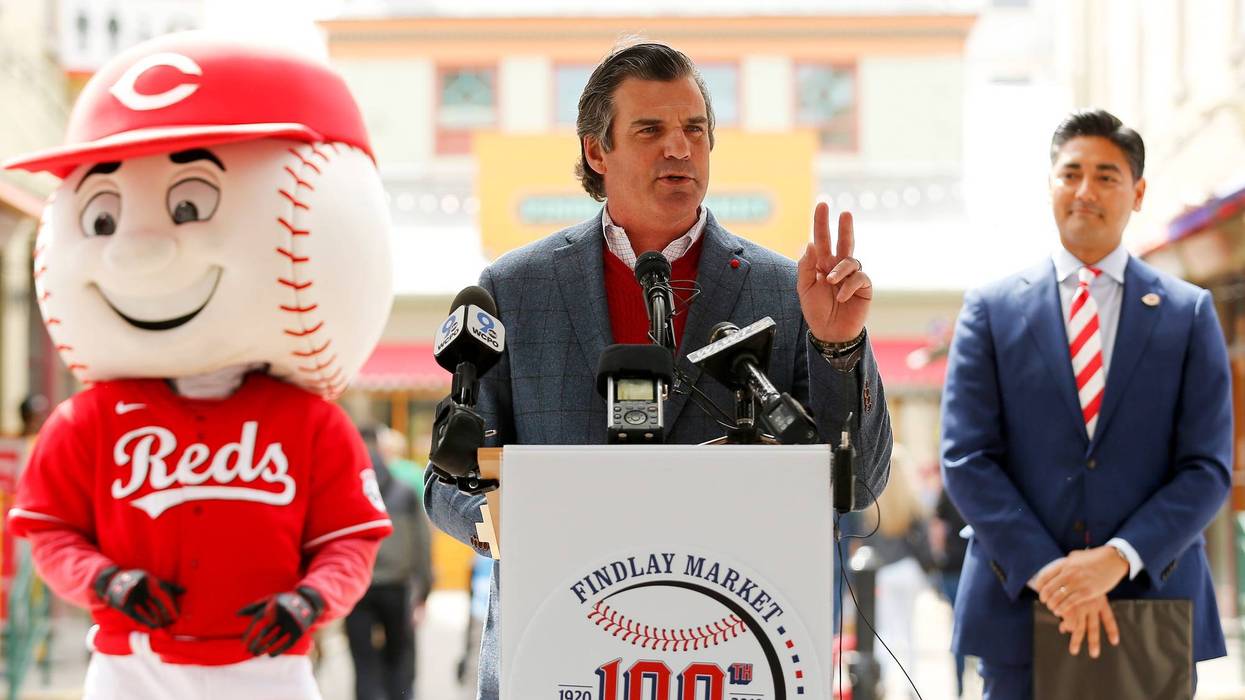

Imagine running a restaurant with terrible service, undercooked food, broken chairs, and an infestation of roaches. Then, imagine customers stop showing up, and predictably start to complain about your ownership abilities. When asked what you'd tell those frustrated patrons, you answer, "Well, where you gonna go?" This is how Cincinnati Reds president Phil Castellini responded to a beleaguered fanbase that's watched its favorite establishment fire its wait staff, fail health inspection, and serve pink chicken breast.
There's an unfortunate truth here. Loyal fans don't have many options. Sure, Reds lifers can ignore the team and follow FC Cincinnati to get their summer sports fix. They can pour themselves into the Single-A Dayton Dragons. They can spend the entire summer playing cornhole and lawn darts. But nothing is truly going to replicate the joy a fan feels from their favorite team, and these owners know that. It's the single best business proposition going. Buy a professional sports team for what appears to be an exorbitant price, and watch its value hit even crazier stratospheres.
Pat Bowlen bought the Denver Broncos for a then eye-popping $70 million in 1984. The team is currently up for sale and could fetch more than $3 billion. In 1986 the New York Mets sold for $81 million. Hedge fund kingpin Steve Cohen just purchased the club for $2.25 billion. Bob Castellini took over the Reds in 2006 for $270 million. Forbes recently listed the franchise's worth at $1.19 billion.
This is significant, because MLB owners tend to enjoy telling us how little profit they generate. If you listen to them, players' salaries are too high, television contracts don't cover the bills, and they're clipping coupons when they head to the supermarket. But in a mere 15 years, the Castellini family would make nearly a billion-dollar profit if they were to sell. Not a bad return on a team in one of the smallest markets in the league that hasn't advanced in the playoffs since Castellini took over.
Bob's fortune comes from his fruit and vegetable wholesale business. He's a member of the Greatest Generation, a man born during World War II, raised a Reds fan in Cincinnati and proud owner of his childhood team. But he's handed the keys over to his nitwit son, who acts exactly like a person who didn't build his own wealth by hauling turnips and cantaloupes. He acts exactly like a person who was handed plum jobs his entire life by his dad, with no idea he has the intelligence of a turnip.
The Reds have decided the best way to operate is by stripping down the payroll to its studs. The front office has sold off, traded, or watched all of its best talent leave for more money. The Reds are following a blueprint set up by the Chicago Cubs and Houston Astros in recent years by aiming to lose plenty of games for three to four years. But hoping by drafting high picks and collecting minor league talent, they can build the nucleus of a winner that blossoms at the same time.
This is a defensible plan, and it's certainly not unique. Chicago and Houston won the World Series this way. The Baltimore Orioles, Miami Marlins, Pittsburgh Pirates, Detroit Tigers, and Cleveland Guardians have undergone the same growing pains to varying degrees of success. But if you're going to walk down this road and prepare the fanbase for a few years of 100-loss seasons, you might want to ask for forgiveness and patience in return.
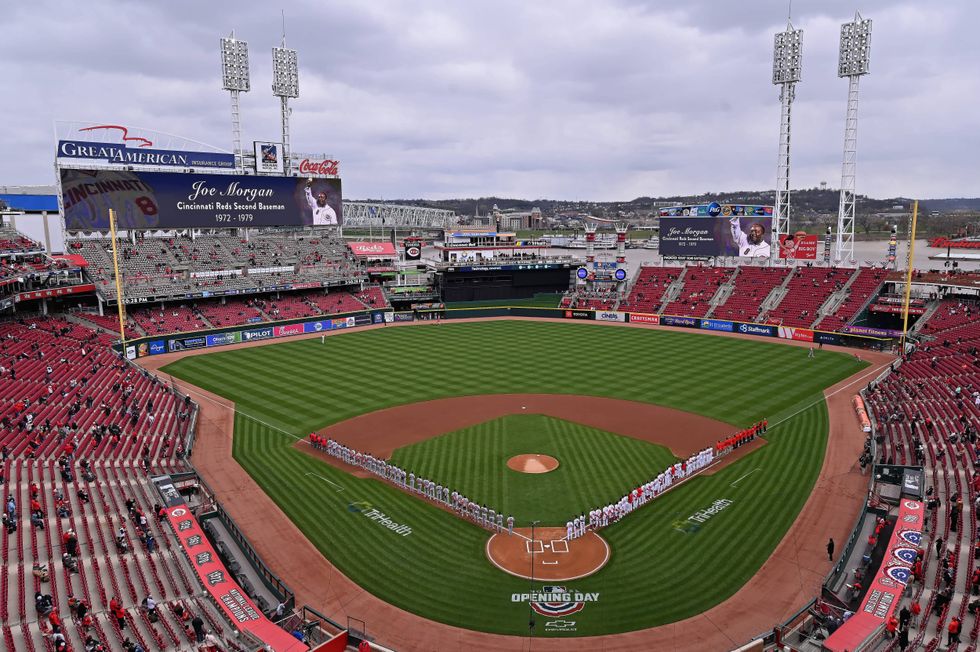
When teams rip apart their rosters, ticket prices don't usually drop in tandem. Last-place finishes don't mean $3 beers and 75-cent popcorn. You don't get to suddenly park for free. So when Phil was asked this week before the home opener why fans should still trust this front office as they embark on a voyage of tag-sale results at designer prices, he should've been diplomatic.
 Jamie Sabau / Stringer / Getty Images
Instead of mentioning how passionate and loyal Reds fans are, he dismissed them. Instead of asking for understanding, he threatened them. Instead of embracing one of our best baseball cities, he was hostile to it. He acted like an entitled rich kid who was told the teachers are going to fail him, then proceeded to make fun of their haircuts and Toyota Corollas.
"Well, where are you going to go?" Castellini said on 700-WLW. "Sell the team to who? That's the other thing: You want to have this debate? What would you do with this team to have it more profitable, make more money, compete more in the current economic system that this game exist? It would be to pick it up and move it somewhere else. Be careful what you ask for."
If Castellini was running a vegetable wholesaler, like his dad, and delivered rotten lettuce every day and employed drivers who arrived two hours late -- whose trucks were dirty and broken down -- supermarket owners would go elsewhere. If he was running a restaurant that provided terrible service and undercooked food, patrons would stop coming. But the spoiled kid who runs a sports team knows he's got a customer base who'll keep returning, no matter how bad it gets. It's nearly impossible to get this loyalty out of our blood. It's not an option, it's an identity. It's not a choice, it's family lineage. When Nikes give you blisters, you buy Adidas. When the Cincinnati Bengals stink, you don't adopt the Cleveland Browns.
When given a chance to apologize to fans, Castellini was defiant. Of course he didn't see anything wrong with what he said. Finally, after hours of clearly being told how egregious this stance was, he issued a pathetic three-sentence memo. It was clearly written by the PR department. The emotional manipulation and outright hostility to his own fanbase was jarring and offensive by any standards. I raked him over the coals on my show last week, and was met by an outpouring of gratitude from Reds fans. They wanted to thank me for giving them a voice to their frustrations.
While I appreciated every single one of them, the thank yous were unnecessary. I stand with Reds fans. It's like being in a fight with your significant other and that person telling you, "You're mad at me? Where are you gonna go anyway? You're ugly, you're broke, and you're lucky to have me. Now I'm going out to the bar and you better have dinner ready when I get home." Castellini is an abusive partner. We should all be aligned against him.
Unlike the fans he told off, he's never had to work a 9-5 to pay the bills. He's never had to scrape together the money to go see a Reds game, buy a jersey, plunk down for parking. His fans work to support their passion. Phil Castellini was handed a job running a baseball team without any experience needed. He aced the interview process by being born to the right guy.
"Where are you gonna go anyway?" is one of the most arrogant and offensive statements ever uttered by an owner. It could only be spoken by a guy who has no clue about work ethic and loyalty. I'll turn the question around for Phil: if daddy didn't buy you a baseball team, where were you gonna go?