

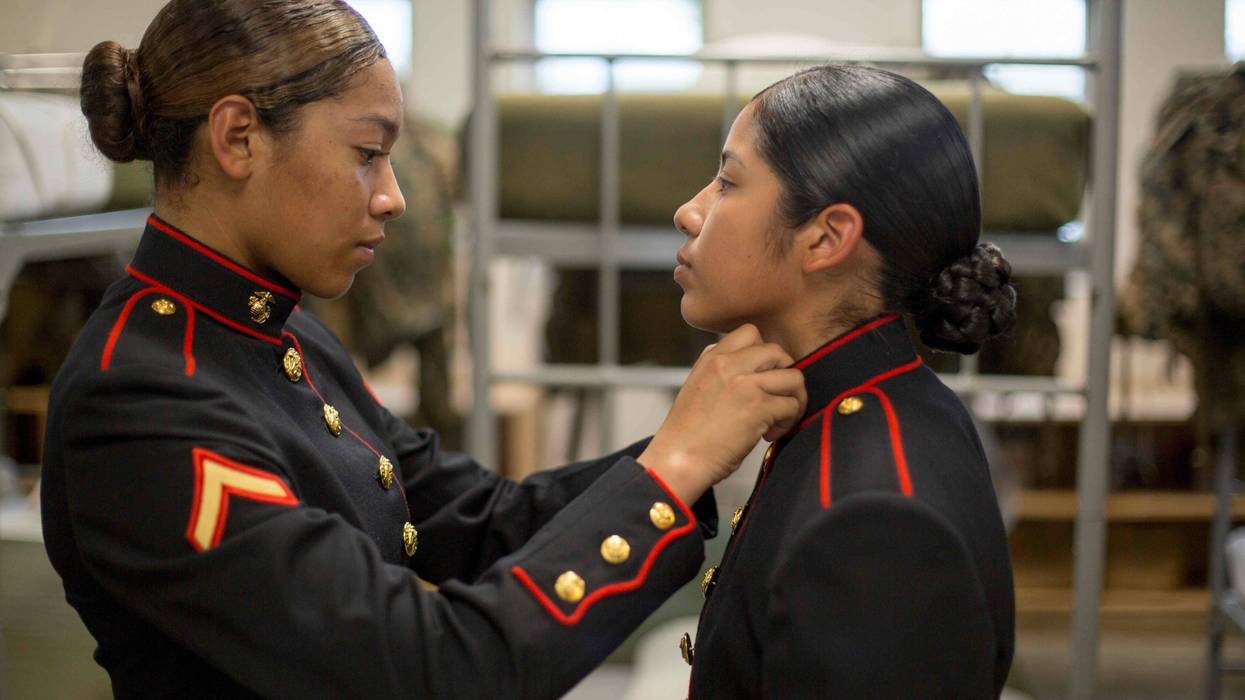

Sexual harassment affects two out of every three female military service members, according to a recent study conducted by the Smithsonian. The study polled Stars and Stripes subscribers on a number of policies and cultural aspects of being in the military. The results confirmed what we generally already know — being a female in the military comes with unique challenges.
On one hand, the female role in the military is still developing. While 70 percent of respondents supported the deployment of female troops in ground combat situations, 30 percent do not. And, while the majority may support women in ground combat, the majority also believe that they reduce physical training standards in gender-mixed basic training environments.
And even as the female role in the military expands, women are facing discrimination when they get into those roles. 68 percent of females say they have experienced gender-based discrimination. 42 percent of females have witnessed another service member being sexually harassed or assaulted. And 66 percent of female respondents say they have personally experienced sexual assault or harassment — that's ten times more likely than their male counterparts.
According to the Smithsonian, the level of mistreatment demonstrated by the study is twice as high as other recent studies have reported — and the Department of Defense's own documentation of sexual assault and harassment only accounts for reported instances. For example, the Department of Defense's annual Sexual Assault Prevention and Response Office annual report documented 5, 277 complainants of sexual assault and 419 complainants of sexual harassment. These percentages are far lower than the percentage of military service members who said they had been sexually assaulted or harassed in the Smithsonian study.
There are several possible reasons for such a high difference in numbers. Since the majority of sexual assault and harassment cases go unreported — especially so in the military — it's difficult to compare the Smithsonian's anonymous respondents to the DoD's annual document on reported assaults. The DoD, unfortunately, does not have a comparable study to the one the Smithsonian conducted. If the DoD only collects data on instances of sexual assault and harassment that are actually reported, they may not be seeing the true extent of the problem in the military.
Want to get more connected to the great stories and resources Connecting Vets has to offer? Click here and sign up for our weekly newsletter.