


It began with a shudder.
June 12, 2004. The sky over Taji, Iraq, shimmers in the heat as U.S. Army Chief Warrant Officer 4 Brent South, strapped in the seat of a Kiowa Warrior OH-58D helicopter, scans the terrain below. His breath catches as he spies soldiers forced to their knees in the dirt – the unmistakable posture of execution. As South and the pilot of his companion helicopter cut through the sky their shadows swept across the ground, causing the would-be executioners to flee.
But South’s mission wasn’t over – he returned to refuel fast, too fast. A four-vehicle convoy had formed and he pushed to intercept. No time for delay. No time to complete an assessment of the fuel. A costly mistake.
On his return, the engine sputtered. Alarms wailed. In the next instant, there was a sudden loss of power and a breathtaking drop. Metal screamed, rotors shattered, and the world spun violently. South’s last conscious view was an upside-down horizon and water all around him.
He woke up in the Combat Army Surgical Hospital in Baghdad. Groggy and disoriented, the first thing he heard was a British voice asking him how he ended up there. As South shared his story, the man began sobbing. By a twist of fate, South had been placed in a hospital bed next to one of the men kneeling in the desert. A man who had been seconds from death.
South had sustained extensive injuries. A traumatic brain injury, 13 surgeries followed along with physical therapy, chiropractic care, cognitive behavioral therapies like EMDR. Each step forward came with pain and the weight of memory. He had spent a lifetime running toward danger, now he was faced with the aftermath.
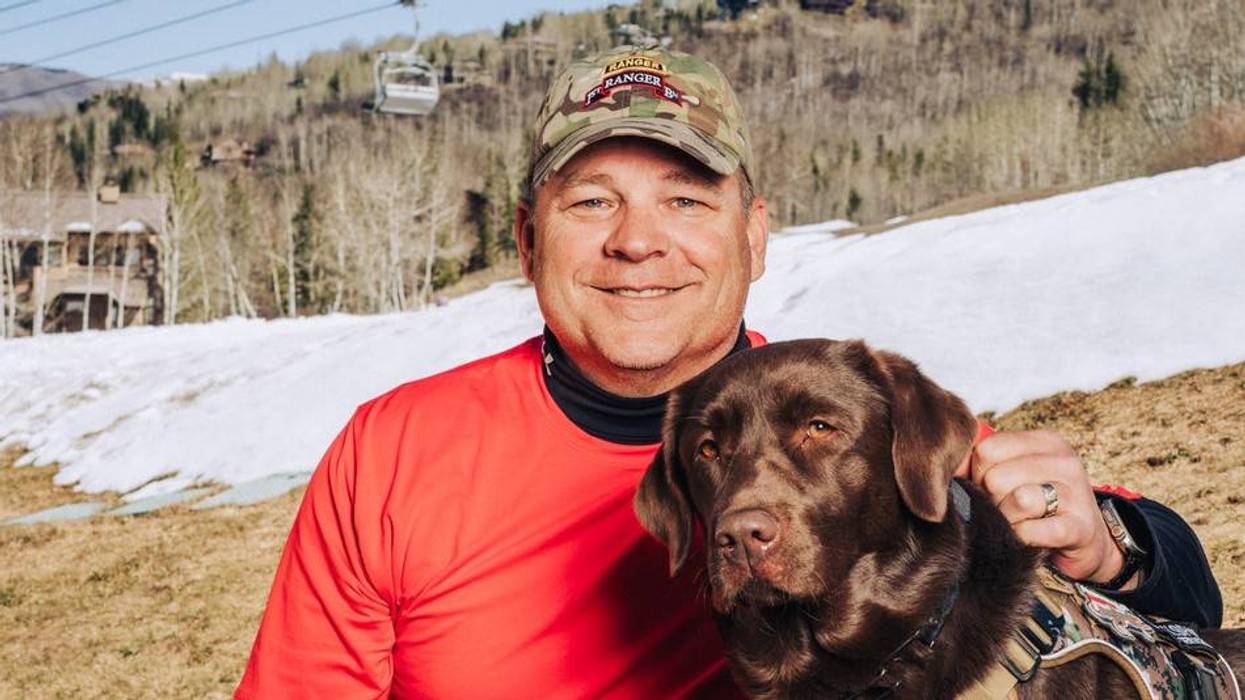
He had enlisted in 1989, beginning his career in the 1st Ranger Battalion. From there he rose through the ranks, becoming a warrant officer and eventually a helicopter pilot. Later he was tapped as an experimental test pilot and then an instructor. His deployment theaters spanned Bosnia, Iraq, and Afghanistan.
Adjusting to his “new normal” did not come easy. Years of service had taught him to operate in chaos, but not necessarily how to sit with an invisible weight.
 U.S. Army Chief Warrant Officer 4 Brent South offers a thumbs up from seat of a Kiowa Warrior OH-58D in Taji, Iraq, June 12, 2004. South survived a crash that destroyed a helicopter, and nearly took his lifeDVIDS
On his journey, he discovered the National Disabled Veteran’s Winter Sports Clinic and in 2015 he attended the event with the Tampa VA Health Care System. The clinic, hosted by VA and DAV, now in its 40th year is hosted each year in Snowmass, Co. It allows profoundly disabled Veterans to participate in adaptive Alpine and Nordic skiing, sled hockey, scuba diving and a number of other adaptive activities, sports and education.
The first year he kept to himself. But something shifted the second year. Maybe it was an awareness of the quiet resilience of the other veterans. Or maybe it was the realization that healing wasn’t meant to be done alone. He started showing up.
And that became his message to other veterans. Get out there and share your experience, because, as he tells people, “You can’t help everyone, but everyone can help someone.”
Today, South is an advocate. He speaks publicly, not for recognition, but for understanding. He wants civilians to grasp, if even in part, what veterans have carried. The decisions made in seconds, the consequences that last decades. Most importantly, he wants them to know something else: their support matters.
That when they donate to organizations supporting veterans, they are not giving to a concept, they are investing in recovery.
Brent South survived a crash that destroyed a helicopter, and nearly took his life. But that isn’t what defines him – it’s the life that he built afterward and his commitment to making sure no veteran has to navigate the aftermath of trauma alone.