


Leave it to Ray Ratto to ask the question MLB fans have all been wondering: Why does Rob Manfred look like he eats puppies to stay alive?
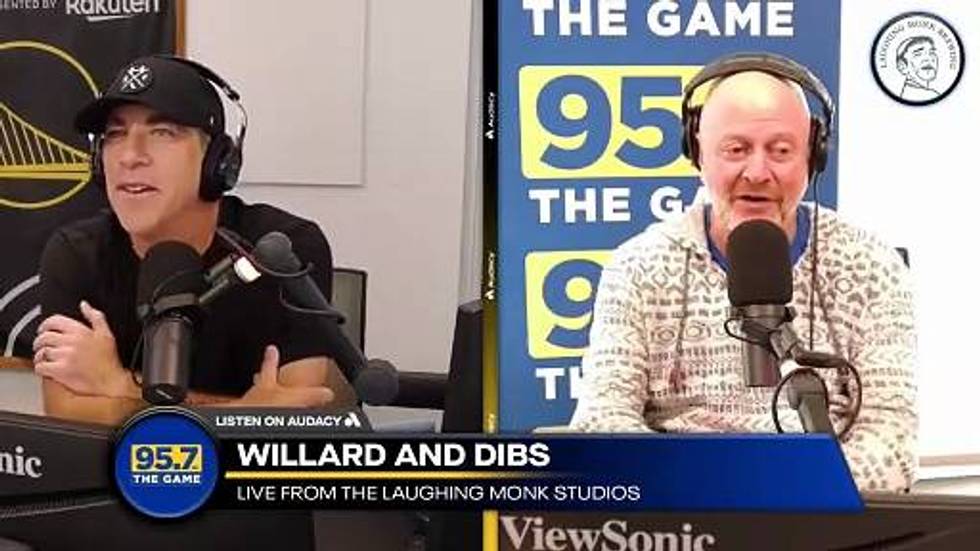
Ratto posed the question to ESPN’s Tim Kurkjian during Wednesday’s “Damon & Ratto” show on 95.7 The Game. You can hear it at the 14:21 mark below:
Kurkjian joined Ratto and Whitey Gleason (filling in for Damon Bruce) to discuss the MLB commissioner, anonymity of today’s owners and more. As for Ratto’s hilarious line of questioning, Kurkjian played it off like a true pro.
“It’s really amazing the beating that he has taken here,” Kurkjian said. “I’m certainly not going to defend him. This is on his watch, he’s in charge of this and it hasn’t worked yet. He has to take part of the blame here.”
Before MLB’s 30 owners elected Manfred to become commissioner in 2014, he was one of the league’s chief negotiators and helped forge new Collective Bargaining Agreements in 2002, 2006 and 2011.
It’s worth noting whose side Manfred used to represent comes to the owners vs. players dynamic during ongoing lockout negotiations. Perhaps he isn’t the most partial person to preside over the situation.
“Rob Manfred is part of the problem here,” Kurkjian said. “In part, because he negotiated the last couple of deals here from the owners’ side. He did such a good job in winning some of them, that it’s hard to live up to some of the good things that he’s done. The bottom line is this, it just doesn’t make any sense that he is hired by the owners and he works for the owners, when he should be looking out for, like every commissioner, the best interests of baseball.”
Kurkjian thinks the precedents Manfred help set have led the owners to dig in their heels at the negotiating table. On Tuesday, Manfred announced that the first two series of the regular season have been canceled.
“I think the owners kinda misread the resolve of the players,” Kurkjian said. “I think they know, ‘We crushed them in 2016, we’re gonna crush ‘em again because we’re better than they are at this.’ Then they decided, ‘We can go to the last week and we can get what we want because they’re gonna give it up.’ Then they didn’t. They misread that.”
Kurkjian also pointed out the relative anonymity MLB’s owners enjoy while holding the game hostage.
“I don’t know who’s in that room any more,” Kurkjian said. “This is part of the problem – we don’t know who the owners are any more.”
Listen to sports talk now on Audacy and shop the latest MLB team gear
A’s owner John Fisher has only granted one interview since taking over in 2005, which came in 2020 when he spoke to the San Francisco Chronicle’s Susan Slusser about his decision to reverse course on stopping $400 minor league player stipends during the pandemic, and to furlough front-office employees. One damage control interview in 17 years.
Giants principal owner Charles B. Johnson, 89, has also maintained a low-profile. In 2012, he granted an interview with the San Francisco Chronicle’s Gwen Knapp, on the condition the interview only broached his personal life and not team business matters.
It didn’t always used to be like this.
Kurkjian remembers when former Milwaukee Brewers owner (and Manfred’s predecessor as MLB commish) Bud Selig used to greet visiting reporters.
“He used to come in the press box every time a visiting team would go through,” Kurkjian said. “When I covered the Rangers and the Orioles, Bud Selig – the owner of the Brewers – would walk through the clubhouse and talk to all the visiting writers. Every single time I went through there for 10 years. The thought of that happening today? I can’t even imagine. These owners just don’t speak publicly. We don’t hear from hardly any of them. We don’t know who they are. Therefore, it’s difficult to tell who is the big voice in the room. That’s part of the problem.”
When it comes down to it, Kurkjian thinks today’s owners simply don’t have a passion for the game.
“I don’t sense that they really like baseball,” Kurkjian said. “They have other businesses. This is just another business for them. If they lose a few games, they have another business to cover it. Whereas baseball players – you can say what you want about them – they don’t have another job. … I just don’t sense that [the owners] love the game. I don’t sense that they love the players on their own teams.”