

What to expect from President-elect Donald Trump's first 100 days in office

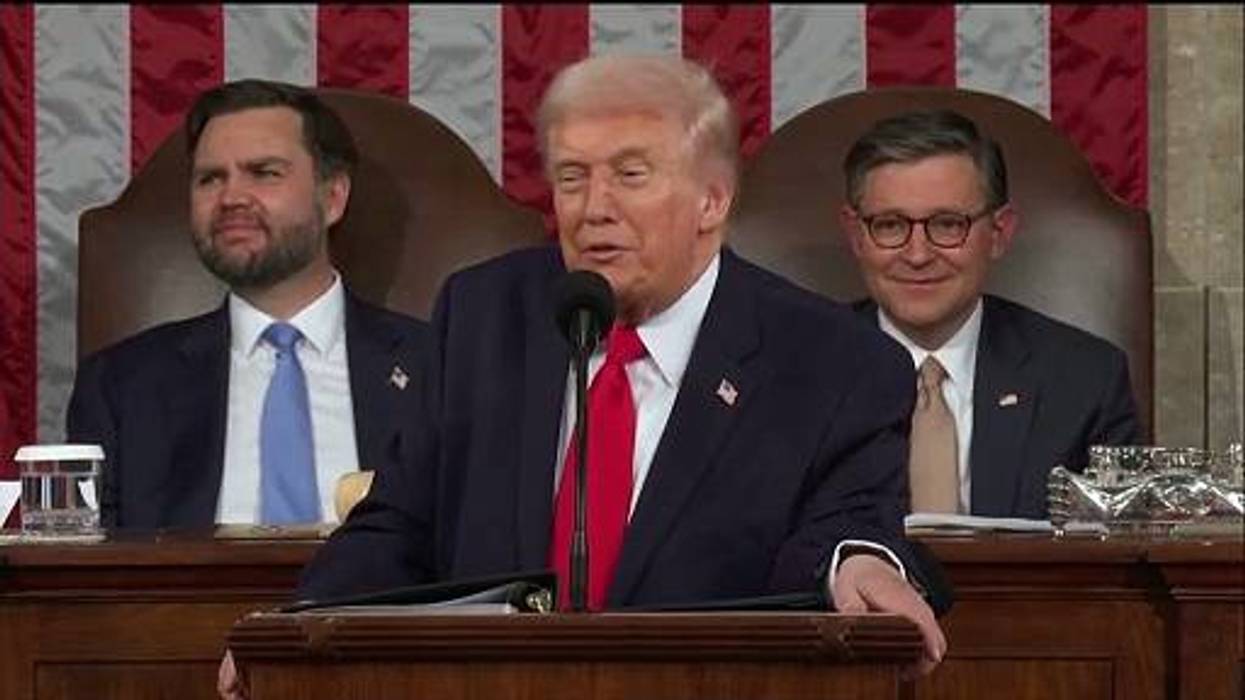
Ever since Franklin D. Roosevelt worked to pull the nation out of a depression during his first 100 days in office, that timestamp has been used to measure new presidents. With a new administration incoming, what can we hope to see in the 100 days after Jan. 20 of next year?
Former President Donald Trump, now president-elect, has been vocal about his main priorities upon taking back the White House. These priorities are focused on the economy, immigration and rolling back policies supported by sitting President Joe Biden.
In a Friday Truth Social post, he previewed some of his policies, including a goal to make expenses more affordable and ID requirements for voters.
Presidents might be routinely measured by their first 100 days in office, but Trump has said wants to get some things done on his very first day. According to a rundown of Trump's immediate plans from NBC News, immigration is at the top of the list.
"Day 1" plans
"Trump has said repeatedly that on Day 1, he will 'seal' the southern border and begin what he calls "the largest deportation program in American history," which is expected to cost billions of dollars and require staffing increases.
Another "Day 1" plan includes ending the Russian invasion of Ukraine. Trump has said he also wants to put an end to the ongoing war in the Middle East. Audacy covered more on those plans here.
Yet another "Day 1" proposal from Trump is related to what NBC called "culture wars."
"On Day 1, I will sign a new executive order to cut federal funding for any school pushing critical race theory, transgender insanity, and other inappropriate racial, sexual or political content onto the shoulders of our children," Trump has said, according to the outlet. "And I will not give one penny to any school that has a vaccine mandate or a mask mandate."
In the same culture wars-vein, Trump has also said he plans to "get rid" of the Education Department and leave education up to states. He also said that under his administration there will be no tax on the first $10,000 of costs associated with education for parents of children who are homeschooled.
Economic plans
Regarding the issue the voters routinely said was the top concern, the economy, Trump has also revealed some plans.
These include ending inflation, which softened this year after a years-long streak of increases in the wake of the COVID-19 pandemic. This week, the Federal Reserve Bank also cut interest rates for the second time this year, making it easier to for Americans borrow money.
"We will target everything, from car affordability to housing affordability, to insurance costs, to supply chain issues," Trump said at a rally in North Carolina in August. "I will instruct my Cabinet that I expect results within the first 100 days or much sooner than that."
Going forward, Trump has also proposed removing taxes on tips, overtime and Social Security. The president-elect has also offered a tax credit for family caregivers who take care of a parent or loved one.
At the same time, Trump has said he wants to lower the corporate tax rate from 21% to 15%. He also wants to impose a 10%-20% tariff on all imported goods, too, as well as a tariff of between 100% and 200% on all businesses from countries that don't want to use U.S. dollars as their reserve currency.
"In September, Trump called for reinstating the state and local tax deduction, commonly known as SALT," said NBC. "In 2017, Trump signed the legislation that capped the previously unlimited federal deduction at $10,000 per filer. The policy hit people in blue states the hardest. Even though Trump signed that measure, he has pledged to undo it."
Trump has also recruited tech billionaire Elon Musk to analyze federal regulations in an effort to help Americans save money and to promote job growth.
Other initiatives
A reversal of Roe v. Wade delivered by a conservative leaning Supreme Court that includes three Trump-appointed justices was unpopular. Although he praised the ruling, Trump has said that he would not sign a federal abortion ban if it crosses his desk.
Still, that doesn't mean that Trump doesn't plans to dismantle much of what the current Democratic administration put in place. For example, he plans to walk back environmental initiatives such as an electric vehicle rule announced in March.
He's gearing up to tackle a mountain of legal issues he's faced over the past four years, including his conviction on 34 criminal counts this year. Audacy explained how, as president, it is likely that he'll be able to get out of most of his legal challenges, including potential jail time.
"Trump made his belief that he is the victim of political persecution a centerpiece of his campaign, and he frequently promised 'retribution' for his enemies," said NBC.
What can he really get done?
Even if Trump has control of both Houses of Congress, there are still challenges to overcome as far as making his initiatives a reality. He was in the same position back in 2016 and still wasn't able to follow through on many of his campaign promises within 100 days, according to the Illinois Law Review.
"Trump himself took office with no prior political experience and an uneasy relationship even with congressional Republicans. It comes as no surprise, then, that most of the items in the Contract with the American Voter have not been achieved. Indeed, if there is a single theme to Trump's first 100 days, it has been learning how things get done rather than getting them done," the review said.
This time, he has more experience. However, that's doesn't guarantee success.
"Biden knows his way around Congress: he served in the Senate from 1973 to 2009. Trump, by contrast, had held no federal office at all before he entered the White House. But when Trump became President... ago, Republicans controlled both the House and the Senate. Biden started his term with a Senate split 50-50 and Democrats holding only a narrow lead in the House. Biden's legislative agenda necessarily requires cooperation across political divisions," said the Illinois Law Review in 2021 after Biden served his first 100 days as president.
Biden has also faced challenges in the form of lawsuits from conservatives, including one that recently blocked a new immigration program. Trump should expect to face similar challenges from Democrats, who have said they plan to use the courts to prevent some of his initiatives, according to NPR.
As they wait for inauguration day, other Republicans, including House Minority Leader Steve Scalise (R-La.) and Speaker of the House Mike Johnson (R-La.) have announced plans to support Trump through his first 100 days.
"With Republicans in control, we will secure the border, grow our economy, restore American energy dominance, and end the radical woke agenda," said Johnson.