


(670 The Score) Baseball players all look more and more alike, and that's too bad. Styles are what make sports fun and interesting, particularly at the highest levels of any given craft, the idea that there's no one way to be great and so many creative ways to make the most of what one has.
But individuality is being replaced by understood best practices and from younger ages than ever for those on an elite track. There are now preferred methods to create the most efficient pitching deliveries and fastest, most powerful swings. Look from one great young player to another now, and it takes a keener eye to detect signature methods or approaches that used to jump out at us in more obvious ways, those differences sanded down by YouTube's shrinking of the world and readily available expert coaching.
This is about making a point to celebrate the unique talent of Ichiro Suzuki, but it's also a lament about standardization of brilliance.
Our interconnected competitive world no longer encourages divergence from the accepted right ways to do things, meaning PGA golfers' swings all carve a similar arc, with Jim Furyk's upright take-back and hand-lift a vestigial reminder of a time when Lee Trevino's open stance competed on the same course with Arnold Palmer's helicopter finish. NFL quarterbacks have their arm action shortened and un-hitched starting in high school, all in order to please the eyes of unforgiving scouts unready to risk reputations on something odd, even if effective. We won't come across another basketball Hall of Famer who plays quite like Adrian Dantley, because such development wouldn't be allowed to occur. Put all of the NHL's 6-foot-2 butterfly goalies in identical outfits and try to identify them by how they react and move (hint: you probably can't). Even in mixed martial arts -- an entire sport designed to pit one distinct fighting style against another -- evolution has homogenized the way the athletes do their jobs.
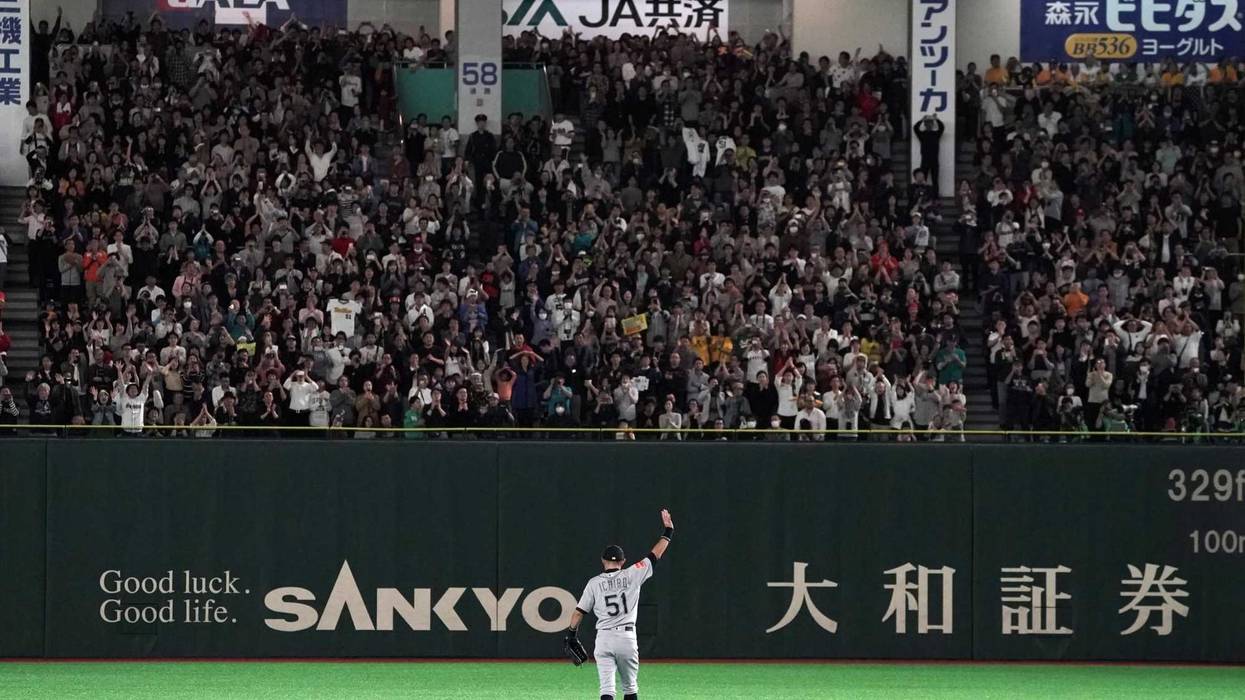
So when someone like Ichiro walks off the field for the last time as he did Thursday in Japan as his Mariners faced the Athletics, we acknowledge not only that he'll be missed but also why.
He isn't even a naturally left-handed hitter but made that way by an obsessed father who wanted his speedy son to exploit the advantage of being closer to first base. His stance and swing were constructed to maximize the leverage of whatever body weight he had, and every movement he made on the field was the product of a larger plan, his devotion to routine becoming legendary.
That was my first memory of seeing him play in Chicago during his rookie season of 2001. It was the lengthy and specific warmup regimen, his batting practice approach and the stretching both in between pitches while in the outfield and while in the on-deck circle. His actual play was spectacular enough, the preternatural bat-to-ball skill, straight-line speed and powerful and accurate throwing arm, but what was going on in between all that was fascinating in itself. Nobody else did that.
Ichiro's stat comps as a batter on baseballreference.com speak to this too, taking us back into the 1800s for similarity scores before settling nicely into both the dead-ball era and the Astroturf swards of the slap-happy 1970s. It means something that there's no easy way to describe Ichiro with either words or numbers.
He was a sui generis ballplayer, a species of a new kind outside of previously accepted taxonomical structure. There are fewer of those in sports with every passing day.
Ichiro is gone from baseball, and there won't be another.
Dan Bernstein is a co-host of 670 The Score's Bernstein & McKnight Show in middays. You can follow him on Twitter @dan_bernstein.