

Major League Baseball has a lot to figure out before the Toronto Blue Jays have to figure out where they will play games this season. At this point, the MLB and the MLB Players' Association have gone back-and-forth on return to play plans with no agreement in place.
Should the two sides finalize something at some point, the Blue Jays may have the added wrinkle of being across the border. If play resumed tomorrow, the Blue Jays would certainly have to find a place in the United States to play with the border closed due to the COVID-19 pandemic.
Mike Wilner, play-by-play man for the Blue Jays on Sportsnet 590 The Fan in Toronto, pointed out with Schopp and the Bulldog on Tuesday that they could end up playing at their Triple-A affiliate's stadium in Buffalo.
"Right now if the season starts, I can't imagine they'll play in Toronto. With the border still closed and having to quarantine for two weeks if anyone would come in. I don't think they want to play in Dunedin... A lot of people are saying, 'hey, maybe they play in Buffalo.' Think it's a reasonable thought they play home games in Buffalo."
Dunedin is the Blue Jays' spring training location in Florida. Wilner, in his reasoning for why the idea makes sense, mentions Dunedin not having proper lightning for Major League Baseball. Also, the Blue Jays would then have to share the market with the Tampa Bay Rays.
Buffalo has everything the Blue Jays need in a return to play, in a time where crossing the border is challenging. Sahlen Field would be much more accommodating, in terms of stadium lighting, for television purposes. In addition, Buffalo's proximity to Toronto, compared to Florida's, may make it the favorite to host Blue Jays home games.
Any Blue Jays staff living in Toronto would only have to travel a few hours south for their new place of employment. With Bisons staff members being a part of the organization, not having to relocate them could be beneficial as well.
Not that fans would likely be allowed to attend games, but Sahlen Field does have the largest capacity in all of minor league baseball at 16,600.
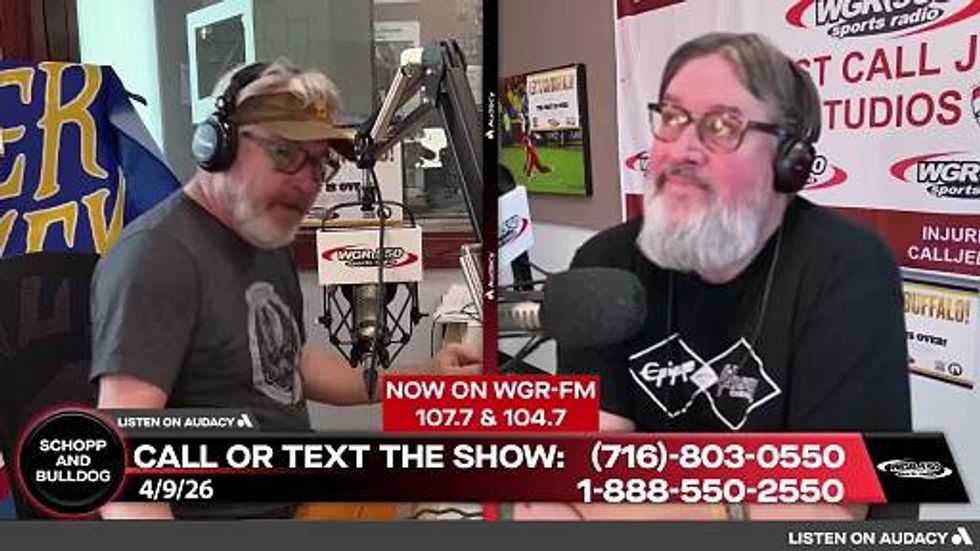
You can hear more of Wilner's interview with Schopp and the Bulldog below: