

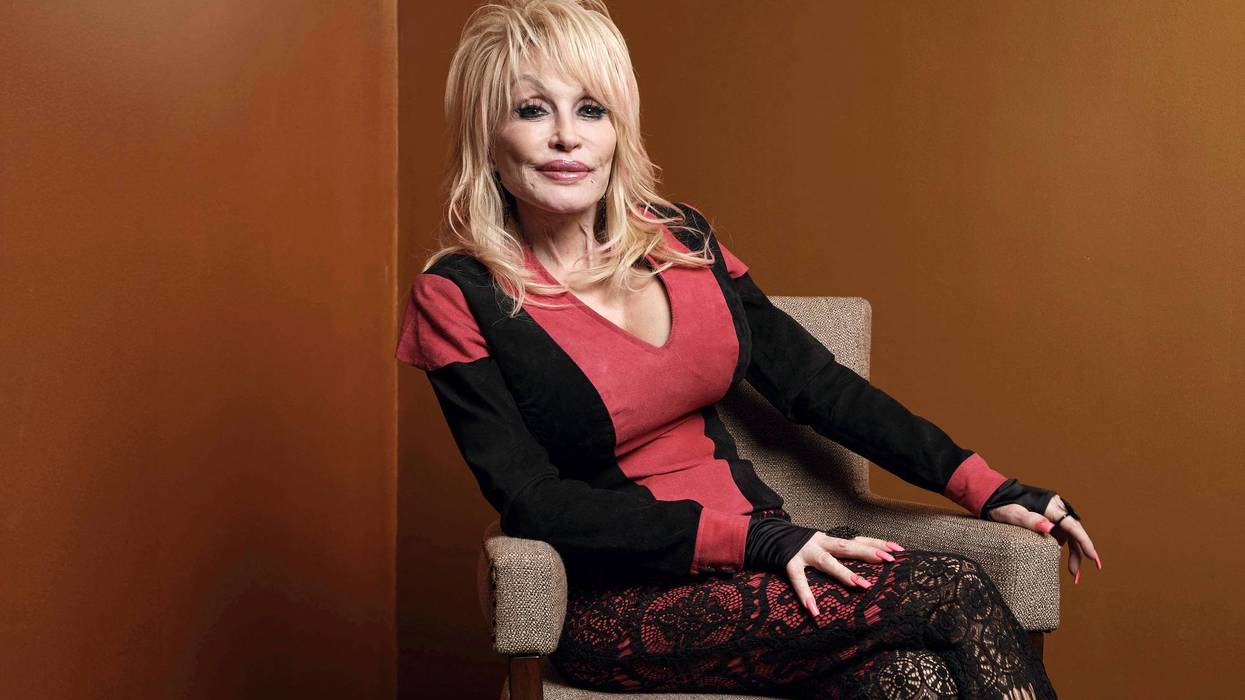

Dolly Parton ’s longtime manager moved Thursday to drop a complaint that accused the late singer’s nephew who acted as her head of security with threatening her estate and its employees.
The proposed dismissal and apparent settlement brought a sudden, unexpected and unexplained end to an ugly rift in the beloved country superstar's inner circle that began while she was sick with cancer and spilled into public view in the weeks after her Aug. 25 death.
The manager, Danny Nozell, who runs She’s Alive, an entity founded to manage and protect Parton’s estate, had secured a temporary restraining order against Bryan Seaver and his security company, Squadron Augmented Protection Services, in September. Nozell was seeking to turn the order into a permanent injunction against Seaver.
A very brief filing in a Tennessee court Thursday gives no reason why the complaint is being withdrawn. It says only that a proposed order was being drafted for the judge’s approval to dismiss the case without prejudice, meaning it can be refiled again. A court filing from a day earlier said the two sides had reached an agreement, but that gave no details either.
The fight was about to become even more public with the first hearing on the matter that was slated for Tuesday, with the two sides set to argue over the proposed permanent injunction.
The Associated Press sent emails seeking comment from lawyers for She’s Alive, Seaver and his company.
She’s Alive terminated Seaver and SAPS in early September, and the following week petitioned for the restraining order against him, arguing that his “terrorizing conduct made their continued retention untenable.”
The petition said that starting shortly before Parton’s death and continuing after, Seaver made threats and aimed them directly at She’s Alive’s “personnel, counsel, and business partners. In writing, he vowed to ‘destroy the entire brand.'”
It says he “called himself ‘literally an international arms dealer and mercenary,’” and said everyone “needs to be worried about what I might do.”
In granting the temporary order, Chancellor I’Ashea L. Myles cited Seaver’s “claimed access to weapons, experience with violence, and intention to retaliate.”
Seaver, who Parton had handpicked to announce her death, said in court filings that he considered Nozell a close friend and ally before Nozell took out the restraining order.
In an affidavit, Seaver said text messages Nozell cited as evidence of his threats were a “private conversation between two friends who were both frustrated, grieving and discussing strategy.”
“I have never threatened physical harm to Mr. Nozell, to any SAL employee, contractor, attorney, advisor, or business partner, or to anyone else associated with SAL,” Seaver said. “I have no intention of doing so.”
Seaver said that in angry and admittedly crude text messages sent to Nozell, Seaver was talking about a dispute he had with Herschend Family Entertainment, which operates Parton’s amusement park Dollywood and her Songteller Hotel, which opened after her death. He said he was upset over the company failing to pay his security outfit more than $250,000 for completed work.
Under the restraining order, Seaver and SAPS must refrain from entering any She’s Alive property or talking with or being within 1,000 feet (about 300 meters) of She’s Alive employees and business partners.
Seaver argued that the order is so broad, and Parton’s business reach so great, that much of Nashville and even his own relatives are off limits to him.
Parton was a widely adored singer, songwriter, philanthropist and country music icon who rose from a log cabin in the Tennessee mountains to a stardom that spanned generations with songs including “Jolene,” “Coat of Many Colors,” “9 to 5” and “I Will Always Love You.” She also left behind a business empire, much of it based in her hometown, that employed many of her close friends and family.