


SEOUL, South Korea (AP) — North Korea threatened Tuesday to close a Swiss diplomatic office that opened in Pyongyang last month, condemning Switzerland for imposing sanctions on a youth camp in eastern North Korea over its alleged role in the transfer of children from Russia-occupied areas of Ukraine.
Kim Yo Jong, the powerful sister of North Korean leader Kim Jong Un, described the Swiss sanctions on the Songdowon International Children’s Camp in the coastal city of Wonsan as an “open hostile act” and a “serious infringement” of the North’s sovereignty, according to a statement carried by state media.
Kim Yo Jong, one of Pyongyang’s top foreign policy officials, said the camp supported “legitimate” cooperation between North Korea and Russia. She didn't directly address Western accusations that some Ukrainian children abducted by Russian forces were sent there to be reeducated.
North Korea has closely aligned with Russia over the war in Ukraine, sending thousands of troops and large shipments of weapons in recent years to support Russian President Vladimir Putin’s full-scale invasion, possibly in exchange for economic assistance and military technology transfers.
Strengthened ties with Moscow and Beijing have been key drivers of Kim Jong Un’s increasingly assertive foreign policy as he positions North Korea as part of a united front against the United States.
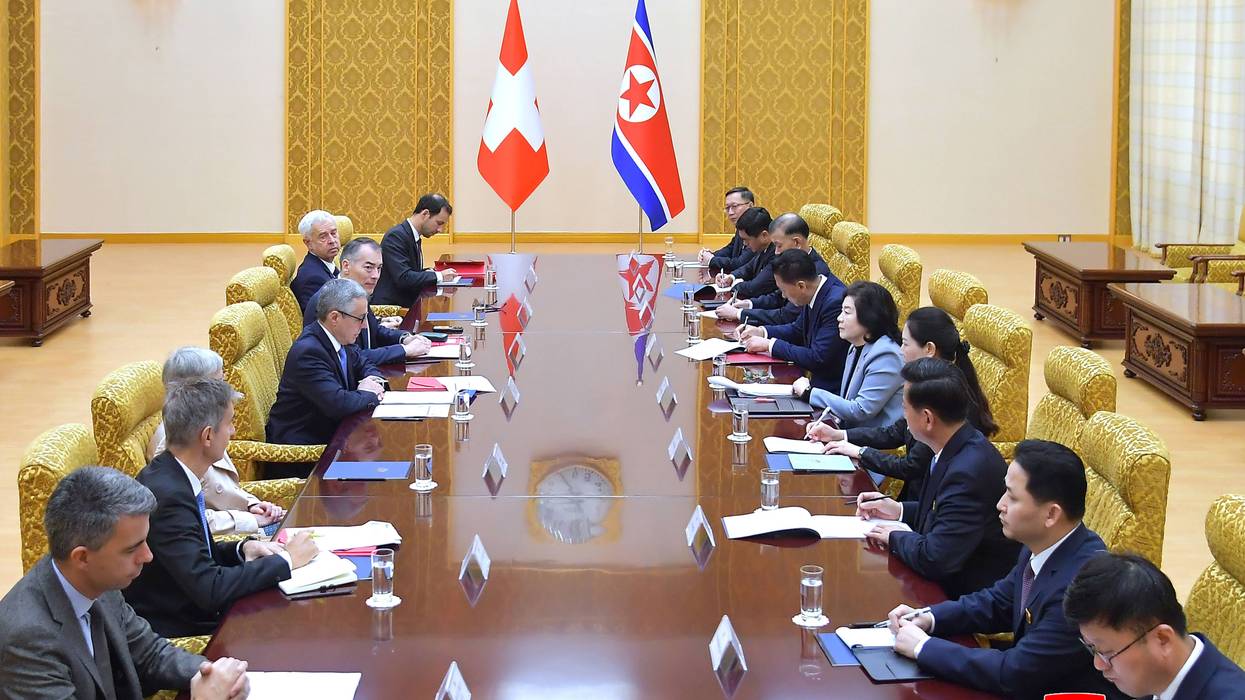
Swiss Foreign Minister Ignazio Cassis traveled to North Korea in late October as Switzerland opened a diplomatic office in Pyongyang and held talks with senior North Korean officials, including Foreign Minister Choe Son Hui, on “promoting dialogue and cooperation,” North Korean state media said at the time.
Kim Yo Jong said that North Korea would need to “comprehensively reconsider the relations with unreliable Switzerland” following the sanctions on the camp and called on North Korean diplomats to take unspecified “corresponding” countermeasures.
“It is my view that the Swiss diplomatic office has spontaneously lost justification for its existence, which was opened in Pyongyang under the pretext of improving the relations, given that the Swiss Confederation has clarified its stand not to respect the sovereignty of the DPRK,” she said, using the initials of North Korea’s formal name, the Democratic People’s Republic of Korea.
In adding the Songdowon camp earlier this month to its broader sanctions related to Russia’s all-out invasion of Ukraine, Swiss authorities held the camp responsible for the “forced assimilation, including indoctrination, and militarized education of Ukrainian minors,” according to a document by Switzerland’s State Secretariat for Economic Affairs.
It said the camp participates in programs involving the transfer of Ukrainian children from Russia-occupied territories to North Korea and exposes them to propaganda and activities designed to promote pro-Russia narratives.
The United Kingdom in May and the European Union in September imposed similar sanctions on the Songdowon camp, freezing its assets and prohibiting financial transactions with the facility, although the practical impact of such measures is unclear given North Korea’s limited financial ties with European countries.
Switzerland established diplomatic relations with North Korea in 1974 and is one of the few Western countries to maintain dialogue with the country, which has aggressively expanded its nuclear weapons program since Kim Jong Un took power in 2011.
The Swiss Agency for Development and Cooperation opened a “cooperation office” in Pyongyang in 1997 that mostly focused on humanitarian programs, but the office closed in March 2020 as North Korea shut its borders during the COVID-19 pandemic.
The Swiss government has said that the new diplomatic office in Pyongyang, which reports to the Swiss Embassy in Beijing, would help strengthen direct contacts with North Korean officials and promote dialogue.
In a statement to The Associated Press, the Swiss Federal Department of Foreign Affairs said that it had taken note of North Korean statements. But it said that neither the Swiss Embassy in Beijing nor its diplomatic office in Pyongyang had been officially contacted about the matter. It said that Switzerland aims to “maintain channels of dialogue, including with states with which we have differences on certain issues.”
Kim Yo Jong's statement came a day after North Korean state media reported that Kim Jong Un received credentials from the newly appointed ambassadors from several countries, including Russia, Sweden, Indonesia, Vietnam, Brazil and India, in Pyongyang on Sunday.
During the ceremony, Kim Jong Un defended his efforts to strengthen his nuclear-armed military as necessary to protect the North’s security amid what he described as an “unstable security crisis and political and economic chaos round the globe,” Pyongyang's official Korean Central News Agency said.
___
Jamey Keaten contributed to this report from Geneva.