

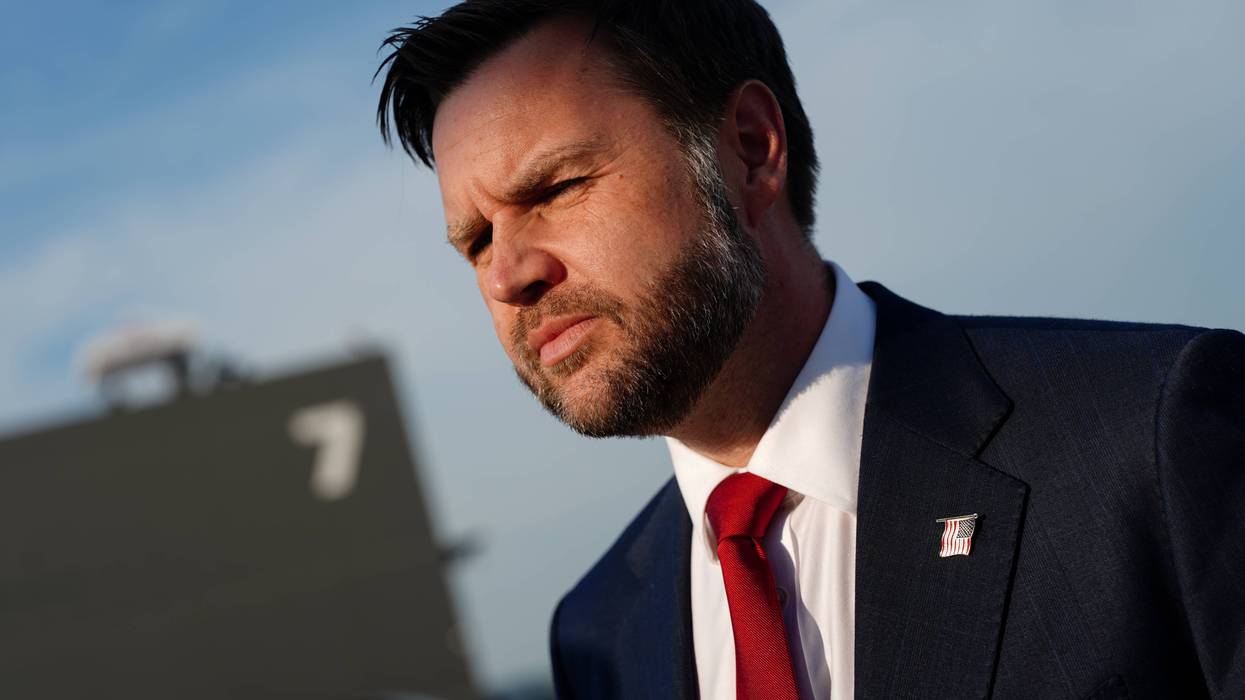

WASHINGTON (AP) — U.S. President Donald Trump and Vice President JD Vance say their interim deal to end the war with Iran will deliver a financial windfall to American farmers.
But the Iranians deny it. And, in the absence of more details, sanctions experts are flummoxed over exactly how billions of dollars’ worth of Iranian assets would make their way to the American heartland from the escrow accounts where they’ve been locked for years by U.S. sanctions.
A tentative agreement reached last week would reopen the Strait of Hormuz, through which a fifth of the world’s oil and natural gas once passed, and allow Iran to start selling its oil freely again during a 60-day period when the two countries will continue negotiating key issues. The memorandum of understanding also promised to unfreeze Iranian assets.
Trump’s deal has come under fire for failing to address the reasons the president cited for going to war with Iran on Feb. 28, including curbing Tehran’s nuclear ambitions, its missile program and its support for militant groups such as Hezbollah in Lebanon and Hamas in Gaza.
Lashing back at critics Tuesday on his Truth Social media platform, Trump said U.S. farmers would get a payday: The U.S. Treasury Department, he wrote, would release the Iranian assets “into escrow, controlled by the U.S.A., and will be used for the purchase of food and medical supplies, exclusively from the United States, including Corn, Wheat, and Soybeans from our great American farmers. These are things that are desperately needed by Iran.’’
Vance, who spoke about the proposal after high-level talks in Switzerland, and Trump say that any frozen funds and assets held outside of Iran will be used to buy U.S. crops.
But the Iranians deny that's part of the deal. A spokesperson for the Iranian Foreign Ministry, Esmail Baghaei, said any agricultural purchases would be based on “prices and quality,’’ not terms dictated by Washington.
“It is interesting that the philosophy and goal of the war, which was the destruction of the Iranian civilization and the collapse of Iran, has become enriching American farmers,” Baghaei said.
Iran’s ambassador in Geneva, Ali Bahreini, rejected Vance’s contention that the U.S. and Qatar would dictate how Iran uses unfrozen funds. “Iran is the only country who decides what to do with those assets,” he told reporters.
Joseph Glauber, a research fellow emeritus at the International Food Policy Research Institute, said Iran was unlikely to abandon its other trade partners on food.
Iran’s major suppliers include Brazil, India, Turkey, the European Union, Canada, Australia and Argentina, he said. Trump’s demand to buy from the U.S. would “create some hard feelings with some of our competitors.”
Under previous sanctions, the U.S. has required that money foreign countries spend on imports from Iran — such as South Korean purchases of oil and Iraqi purchases of Iranian electricity — be locked in escrow accounts and typically released only if the Treasury approves and if the proceeds go toward “non-sanctionable’’ items such as food and medicine.
On Monday, the U.S. Treasury approved the sale of Iranian oil, petrochemicals and petroleum products through Aug. 21. It did not mention any escrow accounts.
Richard Goldberg of the Foundation for Defense of Democracies, who coordinated efforts to put diplomatic pressure on Iran in the first Trump administration, said in a post on X that he would welcome “a clarification that Iran is actually restricted to only buying U.S. agricultural products.”
Richard Nephew, senior research scholar at Columbia University’s Center on Global Energy Policy, said it’s unclear what the new U.S.-Iran agreement actually means for releasing restricted Iranian assets.
Could the U.S. require that the assets be used to buy American farm products?
“Well, we can try!’’ Nephew, who helped design Iran sanctions in the Obama and Biden administrations, said by email. “All you really need to do is to tell a foreign bank that they can move the money but only to a U.S. bank to buy soybeans or whatever."
Banks do not have to comply, he said. If they refuse, the U.S. could sanction them as well.
But it's rare for the U.S. to conduct itself that way, he added, “in part because we don’t usually like to give the impression that we treat national security issues as a cash grab.”
___
Associated Press Writer Josh Boak in Washington contributed to this report.