

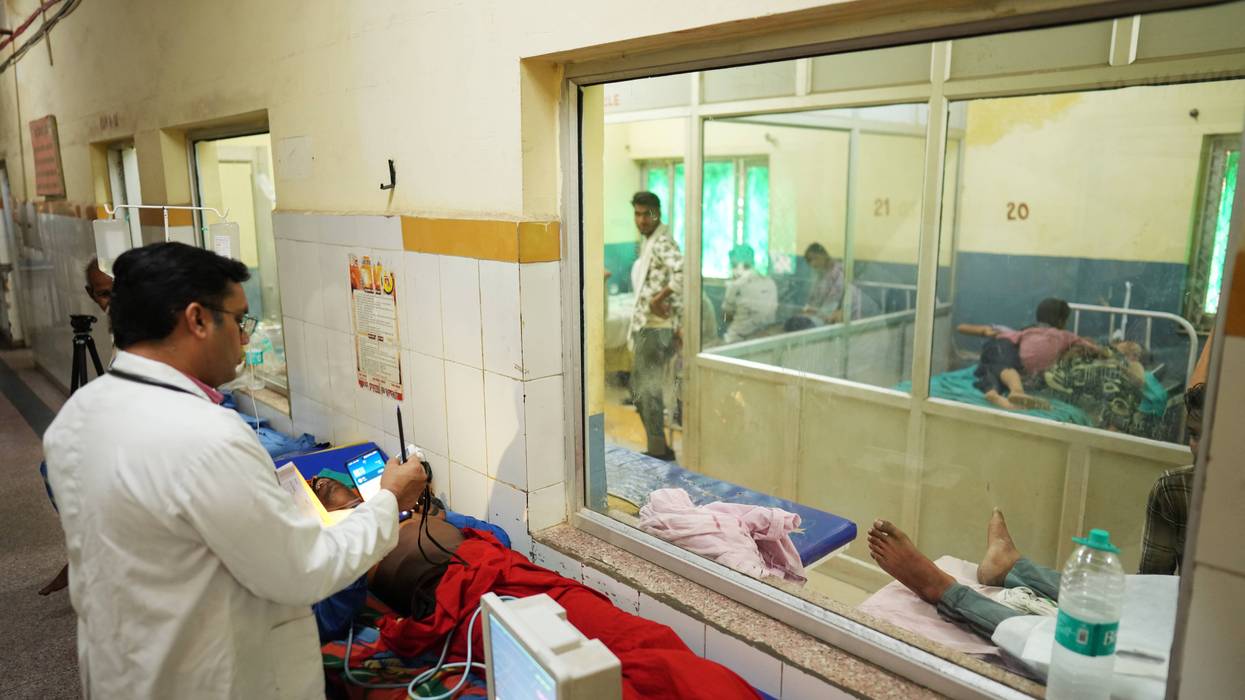

WASHINGTON (AP) — When the temperature heats up, so do emergency rooms, according to a massive study of Chicago hospital and urgent care records, which found increased accidental gunshot wounds, kidney complaints, skin problems, varicose veins and even mental health issues related to marijuana use.
Northwestern University medical school researchers pored through records of 916,404 visits to hospital emergency rooms and urgent care centers in Chicago from 2011 to 2023 to see if they could spot trends in illnesses and injuries when the temperature hits 92.6 degrees (33.7 degrees Celsius) or higher. They found when it gets hot, more than a dozen broad categories of injuries and illness become more frequent, including some that most people don't associate with heat, according to the study in Wednesday's Science Advances.
While the study looked only at Chicago, outside experts said it highlights underestimated health problems and rising costs that infect much of the warming world.
“The sound of the city is the sound of ambulances,” said study senior author Dr. Abel Kho, an internal medicine professor at Northwestern. “Hot days are just like, something’s going to happen.”
How heat multiplies medical problems
“When there’s heat, there’s a much higher likelihood of people having external injuries, as well as complications of certain conditions, specifically those related to kidney disorders or things like exacerbations of drug effects, like cannabinoids,” said Kho, a former emergency room physician.
Some problems doubled, tripled or, in the case of accidental gunshot wounds, jumped more than 30-fold compared to days under 92 degrees, the study said. Unspecified injuries from assault showed an even bigger increase, the data showed.
This study “helps confirm that we’ve been underestimating health risks from heat exposures,” said Dr. Jonathan Patz, chair of health and environment at the University of Wisconsin, who wasn't part of the research.
“It also is a reminder that the price of climate change is increased illness, strain on our health care system and health care costs,” said Dr. Courtney Howard, a Canadian emergency room physician, chair of the Global Climate and Health Alliance and president-elect of the Canadian Medical Association. She was not part of the study.
Northwestern researchers looked through all the records to see what became more frequent, instead of just focusing on known heat-related problems.
“Heat-related illness is undercounted when studies only search for explicit heat codes like heat stroke,″ said Dr. Nicholas Cozzi, president-elect of the Illinois College of Emergency Physicians. He wasn’t part of the study.
Researchers found an association between high temperatures and individual medical problems, but that's not the same as a cause-and-effect, Kho said. The data had more Black people and women represented than the general population, but University of Washington climate and health scientist Kris Ebi said that's another positive part of the study because those groups are often underrepresented in medical studies.
“We know that heat waves are becoming more frequent, more intense, and lasting longer,” said study co-author Daniel Horton, a Northwestern climate scientist. “So a study like this indicates that those heat waves have real effects on people, not only on the likelihood of mortality, but of morbidity as well. So all the other things, the bad things that happen on the way up to dying, may also increase.”
The importance of taking heat seriously
Cozzi said that the study has an important message for the public: “Don’t wait for heat stroke symptoms to take heat seriously. If you have a chronic condition — kidney disease, MS, venous issues — treat extreme heat days as a trigger for extra caution, not just an outdoor-activity problem.”
Many of the diseases that saw an uptick in heat had to do with kidneys and the renal system. The skin issues are known by doctors but not often seen in non-medical literature, Kho said.
With the marijuana mental health issues, Kho said doctors have long known that when a body is “under physiologic stress, some medications will have greater effects.” That's why, he said, when it gets hot “maybe people need to be a little more careful if they’re going to be using certain things.”
Yet cardiovascular problems, which are commonly connected to heat in other studies, don't show up in this research as spiking during extra hot days. That's probably because people suffering cardiovascular issues often have other problems at the same time, such as kidney or fluid issues, that determine how their records are coded, Kho said.
Dehydration or “changes in fluid status can then contribute to cardiovascular disease as the heart works harder to pump more concentrated blood to the skin in order to support sweat-related ways to cool the body down,” Canada's Howard said.
Kho said the study had him thinking back to the nights when he worked the emergency room: “When it’s hot out, it’s going to be a busy night. That’s just how it goes.”
___
The Associated Press’ climate and environmental coverage receives financial support from multiple private foundations. AP is solely responsible for all content. Find AP’s standards for working with philanthropies, a list of supporters and funded coverage areas at AP.org.