

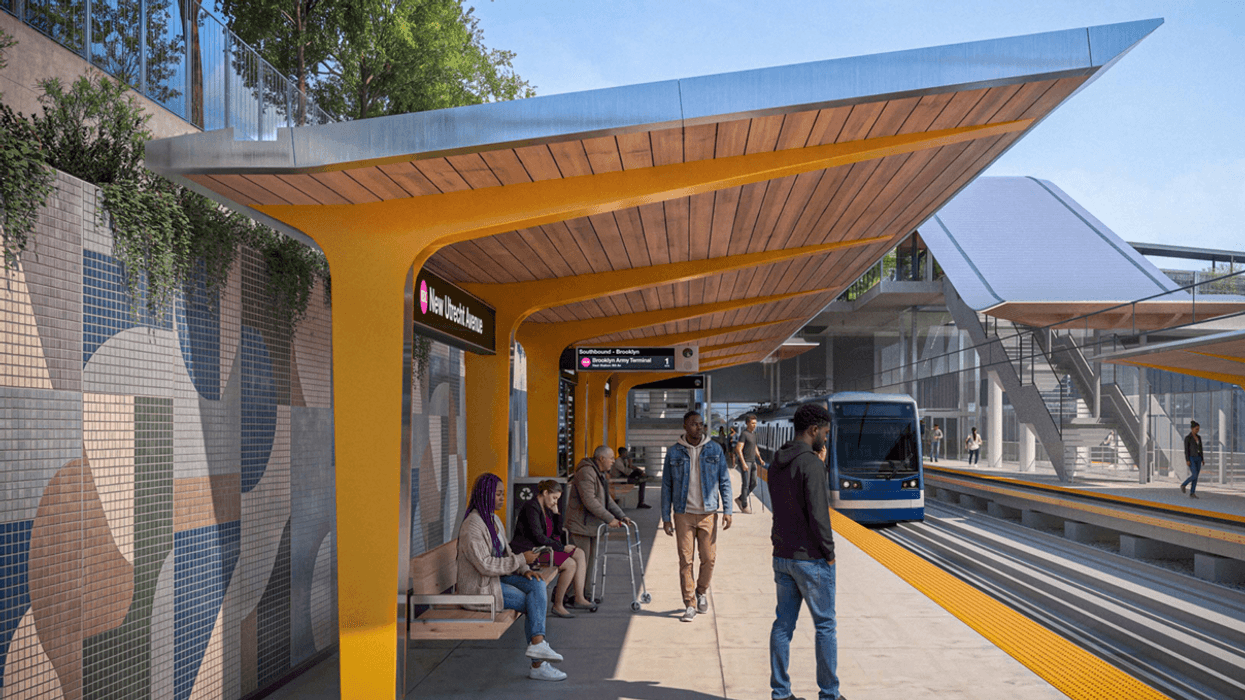

NEW YORK (BLOOMBERG) -- A proposed $5.5 billion light-rail project serving neighborhoods in Brooklyn and Queens will need bigger sidewalks, additional bus lanes and more open space to maximize the potential ridership, according to a report from the Regional Plan Association.
The development, called the Interborough Express Project, or IBX, will utilize 14 miles of existing freight lines to build light rail service through the two boroughs. Transit officials estimate that by 2045 nearly 120,000 daily riders could use the proposed line, which would run through neighborhoods that currently don’t have a transit option. It would connect with 17 different subway lines, more than 50 bus routes and the Long Island Rail Road.
But to capture the IBX’s full ridership potential, the street and sidewalk landscape through these neighborhoods will need an update, according to the RPA report. While about 7% of the IBX corridor’s population is within a five-minute walk of the planned stations, the majority of residents will be as far away as a 15-minute walk. The neighborhoods will need wider sidewalks, more protected bike lanes, bike parking, more dedicated bus corridors, better street lighting and updated pedestrian crossings to get riders to the IBX stations safely, the report noted.
“The IBX has the potential to benefit nearly 900,000 residents along the corridor, accounting for about 10% of the city’s population,” the report said. “However, the efficiency of its operations, the potential ridership it can attract, and the benefits it can deliver to local neighborhoods will largely depend on the quality and safety of the surrounding public infrastructure and last-mile connections.”
The IBX corridor has only nine miles of dedicated bus lanes, or 40% fewer miles per household than the city average, according to the report. It has 13 miles of fully protected bike lanes, but that’s 67% less than the city overall.
In addition, half of IBX’s 18 stations do not have docks for CitiBikes, the bike-share program that helps New Yorkers get around the city faster.
The RPA is a non-profit organization that promotes initiatives for economic health, environmental resiliency and equity.
More stories like this are available on bloomberg.com.