

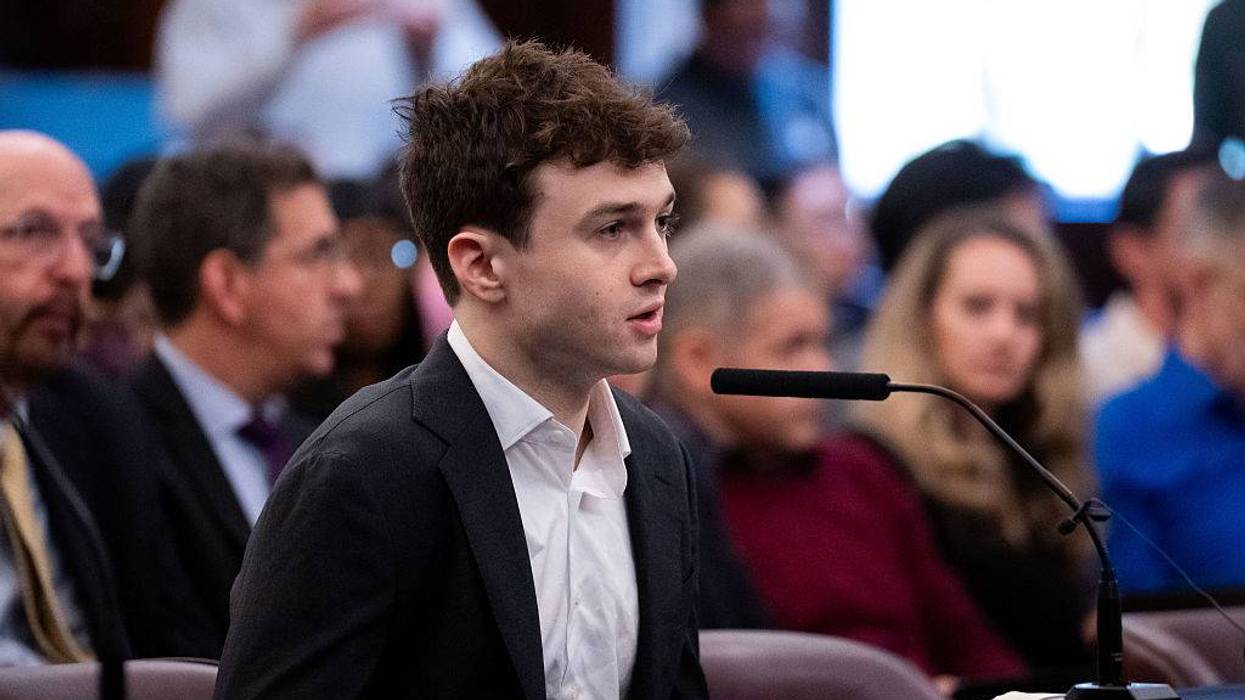

NEW YORK (BLOOMBERG) — Former Anthropic researcher Jacob Coxon warned that the race to develop artificial intelligence poses risks that the industry itself doesn’t fully understand, at a New York City Council hearing where lawmakers weighed whether to impose their own safeguards on a burgeoning global business.
“We do not know how to control any AI system yet,” Coxon said at the hearing on Monday, where representatives from some of the leading AI developers also appeared.
The proceeding made for a striking New York spectacle as Coxon, dressed in a dark suit and white shirt, sat at a table before a crowd of city officials and gave his perspective on the inner workings of an industry that is increasingly at the center of the US economy.
Coxon testified at the request of Council Speaker Julie Menin, who wants to pass a package of bills that would put new curbs on the industry. AI firms have expanded rapidly in New York, but they have faced increasing questions about the threats that their technology could pose to the city’s economy and to its people more generally.
Among the proposals the city council is considering is whether to install a “kill switch” that could shut down rogue AI systems, though Coxon said such a measure would only go so far.
“We need some kind of slowdown on the frontier model development,” Coxon said. Tools like kill switches “may be helpful in the short term” but aren’t likely to be enough to ensure safety in the long run.
New York and other state and local governments have been pressing ahead with their own proposals to regulate AI as the Trump administration has largely taken a hands-off approach. Some executives and President Donald Trump have suggested the best way to regulate AI would be for the industry to conduct its own oversight, an idea that Menin rejected.
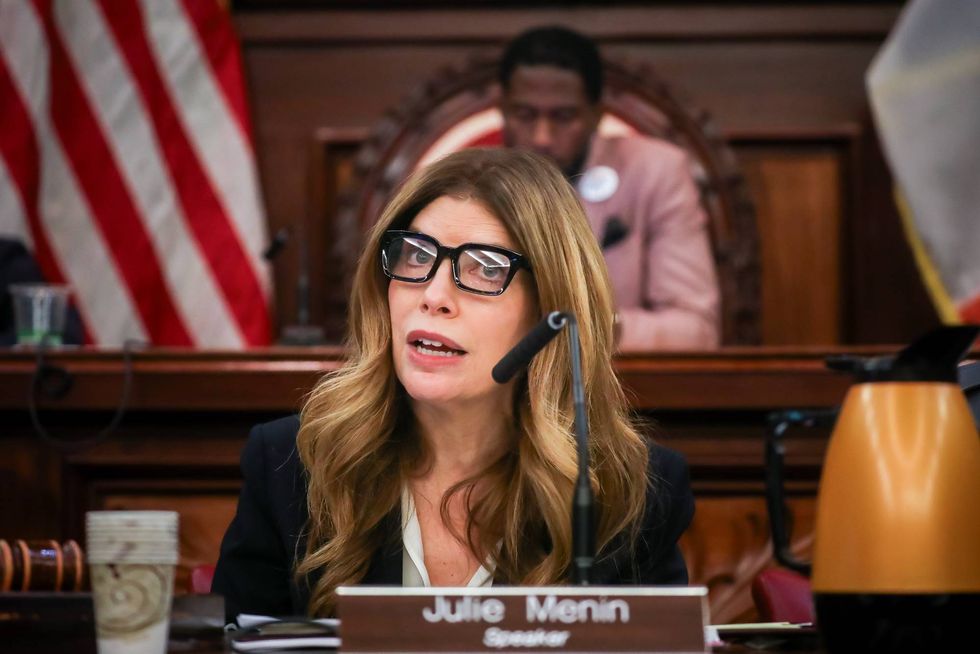 Julie Menin during a New York City Council hearing at City Hall in New York on Oct. 5. Photographer: Michael Nagle/Bloomberg
“The idea that AI companies will simply self regulate is not going to work,” Menin said at a news conference before the hearing. “What we really need to do is pass this legislation which will be first in the nation and hopefully it will spur action by the federal government and other jurisdictions.”
Coxon quit Anthropic last month, warning that AI could become too powerful for humans to control and accusing his former employer and OpenAI of “gambling with our lives.” Former Google DeepMind researcher Alex Turner and Daniel Kokotajlo, executive director of the AI Futures Project and a former OpenAI researcher, testified remotely.
A proposal before the council sponsored by Menin would give whistleblowers a portion of fines or penalties recovered from AI companies following reported violations. Another measure would allow people harmed by AI systems to sue developers under certain circumstances and require third-party validation of some systems before they can be deployed in the city.
OpenAI, Anthropic and Google agreed to have representatives appear at the hearing after Menin’s office warned that they could be subpoenaed.
Logan Graham, head of Anthropic’s Frontier Red Team, which tests advanced AI models for their capabilities and risks, appeared before the council virtually, as did OpenAI’s Morgan Dwyer, head of policy development and operations, and Meta Platforms Inc.’s Shane Cahill, an AI policy director. Google AI policy executive Alice Friend also appeared remotely.
Menin said before the hearing began that she will ask a judge to enforce a subpoena that was sent to SpaceX’s artificial intelligence unit, after it failed to comply with requests to appear.
A spokesperson for Google declined to comment. Representatives for the other companies didn’t respond to requests for comment.
Officials from New York City Mayor Zohran Mamdani’s administration are also expected to testify at the hearing, including Samuel Levine, commissioner of the Department of Consumer and Worker Protection, and Sarah Milstein, deputy commissioner at the Office of Technology and Innovation.