


NEW YORK (BLOOMBERG) -- The threat of a Long Island Rail Road strike is moving closer to reality, with labor unions and state officials yet to reach agreement on a wage increase for this year.
About 3,500 LIRR engineers, signalmen and electrical workers could walk off the job as soon as Saturday, crippling the nation’s largest commuter rail line and leaving tens of thousands of riders to find other ways to get around Long Island and into New York City. The last strike by LIRR workers was in 1994.
The potential shutdown comes one week before Long Island kicks off its peak tourist season over Memorial Day weekend. During the summer, many city dwellers rely on LIRR to get to the island’s beaches, including the Hamptons.
The Metropolitan Transportation Authority and five LIRR unions have been negotiating for months with a federal mediation panel to find consensus on a wage increase for this year. The labor groups have been seeking a 5% boost to keep up with inflation and reduced that ask to “the upper 4s” late Thursday night, according to Nicholas Peluso, national vice president of the Transportation Communications Union/IAM.
The MTA, a state agency that runs New York City subways and buses as well as the LIRR and Metro-North commuter lines, has said that such a hike would force it to raise fares more than anticipated or reduce service.
The parties negotiated for most of Thursday without reaching a deal. Talks resumed on Friday in Manhattan.
The parties heard from Governor Kathy Hochul shortly after negotiations restarted, urging both sides to reach agreement, according to Sean Butler, spokesperson for Hochul.
“Governor Hochul called into this morning’s negotiations with one simple message: getting a deal requires both sides to work together, including labor,” Butler said in a statement Friday. “Nobody wins in a strike - riders will suffer and thousands of workers will lose out on wages they need.”
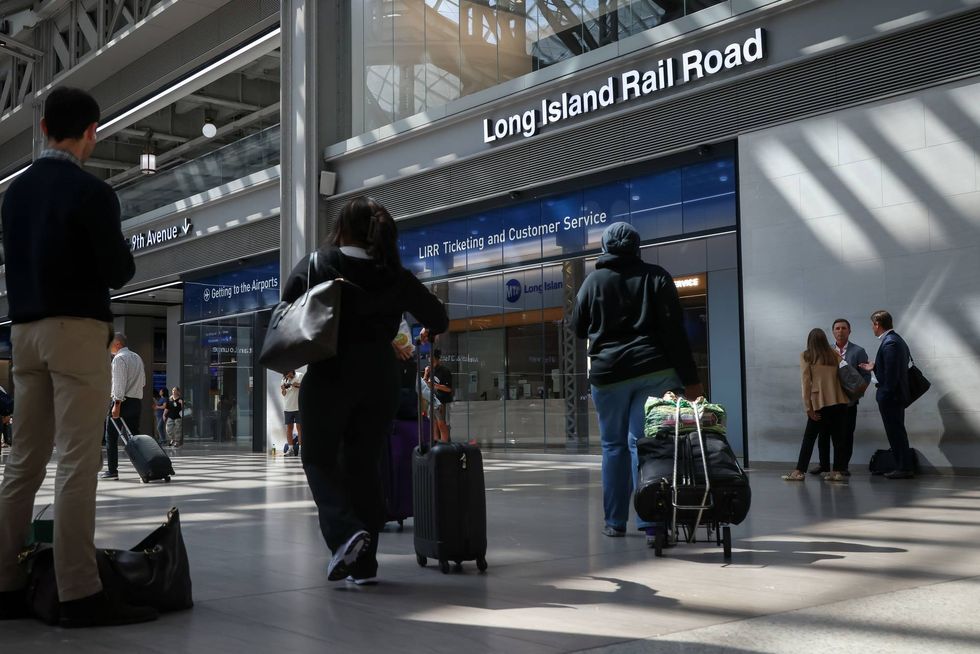
LIRR carries nearly 300,000 weekday riders, the most among US commuter rail lines. Shutting down service would result in approximately $61 million of lost economic activity a day, according to a Thomas DiNapoli, the state’s comptroller. While the MTA plans to offer limited bus service to make up for canceled trains, a strike could force thousands of riders to drive on Long Island’s already-congested roadways.
“It will impact a multitude of industries, from healthcare systems to schools to retailers to professional services, and of course, our tourism,” said Stacey Sikes, acting president and chief executive officer of the Long Island Association, a nonprofit business organization.
 Michael Nagle/Bloomberg
In the event of a strike, the MTA is urging the public to work from home, if possible. The agency’s contingency plan includes running nearly 275 shuttle buses from six different locations on Long Island to subway stations in Queens. Those shuttle buses will cost the MTA up to $550,000 a day, according to Jai Patel, the MTA’s chief financial officer.
Katherine Eletto, a Long Island resident who commutes to her office on the Upper East Side three days per week, said she plans to work from home in the event of a strike. “The traffic is just too much and gas prices are too much to be sitting around in traffic,” she said. Her family is considering changing weekend plans including an outing to see a Major League Baseball game in Queens.
“How am I supposed to get to the Mets game?” said Eletto. “Not that they’re doing great, but seriously, we have Mets tickets coming up and we usually just hop on the train to come in.”
While confronting the potential strike, the MTA is also in labor negotiations with the Transport Workers Union, which represents nearly 40,000 subway and bus workers. Their contract expires at the end of the day Friday, but a New York law prevents those employees from striking.
The labor disputes are playing out as MTA employees, riders and New York residents contend with higher prices for groceries, gas and other essentials. Hochul is facing an election in November in which affordability issues are expected to be top of mind for voters.
At the same time, the MTA needs to find $750 million in operating savings by 2029 to help balance its budget as its expenses increase.
While the MTA and LIRR unions agree on a retroactive 9.5% wage hike over three years, the parties disagree on a raise that would begin in June. The transit agency is seeking a set increase along with a one-time cash payment. The unions have rejected that structure and want a higher percentage boost without a cash payment.
“After last night our ask is in the upper 4s, MTA’s is in the mid-3s,” Peluso said in a statement Friday. “The key question is: Will MTA and Governor Hochul create frustration and gridlock for commuters, spend millions on buses during a strike and lose millions in revenue over what amounts to roughly a one percent difference in wages?”
The Brotherhood of Locomotive Engineers and Trainmen, one of the unions involved in the LIRR contract negotiations, forced a three-day work stoppage in May 2025 on New Jersey Transit.
Transit officials are reluctant to give LIRR workers a raise of more than 3% because that will influence their negotiations with TWU, union leaders said. Subway and bus workers will want a wage increase that is equal to or greater than whatever the MTA gives to its commuter-rail employees, according to John Samuelsen, the TWU’s international president.
Even a two- or three-day strike starting on Saturday would be a major disruption for Long Islanders. More residents are using the system for weekend travel than before the pandemic, with average weekend ridership in 2025 at 267,567, up from 210,313 in 2019, a nearly 30% increase, according to a report last month from DiNapoli.
More stories like this are available on bloomberg.com.