


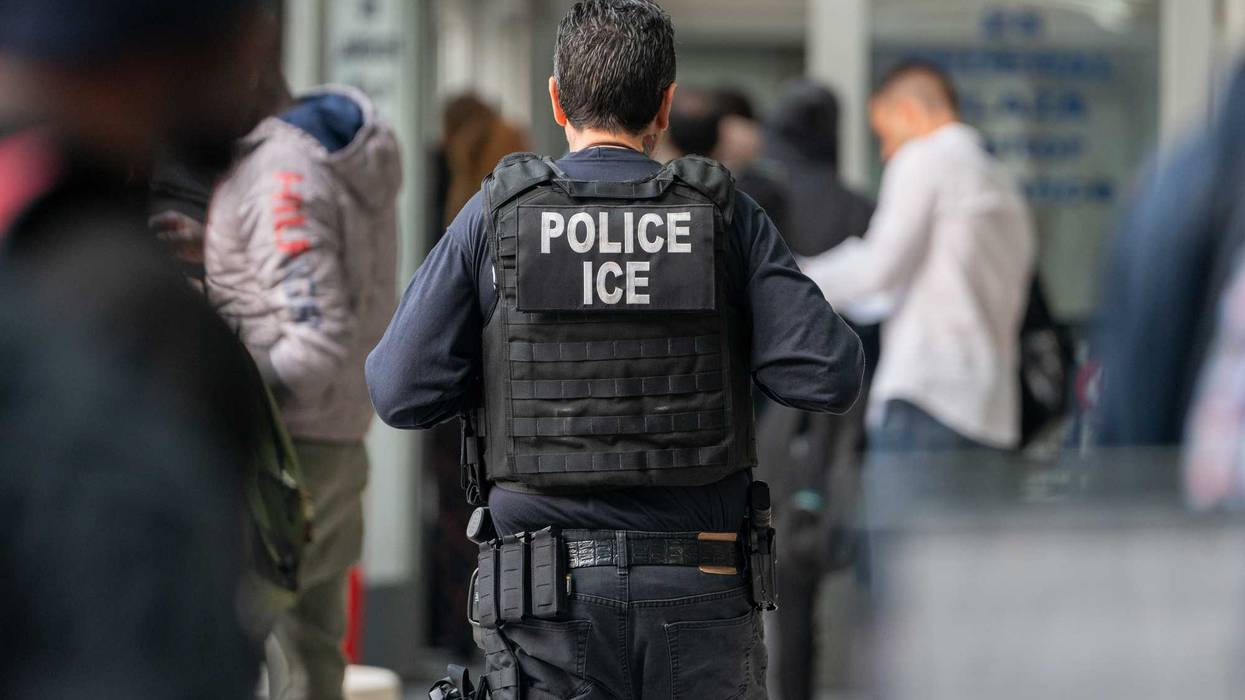

NEWARK, N.J. (1010 WINS) – Newark Mayor Ras Baraka condemned U.S. Immigration and Customs Enforcement (ICE) actions on Friday following a raid conducted "without a warrant" at a local business in New Jersey.
The raid at Ocean Seafood Depot in Newark on Thursday led to the detention of three employees, raising concerns over potential constitutional rights violations and the mistreatment of immigrant communities.
"The problem with it is that ICE went in there without a warrant," he said. "What we must agree on is that the thing that separates this country from many other countries around the world is the Constitution of the United States. We can't quibble about the Fourth Amendment or the 14th Amendment. Everybody has the right to due process."
Baraka explained that the ICE operation detained both "undocumented individuals" and U.S. citizens, including a military veteran whose identification was questioned. He also said that agents fingerprinted individuals and took photos of their IDs and faces during the operation.
"When I got this information, I was appalled, upset, angry that this would happen here, in this state, in this country, that this would be allowed," Baraka said.
ICE defended its actions in a statement, calling the raid a "targeted enforcement operation." The statement read: "U.S. Immigration and Customs Enforcement may encounter U.S. citizens while conducting field work and may request identification to establish an individual's identity as was the case during a targeted enforcement operation at a worksite today in Newark, New Jersey. This is an active investigation and, per ICE policy."
Ocean Seafood Depot owner Luis Ginota told 1010 WINS that about a dozen ICE agents arrived unannounced at his business and then three employees were taken away.
"I feel that we have to be a country of law, but go after the bad people, not working people. These people, these are family people," Ginota, who has operated the business for 26 years, said. "These are people that show up to work every day."
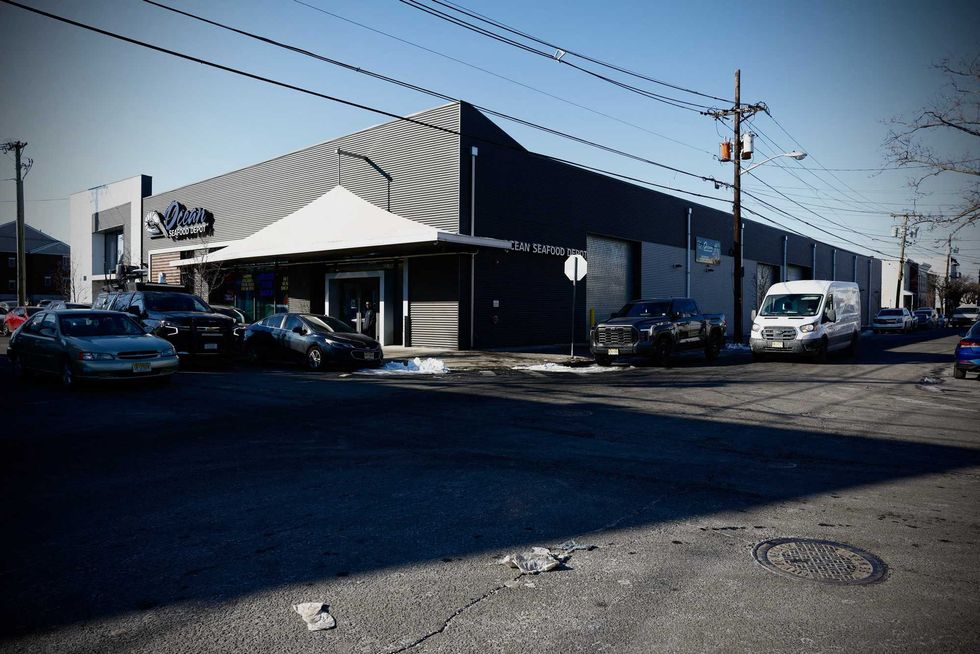 The Ocean Seafood Depot where several workers were arrested on January 23, 2025, by Immigration and Customs Enforcement (ICE) officers, in Newark New Jersey, on Jan. 23, 2025.KENA BETANCUR/AFP via Getty Images
Amy Torres, Executive Director of the New Jersey Alliance for Immigrant Justice (NJAIJ), detailed what happened during the raid. "ICE walked in like it was their empire's own conquered land. They were heavily armed. There was no prior announcement. They were blocking off entrances and exits, scrambling up delivery ramps, and banging down bathroom doors to make sure no one was hiding inside," she said.
Torres explained that ICE failed to provide a single name or warrant during the raid. "This type of sterile language suggests that there was some deep intel and prior investigation, but if this was a targeted operation, why was a U.S. citizen interrogated? Why was a military veteran's credential and honor called into question?" Torres asked.
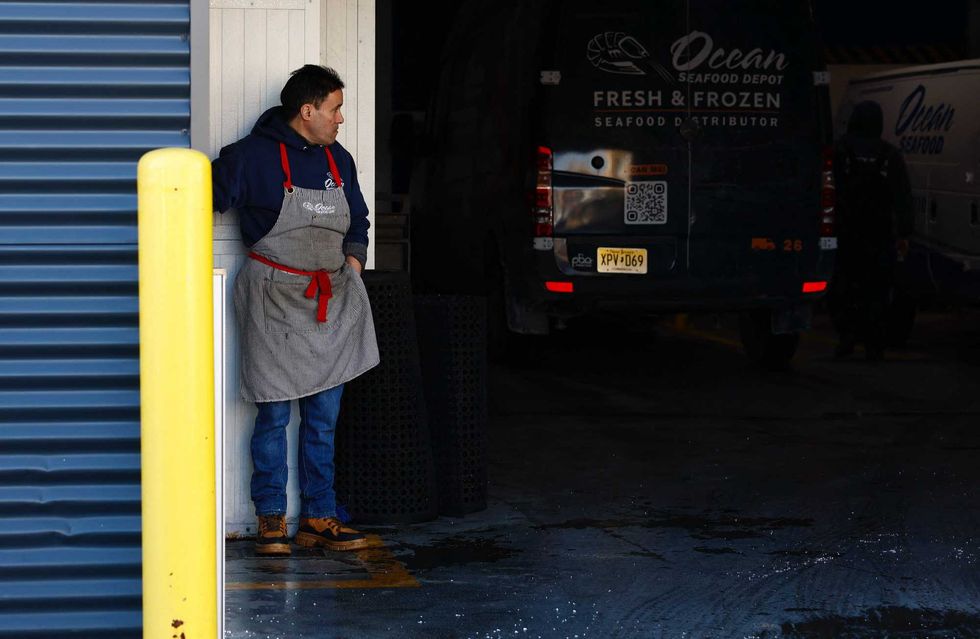 A worker stands at the parking area of the Ocean Seafood Depot where several workers were arrested on Jan. 23, 2025, by Immigration and Customs Enforcement (ICE) officers, in Newark New Jersey, on Jan. 24, 2025.KENA BETANCUR/AFP via Getty Images
The NJAIJ responded quickly by mobilizing translators, attorneys, and civil rights advocates to support the affected workers. "When we got there, there were 12 employees remaining in a worksite that typically employs 80 to 90 people per day," Torres said. "People are scared."
Torres pushed for the passage of the New Jersey Immigrant Trust Act, which limits local law enforcement's cooperation with ICE. The directive aims to build trust between immigrant communities and local authorities by ensuring that immigrants can report crimes and access services without fear of deportation.
Baraka also explained that after speaking out, he received hostile messages.
One email he read aloud said, "Oh, you're not going to stand idly by. These are dangerous rapists and murderers that the liberards in this country have protected far too long. You want to defy the federal government—f*** around and find out what will happen." Baraka read and then said, "None of these people were rapists or murderers or criminals. The problem with it is that ICE went in there without a warrant, and we can disagree on politics."
About half of the city's population of 305,000 is Black and nearly 40% is Hispanic, according to census figures.
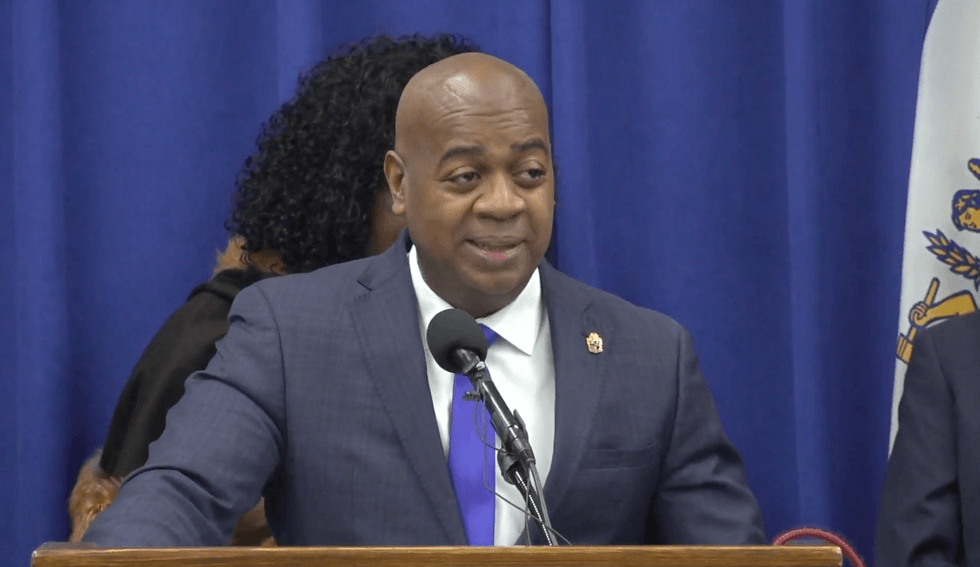 Newark Mayor Ras Baraka speaks during a press conference on Jan. 24, 2025.City of Newark
Baraka also warned against suspending constitutional rights for political purposes, calling it "a slippery slope." He criticized ICE's approach, saying, "How do you determine who's undocumented and who's a criminal just by looking at them? If we allow people to identify us or put us in categories of criminal or any other thing just by the way we look, then we are going back to a time that was very dangerous in this country, specifically for people that looked like me."
"The fact of the matter is we believe in democracy in Newark, New Jersey, and we're going to stand on democracy here," Baraka said. "And we're going to fight for all of our residents in this city, no matter what that looks like for us."
During the speech, some attendees expressed frustration over Gov. Phil Murphy's absence, shouting, "Where is Governor Murphy?" and questioning why he wasn't present.
U.S. Senators Cory Booker and Andy Kim also released a statement demanding answers from the Department of Homeland Security stating their concern. "Actions like this one sow fear in all of our communities — and our broken immigration system requires solutions, not fear tactics."
President Donald Trump's administration has taken action on a number of fronts on his signature campaign promise of cracking down on illegal immigration. And in executive orders signed after he took office Monday, Trump laid out a vision for future actions designed to dramatically boost immigration enforcement in the interior of the country while ratcheting down access at the southern border.
After declaring a national emergency and describing immigration at the southern border as an invasion, Trump sent military troops to the border; lifted longtime rules restricting immigration enforcement near schools and churches; indefinitely suspended the refugee program; and halted key Biden-era immigration pathways.
Newark's raid follows similar ICE operations in other cities, including Boston, Denver, Philadelphia, Atlanta, Seattle, Miami, and Washington, D.C. In a post on X, ICE announced 538 arrests nationwide but did not specify the timeframe.
White House Press Secretary Karoline Leavitt announced in a post on X on Thursday evening that hundreds of immigrants classified as criminals were deported on military aircraft. "The largest mass deportation operation in history is well underway. Promises made. Promises kept," Leavitt wrote.
On Friday, the administration said it was expanding the use of "expedited removal" authority so it can be used across the country and that it would take immediate effect.
"The effect of this change will be to enhance national security and public safety — while reducing government costs — by facilitating prompt immigration determinations," the administration said in a notice in the Federal Register outlining the new rules.
"Expedited removal" gives enforcement agencies broad authority to deport people without requiring them to appear before an immigration judge. There are limited exceptions, including if they express fear of returning home and pass an initial screening interview for asylum.
Critics have said there's too much risk that people who have the right to be in the country will be mistakenly swept up by agents and officers and that not enough is done to protect migrants who have genuine reason to fear being sent home. Friday's notice said the person put into expedited removal "bears the affirmative burden to show to the satisfaction of an immigration officer" that they have the right to be in the U.S.
The powers were created under a 1996 law. But they weren't really widely used until 2004, when Homeland Security said it would use expedited removal authority for people arrested within two weeks of entering the U.S. by land and caught within 100 miles (160 kilometers) of the border. That meant it was used mostly against migrants who recently arrived.
The Associated Press contributed to this report.


