




NEW YORK (BLOOMBERG) — New York City officials identified dozens of buildings with Legionnaires’ bacteria in Manhattan’s Upper East Side, closing in on the source of an outbreak that has infected at least 46 people and hospitalized 22.
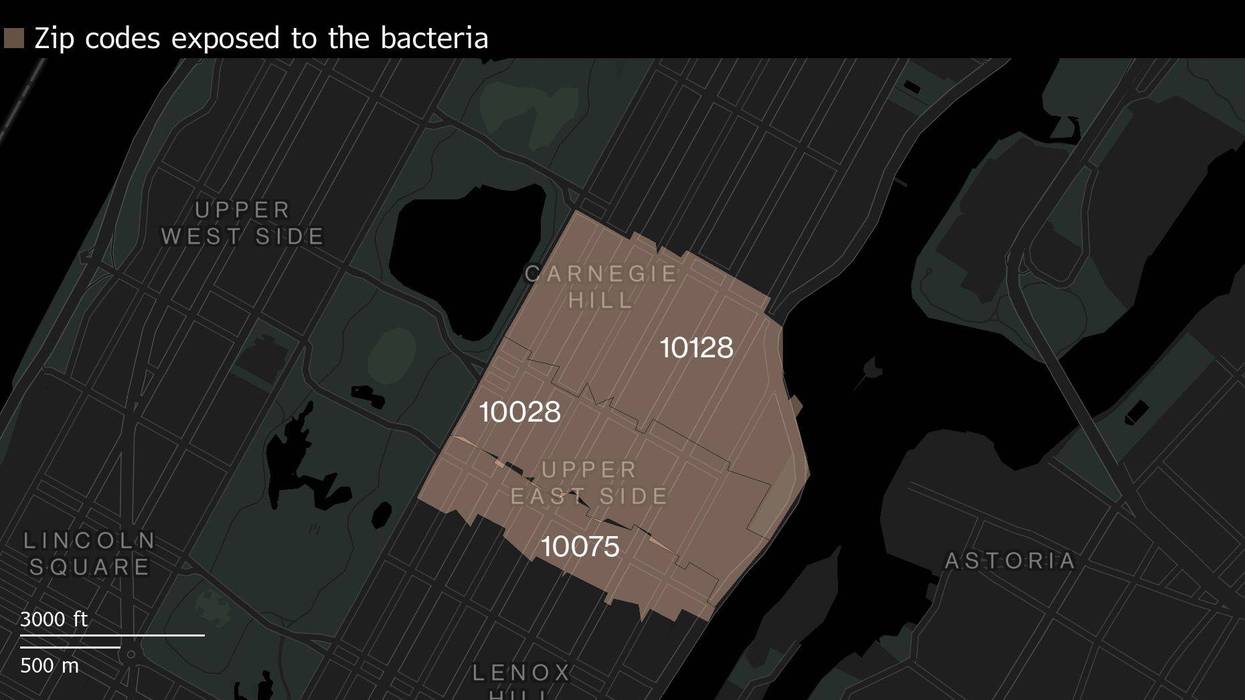
The New York City Health Department said it tested the cooling towers of 183 buildings in neighborhoods encompassed by three zip codes — 10028, 10128 and 10075 — that are among its wealthiest and most densely populated. Of the 31 with signs of bacterial contamination, 19 have already been cleaned, officials said on a call with reporters Friday. The remainder are set to be cleaned by Saturday, July 11.
Officials sought to reassure those who live in or have visited the area in recent weeks, pointing out that they would have already been exposed to the bacteria and noting that most people don’t fall ill from it.
“It’s safe for folks to drink water, to bathe to shower to cook and to use their air conditioner,” NYC Health Commissioner Alister Martin said.
The PCR tests show buildings with both alive and dead bacteria, and the true cause and extent of the current outbreak have yet to be determined. The health department will get the results of culture tests taken in each building in the coming weeks, which should identify those with living bacteria that was infecting residents.
Legionella bacteria grow in the warm water found in cooling towers that sit on top of New York City buildings and help regulate the temperatures of a building’s HVAC system. Infected cooling towers emit a mist that can transmit the pathogen and cause Legionnaires’ disease. The bacteria can spread between buildings through infected droplets in the air.
The vast majority of people who are exposed do not develop the disease. Those who are older, have chronic conditions, are immunocompromised or are current or former smokers are most at risk for falling ill.
Health officials have warned people who visited the area east of Central Park since late June or who live in the area to monitor for flu-like symptoms and contact a health provider immediately if they feel ill. The health department first identified two cases on July 2 and infections have slowly increased.
The incubation period for the disease ranges from 2 to 10 days. The bacteria can sicken people who breathe in infected mist and can cause pneumonia-like symptoms, according to the US Centers for Disease Control and Prevention. Not everyone falls ill, but 1 in 10 people who do get sick typically die from the infection.
The city’s latest outbreak comes nearly a year after seven people died from Legionnaires’ in Central Harlem and more than 100 were infected. This sparked the city to change regulations for cooling towers, including requiring building owners to test for the bacteria every 31 days.
Fines for building owners that fail inspections can reach as high as $2,000.
Outbreaks occur every year in New York state, where 200 to 800 infections are reported annually.
More stories available on bloomberg.com.


