

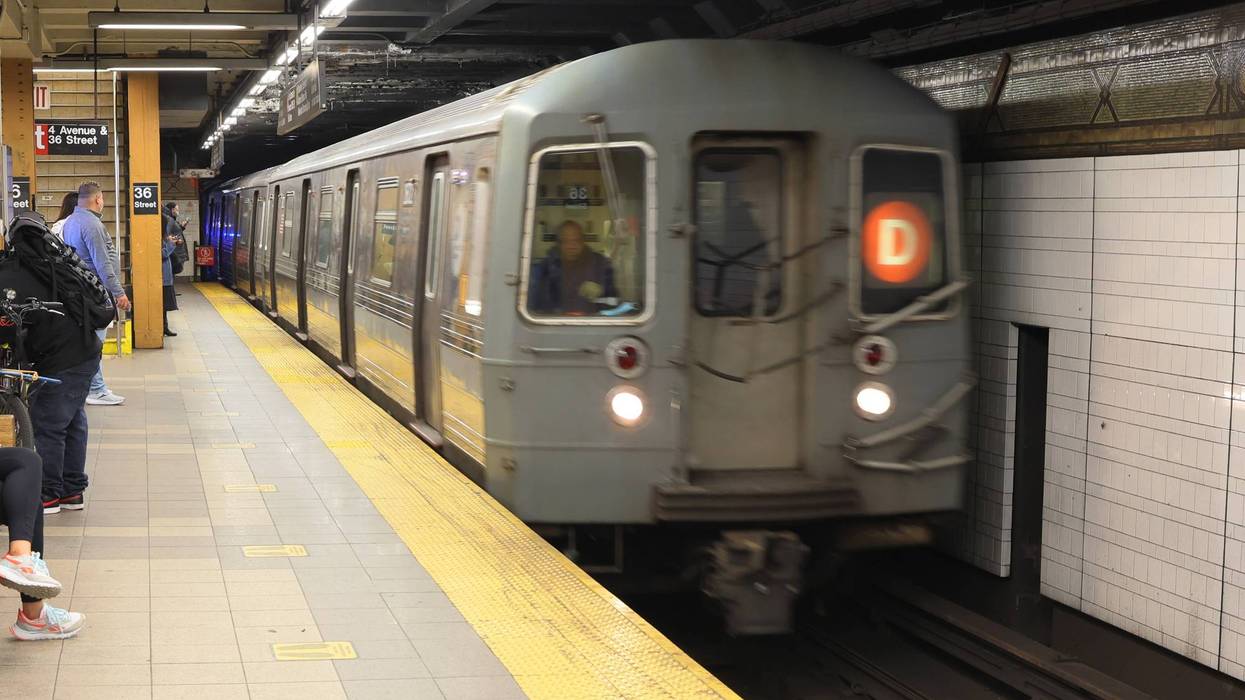

NEW YORK (BLOOMBERG) -- New York City’s subway system, the biggest in the US, has new plans to address the bottlenecks on its tracks that delay trains and leave passengers trapped in stalled cars.
The transit network is more than 100 years old and includes 70 pinch points where multiple lines merge onto one track or go through sharp turns. Outdated switches and old train signals in these spots can often cause backups that reverberate through the system.
The Metropolitan Transportation Authority, which runs the city’s subways, buses and commuter lines, plans to start by addressing two bottlenecks in Brooklyn that are major contributors to delays, according to a new report on the bottlenecks. The agency is building new crossover tracks at Nostrand Junction in Brooklyn, where the 2, 3, 4, and 5 subway lines come together. The work will reroute service and reduce delays, saving about one minute of travel time for trains passing through the area and benefiting 1.2 million daily trips.
The other location is the DeKalb Interlocking in downtown Brooklyn where new track switches and modern signaling will help the B, D, N, Q and R trains run closer together and more quickly through the busy intersection.
The projects are a more affordable way to increase service, compared with extending subway lines or constructing new routes, MTA officials say.
“We don’t just build new subway lines or dig new tunnels, which costs a fortune,” Janno Lieber, the MTA’s chief executive officer, said last week during an MTA committee meeting. “We’re trying to figure out how to get more transit out of the infrastructure that we have, and strategic investments can untangle and give us just much more throughput.”
The city’s vast subway network serves about four million weekday riders. It began as three separate systems that were consolidated under one operation in 1940, which means the transit grid is a patchwork of 25 subway lines running throughout the city’s five boroughs, rather than a well-integrated framework of links and intersections.
Replacing tracks and switches and updating signals will enable subways to run closer together and in some cases, allow for additional trains, according to Alyssa Cobb Konon, MTA’s deputy chief development officer of planning.
The MTA has identified 70 different chokepoints throughout its system and is analyzing 25 of those to determine which projects should be included in its next multi-year capital plan. That review includes calculating the estimated cost of the improvements along with the anticipated capacity gain and the amount of affected ridership during peak periods. It also highlights troubled areas where more than 40 trains are delayed by at least three minutes on an average weekday.
“Being able to modernize the signals, streamline these interlockings, minimize these disruptions in the bottlenecks, that can all make the service more reliable and that is one of the biggest challenges for customer satisfaction,” said Ana Champeny, vice president for research at Citizens Budget Commission, a think tank that analyzes government spending and services in New York City and New York State.
The subway station at Coney Island is one of the candidates under review. It’s the terminal where the D, F, N and Q trains begin their routes but there is also a neighboring train yard that stores other trains too. Improving the layout of signals and track switches could alleviate congestion in and out of the station, according to the report.
The project stands out because the delays affect 710,000 peak-hour riders across several subway lines. The improvements would create a high level of capacity gain while the capital cost is considered “medium,” according to the report.
“The more and more that they’re using this data to drive their decision making, the more they’re going to be able to stretch their dollars and use them cost effectively,” Champeny said.
More stories like this are available on bloomberg.com.