


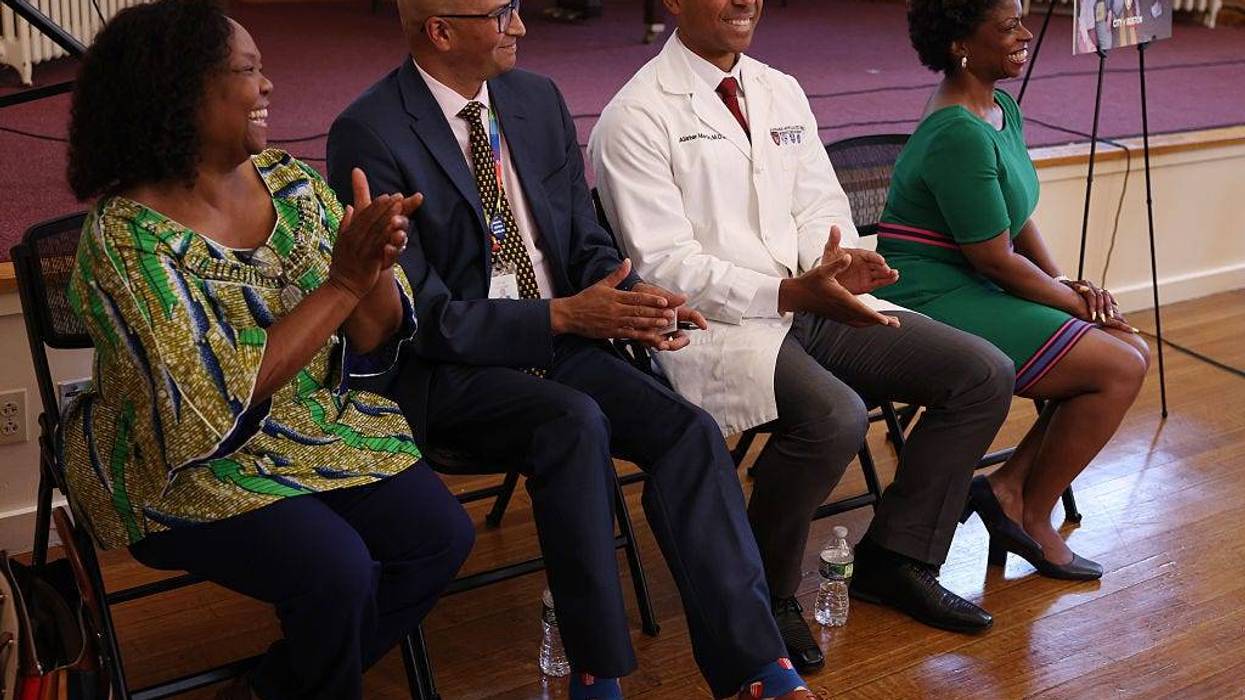

NEW YORK (BLOOMBERG) — New York City's health department is largely known for the letter grades it puts in restaurant windows after food-safety inspections. Its new commissioner is determined to change that.
Emergency room physician Alister Martin is taking charge of the nation's largest municipal public health agency, and its $2.5 billion budget, at a time when traditional medical care across the country is under threat. The cost of insurance is skyrocketing, federal spending on the Medicaid program for the poor is dwindling and support for conventional protections like vaccines are eroding.
Martin, a 37-year-old graduate of Harvard Medical School, said his top priorities include addressing affordability and protecting residents from the harm caused by US funding cuts. With clinics and community touchpoints across all five boroughs, he plans to supercharge communications about new Medicaid requirements, food programs and other initiatives to help residents access care.
"If you don't have health coverage, life is going to become a lot more unaffordable," Martin told Bloomberg in his first wide-ranging print news interview since he took office on Feb. 23. "We're hoping to do everything that we can to leverage the resources that already exist to address financial instability."
Efforts are already underway to elevate the agency's profile and address affordability — a central priority for Mayor Zohran Mamdani. They include a three year, $20 million investment to expand eligibility in the Strong Foundations program that pairs nurses with families from pregnancy through early childhood, the reinstatement of nearly $60 million in public health funds cut in 2019 under then-Governor Andrew Cuomo and a goal of scaling up a city program to erase residents' medical debt.
He also wants to make sure New Yorkers apply for federal programs that would help them.
"Every single year in New York City alone, billions of dollars go unspent because New Yorkers aren't applying" for food stamps and nutrition programs for children and pregnant women that are often federally funded, he said. "We really want to do everything that we can in this department to help connect people to those resources, close the gap, and help them reclaim their benefits."
The effort comes as the Trump administration pulls back on traditional public health funding, especially for states led by Democrats. It recently cut nearly $600 million in grants for four Democratic states for initiatives like HIV prevention and healthy equity programs, and deferred about $259.5 million in Medicaid funding for Minnesota to investigate claims of medical fraud.
While New York City hasn't been targeted recently by the funding cuts, the threat is causing the department to go "grant by grant" to understand what its potential exposure could be, Martin said.
"I am worried," he said. Still, "when the federal government steps back, this department is going to step up on behalf of all New Yorkers."
Global Impact
The Department of Health and Mental Hygiene is already filling in public health gaps created by the US government's pullback from the World Health Organization and the traditional use of vaccines. The city will continue to share vaccine and other information through the Northeast Public Health Collaborative, created to offset some cutbacks at the Centers for Disease Control and Prevention. It will also continue to engage with the WHO, he said.
"We are an international city, and so it is incredibly important for us to be tightly communicating with disease surveillance apparatuses all over the world," Martin said.
He's taking the helm at the largest local health department in the US, with roughly 7,000 employees that oversee the well-being of eight million New Yorkers. Martin said his former work as an ER physician left him frustrated with the public health emergencies he was seeing day in and day out, including patients struggling with overdoses, homelessness and the impact of Covid on patients who couldn't get vaccines.
Martin created the Vot-ER program to help emergency room patients register to vote. He also served as a White House fellow under President Joe Biden and on a Department of Health and Human Services advisory panel focused on underserved patient populations.
"All of these lessons and experiences really helped me build on those muscles that I'm going to use in this role," he said.
More stories available on bloomberg.com.


