



WASHINGTON (AP) — President Donald Trump on Wednesday derailed the confirmation process of his own nominee to head the nation’s intelligence agencies, an extraordinary move that upended Senate efforts to renew a crucial surveillance program and fueled fresh tensions with fellow Republicans on Capitol Hill.
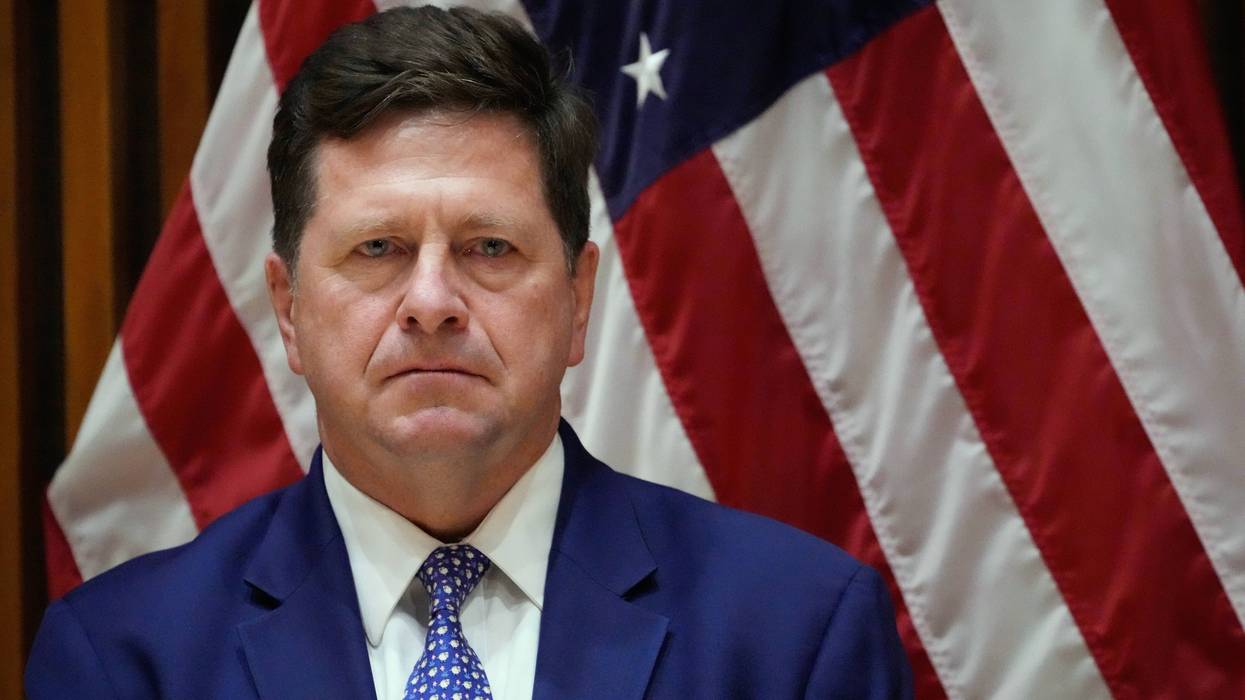
In an overnight social media post from the Group of Seven summit in France, Trump declared he was delaying the nomination of federal prosecutor Jay Clayton as director of national intelligence just hours ahead of his scheduled hearing, despite bipartisan praise for the nominee and Republican efforts to speed him through the confirmation process.
Senate Intelligence Committee Chairman Tom Cotton, R-Ark., said Republicans would go ahead with the Clayton hearing anyway, “unless the president directs him not to appear or withdraws his nomination." But later he postponed the hearing, saying it was “regrettable” that Trump had directed Clayton not to appear.
“Mr. Clayton is a patriot and a highly qualified nominee, as the president has said repeatedly,” Cotton said. “While today’s hearing is now unfortunately postponed, I look forward to proceeding with his confirmation in the near future.”
Trump's attempt to delay Clayton makes it more likely that his temporary pick for the intelligence job, top housing official Bill Pulte, will take over when outgoing director Tulsi Gabbard leaves office on Friday. Republicans and Democrats in Congress have sharply criticized Pulte, a Trump loyalist who has no known national security experience and has used his current administration perch to target perceived adversaries of the president.
Trump has defended Pulte, calling him “fair” and “talented” in his social media post. Speaking to reporters in France, Trump called the speedy process to get Clayton formally installed a “rush act by the Democrats.”
“Why are they afraid of this guy? They’re so afraid of him,” Trump said, referring to Pulte. “They’ll do anything not to have Pulte go in there.”
Caught in the middle is the renewal of Section 702 of the Foreign Intelligence Surveillance Act, or FISA, bipartisan legislation that aims to prevent terrorist attacks by monitoring the communications of targeted foreigners located outside the United States. Democrats had said they would not provide the necessary votes to pass the bill unless Pulte's temporary appointment was withdrawn. The current surveillance authority expired last week.
Further complicating matters, Trump said in his social media post that he would not sign the FISA renewal without his legislation to require proof of citizenship for all voters — which does not have enough votes to pass the Senate — and that he does not want to remove Clayton from his current position as U.S. attorney for the Southern District of New York until his replacement, James McDonald, is approved.
Trump's post sent Senate Republicans scrambling, and it was unclear if and when Clayton's nomination would move forward.
“We’ll just have to take it a day at a time until we get more clarity on what the White House position is on this,” Senate Majority Leader John Thune, R-S.D., told reporters Wednesday morning. He said he didn't know why Trump was holding up the effort.
“Good question,” he said.
Escalating tensions between White House and Capitol Hill
Virginia Sen. Mark Warner, the top Democrat on the Senate Intelligence Committee, called Trump’s move an “extraordinary display of dysfunction from a president who seems determined to turn America’s national security into a political bargaining chip.”
“The biggest obstacle to resolving these issues has not been Senate Democrats or Senate Republicans,” Warner said. “It has been the chaos and confusion coming from the White House itself.”
It was just the latest in a series of standoffs between Trump and Senate Republicans this year.
A funding bill for Trump’s immigration agencies was delayed several weeks when Republicans revolted over a $1.776 billion “anti-weaponization” fund and a $1 billion security request for the White House, including his new ballroom. The bill passed after acting Attorney General Todd Blanche said the settlement would not move forward, and GOP leaders decided to drop the security money from the bill.
Trump then appointed Pulte as interim intelligence director just as the FISA renewal was moving toward passage, upsetting bipartisan talks. Republicans urged the White House to pull the appointment, to no avail.
Republican Sen. Thom Tillis of North Carolina said that Trump’s recent moves are “undermining the results he wants.”
“Jay Clayton was on the brink of having a very good hearing and probably getting some Democrat support, and now we’re in a posture to where it may be the reason that 702 doesn’t get reauthorized,” Tillis said. “That’s a mistake.”
Tillis called Pulte a “sycophant” to Trump.
“How could anybody think he was going to be a credible choice?” he asked.
Democrats say Trump is distracting from other issues
Democrats say that Trump is undermining Americans’ safety as he makes demands of the Senate and tries to put loyal allies in national security positions.
Pulte’s appointment “should send a shiver down the spine of every American,” said Democratic Sen. Elissa Slotkin of Michigan, a former CIA analyst and national security official. “The only thing more dangerous than letting FISA lapse is putting Bill Pulte at the head of 17 intelligence agencies.”
Sen. Angus King, an independent from Maine, said he may have supported Clayton, with whom he met on Tuesday. “It’s unfortunate because he nominated this guy,” King said of Trump.
Sen. Patty Murray, D-Wash., said she thinks Trump is also trying to divert attention from the war in Iran.
Murray said Clayton was on track to be confirmed because “most Democrats felt that allowing Pulte to go in office was a really bad idea, and most Republicans agreed.”
Consequences for FISA's lapse
National security officials across both major political parties have for years described Section 702 as vital for gathering intelligence that can disrupt terrorist attacks and espionage operations, though some lawmakers and civil liberties advocates have raised concerns over the government's use of information about Americans that is incidentally collected through the program.
A court order from March certified that the program could continue for an additional 12 months, though it is possible that communications companies could challenge the government's authority to force them to cooperate and share data.
Trump's delay of Clayton “shows he has no interest in getting FISA done,” said Senate Democratic leader Chuck Schumer, D-N.Y.
___
Associated Press writers Kevin Freking, Joey Cappelletti and Lisa Mascaro in Washington, Aamer Madhani in Evian-les-Bains, France, and Darlene Superville in Geneva contributed to this report.


