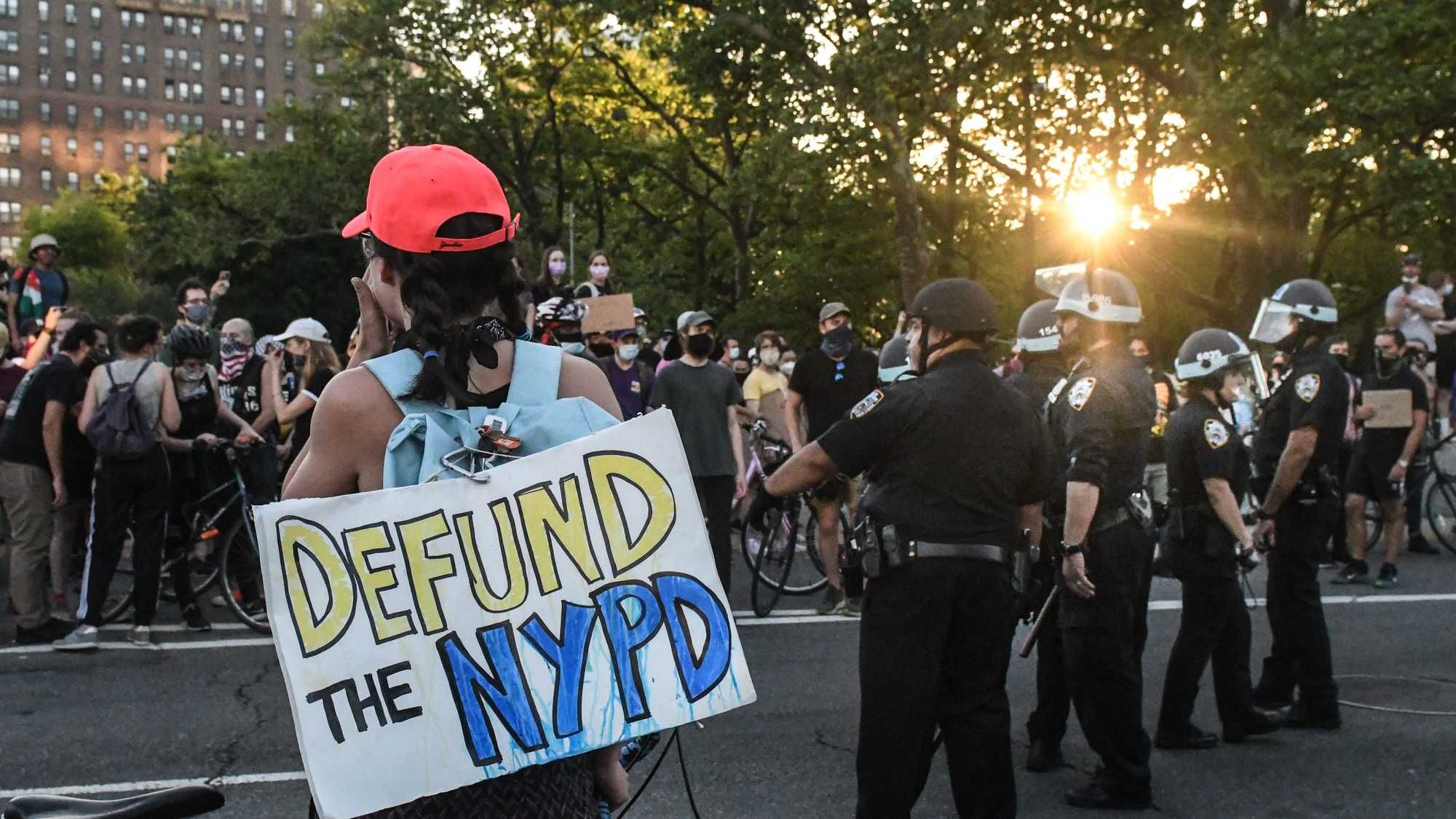


NEW YORK (1010 WINS) — New York State Attorney General Letitia James is suing the NYPD over its response to protests last year and is recommending a federal monitor to oversee the department.
The suit, filed on Thursday, comes after investigations into the NYPD's response to last summer's protests over George Floyd's death.
James' office said the suit against the NYPD and its leadership aims "to end its pattern of using excessive force and making false arrests against New Yorkers during peaceful protests."
The suit specifically charges the NYPD, the City of New York, Mayor Bill de Blasio, NYPD Commissioner Dermot Shea and NYPD Chief of Department Terence Monahan with "failing to address this longstanding pattern of abuse by not properly training, supervising and disciplining officers to prevent misconduct, despite knowledge and public admission that it violated the rights of New Yorkers."
The suit "lays out dozens of examples of the NYPD's blatant use of excessive force and other misconduct, since May 2020, including the indiscriminate, unjustified, and repeated use of batons, pepper spray, bicycles, and a crowd-control tactic known as 'kettling' against peaceful protesters — all causing protesters significant physical harm," James' office said.
The suit seeks systemic reforms to the NYPD and the implementation of a monitor to oversee the NYPD's policing tactics in future protests and to "ensure compliance with the law."
"There is no question that the NYPD engaged in a pattern of excessive, brutal, and unlawful force against peaceful protesters," James said in a statement. "Over the past few months, the NYPD has repeatedly and blatantly violated the rights of New Yorkers, inflicting significant physical and psychological harm and leading to great distrust in law enforcement. With today's lawsuit, this longstanding pattern of brutal and illegal force ends. No one is above the law — not even the individuals charged with enforcing it."
In a tweet Thursday afternoon the NYPD said: "The New York City Police Department welcomes reform and has embraced the recent suggestions by both the city's Department of Investigation and the city's Law Department."
"As the Mayor has said, adding another layer does not speed up the process of continued reform, which we have embraced and led the way on," the statement continued.
Police Benevolent Association President Patrick Lynch also responded to the suit in a statement, saying: "We will say it again: what we witnessed in June was a failure of New York City's leadership. They sent cops out to police unprecedented protests and violent riots with no plan, no strategy and no support. They should be forced to answer for the resulting chaos, instead of pointing fingers at cops on the streets and ignoring the criminals who attacked us with bricks and firebombs."
"As part of the Attorney General's inquiry, the NYC PBA submitted extensive written testimony, including testimonials from injured police officers and input from disorder control expert and former NYPD Chief of Department Louis Anemone," Lynch said, adding that the testimony can be found at nycpba.org.
In December, the city's Department of Investigation released a 111-page report that found "several deficiencies" in the NYPD's response to the Black Lives Matter protests.
The DOI said "the NYPD's use of force and certain crowd control tactics to respond to the Floyd protests produced excessive enforcement that contributed to heightened tensions."
It added that the department "deployed officers who lacked sufficient, or sufficiently recent, training on policing protests."
In July, the attorney generals office, which was directed by the governor to probe the police response to the protests, released a preliminary 57-page report that included in-depth accounts of interactions between police and demonstrators between late May and June, as well as recommendations for systemic police reforms.