


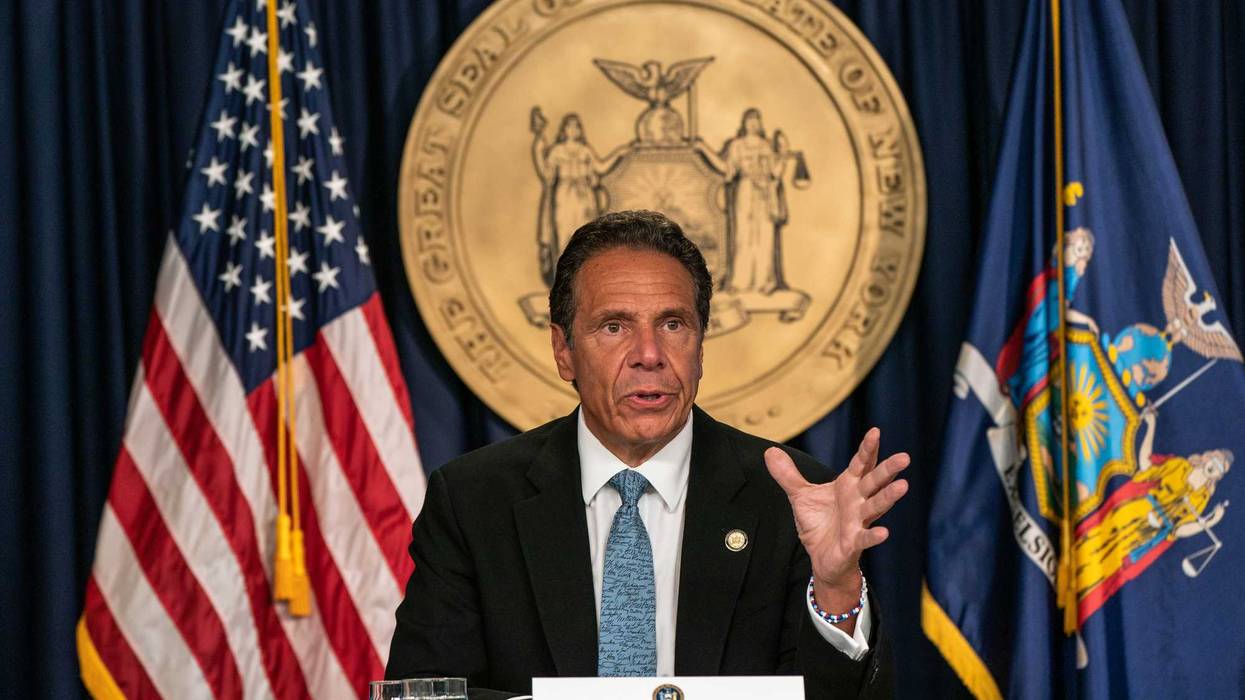

NEW YORK (1010 WINS) -- New York state reported 43 new COVID-19 hospitalizations on Wednesday — an increase Gov. Andrew Cuomo said could be attributed in large part to its "hotspot clusters."
As of Tuesday, 748 people in the state were hospitalized with COVID-19, up by 43 from Monday's 705, Cuomo said in a teleconference with reporters Wednesday morning.
"The increase in the hospitalizations is, we're seeing the hotspot clusters adding to hospitalizations at over three times their population rate," he said. One hundred and seventy-six of the 748 hospitalized patients were in intensive care, and 72 were on ventilators, he noted.
Of the 108,246 COVID-19 test results that came back on Tuesday, 1,360, or 1.25 percent, were positive, Cuomo said.
Excluding "hotspots" in Brooklyn, Queens, Orange County, Rockland County and Broome County, the state's infection rate was 1.05, he said. The hotspots themselves reported a 5.1 percent infection rate, with Broome County reporting the highest individual rate, at 6.1 percent, and Brooklyn reporting the lowest, at 2.2 percent.
"We are oversampling the hotspots, and then we do the normal statewide testing," the governor explained. "The spread is inevitable if we do not control the hotspots."
New York state also reported eight new COVID-19 deaths.
Cuomo's teleconference came a day after he announced that New York state would start rolling back reopening measures in some COVID-19 hotspots.
The state released maps designating parts of Brooklyn and Queens, as well as Rockland, Orange and Broome counties, "Red Zones," "Orange Zones" and "Yellow Zones" based on COVID-19 case data.
"Red Zones" must ban mass gatherings, limit capacity at houses of worship, close non-essential businesses, shutter schools and move restaurants to takeout-only for 14 days, effective Friday at the latest, Cuomo said.
The newly-announced rules sparked protests in Orthodox Jewish areas in Brooklyn on Wednesday night, with four Orthodox Jewish lawmakers claiming the governor had "chosen to pursue a scientifically and constitutionally questionable shutdown of our communities."
Asked about the backlash on Wednesday, Cuomo acknowledged that "some people are unhappy," but stood by the measures.
"To the extent that there are communities that are upset, that's because they hadn't been following the original rules," he said. "That's why we are where we are."
The cluster maps were drawn using "case data," the governor noted, adding that there was "nothing arbitrary about this."
"The enforcement has to be done," he said. "The reason we're in this situation now is because the enforcement wasn't done."