

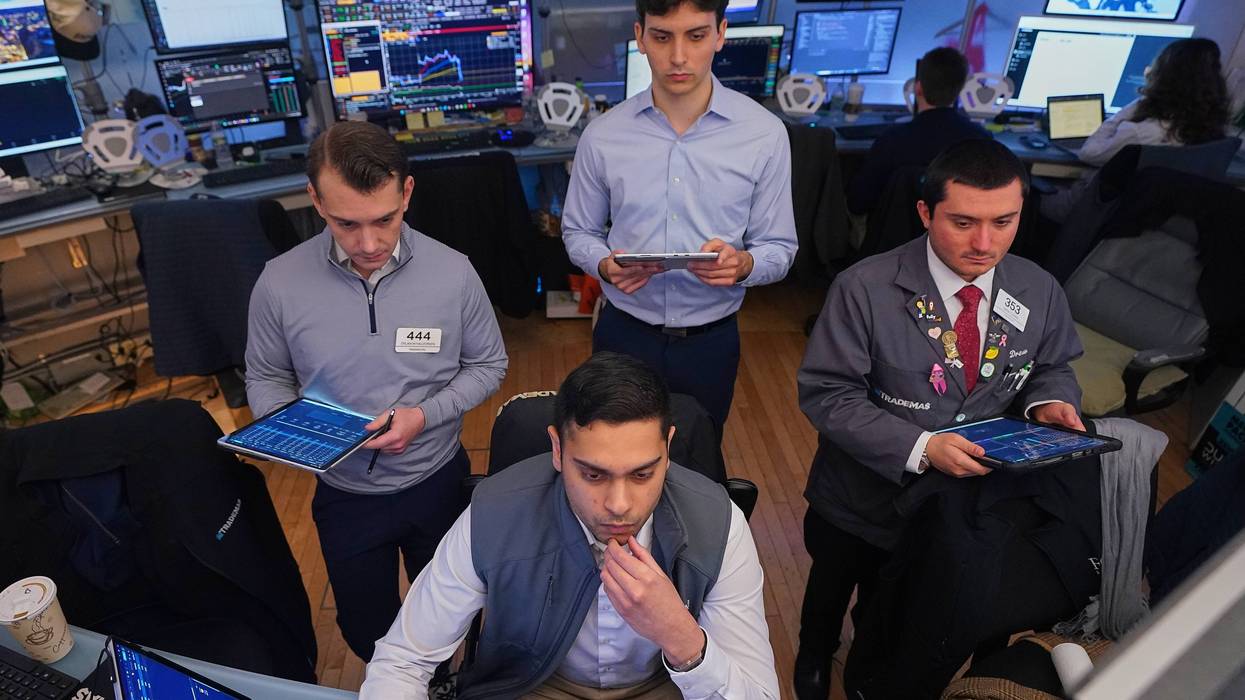

The operator of the S&P 500 says it has decided not to change its guidelines for when very large “MegaCap” companies are eligible for inclusion into its bevy of stock indexes.
In its announcement Thursday, S&P Dow Jones Indices said its index committee weighed responses received from a “wide range of market participants,” but ultimately decided not to make any changes to its criteria for determining when a company should be added to the S&P 500, S&P MidCap 400, or S&P SmallCap 600 indexes.
Some of the criteria for inclusion include headquarters in the United States, listing on NYSE or Nasdaq and profitability over the past year.
S&P also requires companies that complete IPOs to be traded on an “eligible exchange” for at least 12 months before they can be considered for inclusion into an index. The committee weighed shortening that requirement to six months, but opted not to do so.
The committee also decided against creating exceptions to its guidelines solely based on market capitalization, or how the stock market gauges a company’s value.
The move by S&P comes as other major U.S. index operators have taken steps to add very large companies soon after they make their stock market debut.
In March, Nasdaq announced new guidelines that allow for expediting the addition of large companies fresh off their initial public offerings into its benchmark Nasdaq 100 Index.
Nasdaq's guideline change is meant to ensure that the index, which tracks the 100 largest, non-financial companies listed on the Nasdaq, accurately reflects the market sooner, rather than possibly months after a very large company goes public.
In its decision, S&P noted that there may be trade-offs in sticking to its guidelines for index eligibility, but said its current approach provides its indexes “substantial market coverage and sector balance.”
Many pension plans and mutual funds use S&P and Nasdaq indexes as an investing benchmark.
The moves by S&P and Nasdaq come as several of the biggest artificial intelligence companies in the U.S. are setting the stage for blockbuster IPOs this year.
Elon Musk’s SpaceX is expected to go public this month with plans to raise up to $75 billion, which would make it the largest-ever stock market debut.
Meanwhile, Anthropic, the maker of the Claude chatbot, announced Monday its plans for a proposed IPO, while OpenAI, maker of ChatGPT, is planning an IPO as soon as this fall.