


Tuesday, WWL's Newell Normand began his show talking about an issue very important to radio listeners. He took it a step further and said it’s an issue that isn’t just vital to those in the audio industry. It’s important to each and every one of us.
On September 15th, the House of Representatives passed H.R. 979, otherwise known as the AM Radio for Every Vehicle Act, which “requires the Department of Transportation (DOT) to issue a rule requiring AM radio capabilities to be standard in all new passenger vehicles.”
In the modern age, a number of auto manufacturers look to remove AM radio from their new models, claiming it interferes with other electronics. It seems evident that elected officials, and those who voted them in, disagree with the decision to do away with what might be the most reliable source of mass communication available.
The bill to protect AM radio passed the House with bipartisan support and virtually no opposition. But just because it breezed through the House doesn’t mean it’ll breeze through the Senate.
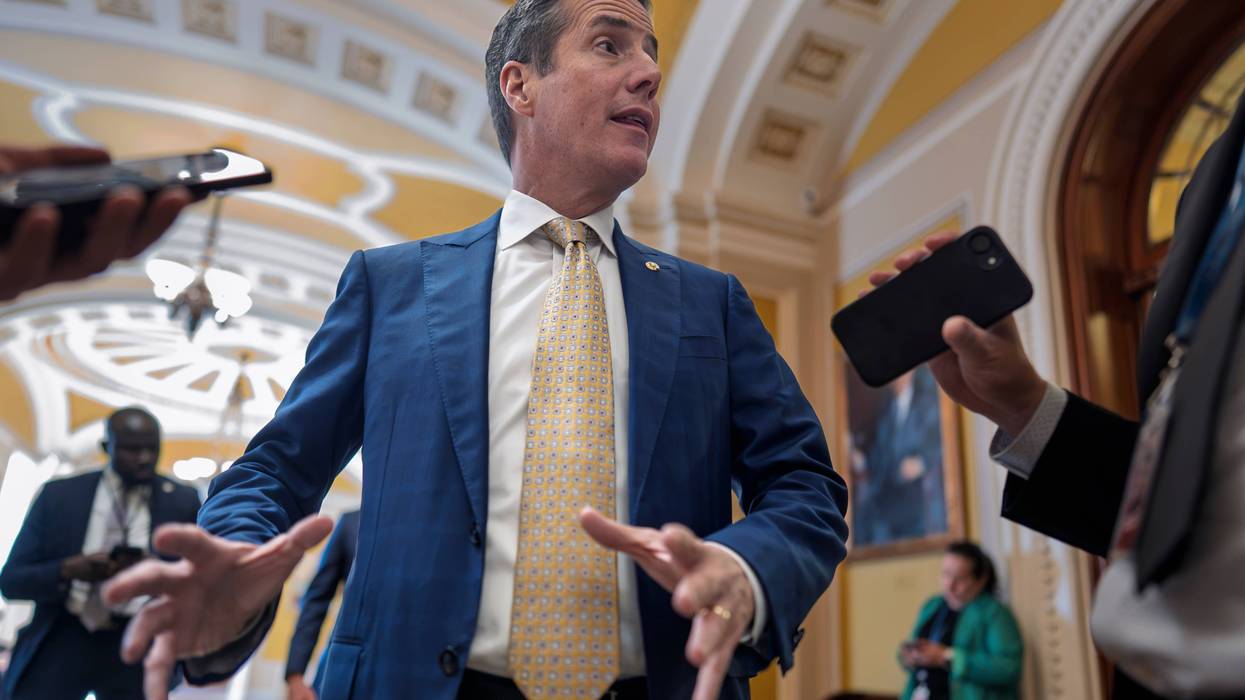
Newell echoed Congressman Jeff Crank (CO-05), who urged broadcasters and listeners to keep pressure on lawmakers. His message: call your US senator. Doesn't matter what side of the aisle they're on, call them.
“AM radio has always been the signal America trusts when everything else fails,” Crank writes. “It is the medium that cuts through mountains, storms, and distance. It is the voice that remains when cell towers collapse, when broadband flickers, when the digital world proves—yet again—that it is only as reliable as the nearest power source. And in 2026, as automakers move steadily toward dashboards defined by subscription software and silent electric drivetrains, AM radio finds itself fighting for its survival in the very place where it has always mattered most: the American vehicle.”
Crank spent 14 years hosting a talk show in Colorado Springs, and he makes the following observation, which I wholeheartedly agree with: To survive in talk radio, you have to be talking about things that a family would talk about at the dinner table. And here at WWL, we talk about all of those things, day in and day out on this station.
But not only is it a valuable source of community news, AM radio, he says, is certainly a safety link to the outside community. We know during times of disaster when we're dealing with hurricanes, when it’s time to pack up and get out of harm's way, often, our only connection to safety information comes through radio.
And for anyone of the belief that radio is a useless or dying medium, I’d urge you to look at the facts. 80% of U.S. citizens over 12 years old listen to radio on a weekly basis, at a minimum. And in areas without cell connection, it's often the only source of vital information. And many don't realize that AM signals are stronger than FM, with the ability to reach upwards of 1,000 miles at night. Put simply: It’s not something we can afford to lose.
Those of us in the Gulf South don’t have to use our imagination to understand AM's importance. During Katrina, that was our lifeline. And nothing has changed.
"Again, I urge you to call your senator," Newell said. "Pick up the phone and call the offices of John Kennedy and Bill Cassidy. Tell them to vote in favor of the AM Act. To my knowledge, both support the bill. But regardless, remind them. This isn’t something we want to leave up to a roll of the dice.
"The process to get this bill written, introduced, and over the first hurdle was arduous. Now we're almost there, and it’s time to bring it across the finish line."