


THE NFL DRAFT REPORT PRESENTS
THE 2019 OFFENSIVE GUARD DRAFT CLASS
Collegiate offensive guards tend to not get the respect they deserve from NFL scouts, as most professional teams are more concerned about drafting blue chip offensive tackles instead of interior linemen. Even though the West Coast Offense is still being incorporated by several teams in the league, most are going back to conventional offenses that feature a more balanced ground attack between the tackles.
With the changes taking place, one position that will have to evolve with those changes is at offensive guard. In the West Coast formation, teams relied upon guards that excelled in trap blocking, pulling on sweeps and getting out quickly to the second level to angle block the linebackers. With so much emphasis on the short area passing game, it was necessary to have guards with excellent foot quickness, sacrificing bulk in their blockers for lateral agility.
While the smaller, quicker angle blockers are not a dying breed, more teams are starting to convert large tackles into offensive guards. In a conventional 4-3 defense, the offensive line is usually matched up against a defense that features two mammoth tackles that come on relentlessly from the interior. To combat these defenders, teams are now looking for offensive guard who are big, physical pass protectors.
Strength is a premium over quickness. Suddenness off the snap and a punishing hand jolt have replaced the small trap blockers. Despite the change to bigger interior blockers, lateral agility still is a big priority, for without that sideline-to-sideline acceleration, cutting off the defensive tackles would be extremely difficult.
There are two basic schemes for blocking up front -power blocking and zone blocking. In a power or man-on-man scheme, these teams usually utilize linemen that are big and physical enough to win the one-on-one battles in the trenches. Zone blockers tend to be more athletic, as these athletes are used more for traps and pulls thanks to their quickness and loose hips needed to execute proper angles.
Most teams prefer the quicker guards, as their running success is based on their ability to get out front and widen the rush lanes. In pass protection, short pitter-patter steps and active hands come into play, as these blockers have to mirror the defender and have the agility to slide. In the zone scheme, more often the guards are pulling and must keep their head on a swivel, knowing when they need to turn and stalk a second level opponent.
Maintaining balance and demonstrating fluid footwork is required in pass protection, as the guard needs to be alert of moving targets and have the balance needed to change direction and work down the line. As they retreat to protect the pocket, their strong anchor is an asset. In a power scheme, you see these guard explode off the snap, maintain proper pad level and use their hands with force to sustain. They are like dancing bears, as their base is important to attain leverage. The ability to pop with his hands coming out of his stance during initial contact allows that blocker to drive through and steer his opponent away from the pocket.
HOW THE VETERAN FREE AGENTS AFFECT THE 2019 DRAFT PROCESS
Prior to the commencement of the 2019 veteran free agent process, Minnesota, Washington, Houston, Tennessee, Miami and Carolina listed offensive guard as either a Day One/Day Two need. Seattle, the Rams, Detroit, the Jets, Jacksonville, Kansas City and San Francisco all indicated that if they did not locate the guards of their desire through free agency, that it would likely see them enter Day Two activity with that position getting strong draft consideration.
New Orleans, the Chargers, Tampa Bay, Cleveland, Cincinnati, Houston, the Giants, Denver, Chicago and Oakland are also going to be in the hunt for guards, more so on Day Three, as they might have other pressing draft needs to address first, or are simply looking to add to their roster depth.
This off-season, there were forty-four offensive guards receiving free agent status. Twenty-four received new deals, with twelve attaining multi-year contracts. The average salary for this group is $4,481,444. Of the multi-year deals, three were given four-year deals, paced by Roger Saffold, who left the Rams for a deal that averages eleven million from Tennessee. Billy Turner joined Green Bay from Denver, as his four-year pact totals $28MM. Former Jet, James Carpenter, takes home 5.25 million per year on the four-year contract that Atlanta handed the veteran.
All four guards who inked three-year deals will average at least five million per year - Jamon Brown (left the Giants for Atlanta at 18.75MM), John Miller (Cincinnati bound from Buffalo for 16.5MM), Josh Kline (15.5MM by Minnesota after he was cut by Tennessee) and A.J. Cann (stayed in Jacksonville for 15.5MM). Joining Cann in remaining with their 2018 clubs are Seattle's D.J. Fluker (two years at six million total), Tennessee's Kevin Pamphile (one year for 1.6 million), the Jaguars Tyler Shatley (1.05MM for 2019) and Detroit's Andrew Donnal (845K for one season).
This left twenty other veteran guards seeking employment. Soon realizing their next deal might not come, Miami's Josh Sitton and Detroit's T.J. Lang decided their wounded bodies were better in retirement. Nine of the available guards are over age thirty, but none have much value as starters. Perhaps the most notable guard available is former Arizona Cardinals first round bust and NFL journeyman, Jonathan Cooper, who suited up for Dallas last season. The youngest on the market is 25-year-old former Charger, Cole Toner and the oldest guard looking for a job is the Giants 2018 waiver pick-up, John Greco, age 34.
OFFENSIVE GUARDS IN THE NFL DRAFT
Offensive tackles have fared much better in hearing their names called than the guards or centers. Since the 2000 draft, there have been averages of 13.53 guards (257 total), 19.32 tackles (367) and 6.42 centers (122) taken each year. Of the 367 tackles, 66 were selected in the opening round (17.98% of all tackles drafted), compared to just 20 of 257 guards (7.78%) getting first round recognition.
Twenty-nine of the 257 guards drafted have never appeared in an NFL game (11.28%), compared 51 of 367 tackles (13.90%) never breaking training camp and suiting up in the league. Of the 74 tackles drafted since 2015, fifteen entered the league as first round picks. Ten of those opening round tackles have started every game they played in. During that same time span, of the 54 guards drafted, four were first round choices and two of them - 2018 sixth overall pick, Chicago's Quenton Nelson (16 games) and Seattle's 31st overall selection in 2016, Germain Ifedi (44 contests).
Quality starting guards seem to have the edge on Day Two tackles. Among the twenty tackles drafted in rounds two/three since 2015, just two started every game and one never even made it into the league. Of the fifteen guards selected during Day Two, all have played and six have never had to come off the bench since entering the league.
The success rate for guards seems to dip after the draft's second day. Of the eleven fourth round choices used on guards since 2015, four never played NFL ball and two others never lasted one season. Five fifth-rounders among the 12 drafted never made it, but all seven six round blockers suited up in the league. Three of the five seven round picks used for guards have received NFL playing time.
THE PLAYERS TEAMS ARE ON GUARD FOR IN THE 2019 DRAFT
There are several teams with pressing needs at guard, led by the Minnesota Vikings, despite their recent signing of Josh Kline. The Rams are certain to look for an interior blocker in the first round, whether at guard or center. Starting snapper John Sullivan was allowed to walk and Roger Saffold takes the starting job that Kline vacated in Tennessee.
The Jets are in need of interior line help after James Carpenter bolted for Atlanta, but the Falcons are still looking for an upgrade, despite also inking Jamon Brown to a vastly over-priced contract to leave the Giants. Big Blue had claimed Brown after he was cut by San Francisco mid-season and he pulls down 18.75MM of the Falcons cash stash the next three seasons.
Buffalo will have to do much better than Oakland's Jon Feliciano to replace John Miller, who received 16.5MM over three years from Cincinnati. Miller has started all 47 games he's appeared in since the Bills had selected him in the third round of the 2015 draft. In a bit of "change partners," Arizona signed J.R. Sweezy from Seattle after the Seahawks had convinced former Cardinal, Mike Iupati to leave the Sun Devil State for two hundred days of rain.
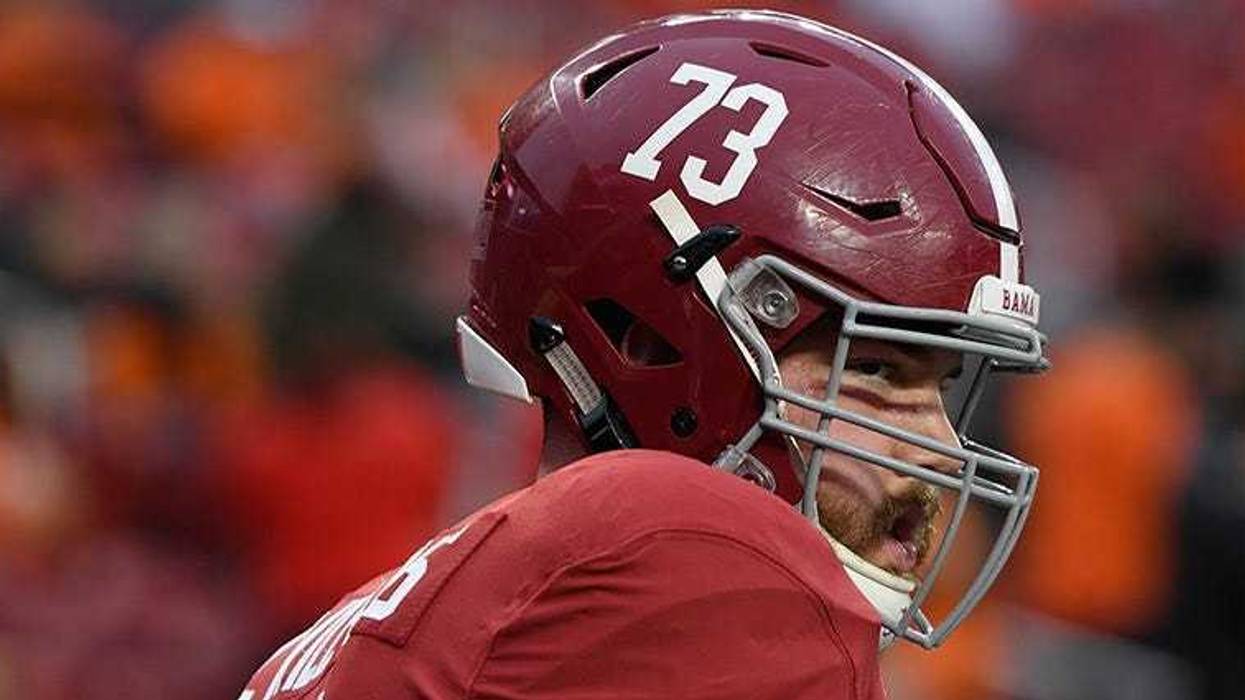
Still, if you look at the current crop of available guard prospects, there are doubts that any will be taken during the draft's first day. Alabama's Jonah Williams is potentially a fit at guard, with both Carolina (#16) and Minnesota (#18) highly interested, but both teams could see him remain at tackle, as there is a left side vacancy for Panthers and a ride side hole the Vikings need to fill.
Williams has had very good success in using his reach to cover up defenders, despite shorter than ideal arms (33 5/8-inches) for a tackle, thus teams viewing him more as an interior blocker. He has no problems getting low in his pads, which helps him generate good force coming off the snap. He has very good knee bend and while he could use more bulk, the bigger down lineman are not going to be able to get under his pads and drive him back into the pocket.
Williams flashes the ability to gain position coming out of his stance. He has very good balance and body control working in-line, at the second level and in pass protection. He shows quick feet, a wide base and excellent flexibility to adjust and stick. His foot speed allows him to almost immediately gain position. He plays flat-footed and with a wide base, which allows him to sustain very well vs. the edge rushers in pass protection.
Another college tackle with late first round projections is Oklahoma's Cody Ford, who is also being placed on several team value boards as a guard. Ford has a thick frame with the footwork and balance to carry at least another ten pounds of bulk. He has a good bubble with thick ankles, thighs and calves. He has functional straight-ahead quickness off the snap, along with the agility and flexibility to stay low in his pads. He has long, well-developed arms and strong hands to shock and jolt on contact. With his big hips and strong lower body frame, it makes it difficult for even the more powerful bull rushers to walk him back into the pocket.
While Ford lacks good sustained speed, he has the quick feet, low pad level and initial acceleration to block into the second level. He plays with above average balance and firmly anchors, thanks to his big hips and lower body strength. He also shows good body control and flexibility when changing direction. He stays in control (does not lunge or over-extend) working in space and has shown improved change of direction agility on sweeps and pulls. Most scouts feel that the Chargers (#28) might be the best place for Ford to earn first round status.
The first collegiate guard expected to be drafted is Boston College's Chris Lindstrom, one of the standouts during Senior Bowl practices. The Eagles senior displays good foot quickness for a down lineman. He demonstrates the agility and initial burst to get into the second level without lumbering. He consistently plays on his feet and shows the low pad level, balance and ability to keep his hands inside his frame when mirroring a defender.
He is quite flexible when redirecting and while he lacks the ideal height you look for on the corners, he could earn additional playing time as an offensive tackle due to his ability to locate and attack speed rushers. He shows good acceleration on the move, doing a good job of getting in front on traps and pulls. He is quick when changing direction and generally keeps his head on a swivel, looking for other defenders to attack. He could be more of a second day target, but if none of the late first round teams come calling (Chargers at #28), he won't get past the 49ers, who own pick #36 in round two.
One player that was discussed in our center analysis, Penn State's Connor McGovern, has his suitors for pivot duties, but the Lions (pick #88, round three) hopes he slips until the end of Day Three. The versatile lineman started in the pivot in 2017, but trying to get their best linemen on the field saw him shift to right guard last season, except for a return back to center in the regular season finale.
McGovern shows impressive speed and balance, especially when blocking or running interference on the team’s “power-left” sweeps, producing most of his Big Ten touchdown-resulting blocks on the move. He displays good foot quickness and body positioning to deliver crunching blocks while working down the line. He also demonstrates explosion and functional strength behind his punch, along with flashing good agility when changing direction in pass protection. He demonstrates good knee bend and hip flexibility to stay low in his pads while still firing off the snap in an instant.
Our staff is very high on a small college performer, Nate Davis of Charlotte. He has that short area foot speed to generate the range needed when pulling from the backside. He is quite effective executing the kick-out and fold blocks, and he could see some action at tackle, thanks to his ability to generate power on the move, along with keeping his head on a swivel to locate and neutralize second level defenders.
Davis gets into blocks with good urgency and breaks down well as a run blocker, especially when asked to deliver movement on drive and down blocks. Davis is best when blocking for the run, as he might be a plodder, but shows the ability to get a good fit and drive the defender off the ball. His leg drive gets him good success to work for position.
Oklahoma's trio of Dru Samia, Ben Powers and Bobby Evans appear to be the best options for teams after those mentioned above, but organizations will probably have to invest second day selections to secure their services. Evans, a collegiate tackle, might be a better fit at the interior spots. He's more of a road grader with adequate foot quickness, but displays a strong anchor and good hand usage to stave off the edge rushers. He shows just average foot quickness past the line of scrimmage, but enough functional speed to pull and get out in front.
It is rare to see him play tall in his stance or be on the ground much, but he has marginal change of direction agility and will have problems mirroring speedy edge rushers at the next level, unless he can stun them with his above average hand punch first. In the trenches, he is very hard to move out or push back into the pocket. He has enough quickness out of his stance and has enough explosion and power to be effective for the short area running game.
Samia is the more polished of his Sooners blocking mates. His strong leg drive allows him to be an effective drive blocker, even if he does not have good hip snap to turn and generate movement. He is able to jar defenders when he gets a clean hand punch and when he plays with a wide base, he is able to anchor vs. the bull rush (must not get up on his heels in order to be effective here).
He is at his best working in a phone booth and while he has good experience in pass protection, he is a more effective run blocker. If he drops his pads and keeps his hands inside his frame, he does a good job of finishing in one-on-one battles. He does need to get better fits on the ground game (bad pad level at times), for despite his upper body power, he will revert to positioning and turning the defender rather than driving through.
Powers might lack sustained speed, but he shows good balance and short area explosion to get out in front on sweeps. He demonstrates proper body control and takes good angles stalking second level defenders. He moves better going straight forward than when shifting laterally, but with his strong anchor, it is very difficult for defenders to bring him down to the ground.
Powers plays with ease getting his hands up to lock on and control. He is naturally strong and shows the aggressiveness to deliver a solid hand punch to shock and jolt. The Lions are showing the most interest, perhaps with an eye on using their third round pick (#88) to secure their replacement for recently retired T.J. Lang.
It will be interesting where an NFL team will place Wisconsin's Michael Deiter on their front wall, as this Badger has starting experience straight across the offensive line. He seems more suited to play guard at the next level. He moves well going down the line, showing good balance and adequate change of direction agility that could be even better, but he does revert to waist bending, especially on drive blocks. He has the quickness to get into the second level and shows good stamina and endurance throughout the game.
While not sudden, Deiter has the initial quickness and balance to accelerate and gain advantage, using his arms well to make reach blocks. He will revert to bending at the waist at times, but generally plays on his feet, generating good body control and angle concept working into the second level. He sets low in his stance and has good stamina, as you won’t see him get lazy late in games or get beat around the corner, thanks to his ability to maintain position and mirror. With injuries at both tackle and guard impacting their protection for Marcus Mariota, Tennessee could be well advised to use their third round pick (#82) for this Badger.
One player that captured my attention while breaking down film on quarterback Ryan Finley was Tyrone Jones. While center Garrett Bradbury was certainly a bonus for Jones to play alongside the All-American snapper. Jones is more of a Day Three project (Eagles and Bills like him in the fifth round area), but he has good explosion off the snap and a punishing hand punch to generate pop on contact. He is quick to gain position and shows good urgency taking proper angles to locate and neutralize second level defenders. With his quick first step, he is very consistent to gain advantage. He needs to develop looser hips, but does strike with good suddenness. It is rare to see him late off the ball and he works hard to control and sustain.
One player I'd like to mention here is Ohio State's Michael Jordan, who is similar to Michael Deiter due to his experience at every offensive line position. Most scouts feel he will find a home as an interior blocker, but are split down the middle on thoughts of him as a guard or center. With his big frame, having him on a squad as an extra tackle also adds to his resume.
Jordan has natural strength and quickness. He shows ease of movement accelerating into the second level and excellent change of direction agility to make plays working down the line. He shows a very good base, keeping his feet wide and pad level low to generate enough explosion coming off the snap. He plays on his feet and has the lateral range to make adjustments in his pass set.
Jordan bends his knees with good flexibility and showed in 2018 that he has the quickness to get out on the edge and seal off the rush. He has the agility to pull and trap with effectiveness from the offensive guard position. He shows good hand usage and the redirection skills to mirror on stunts and blitzes, if a team chooses to move him to center. The Rams are probably his perfect destination, as they have vacancies at both center and guard, possibly investing their third round pick (#99) in the veteran Buckeye.
The third day of the draft will also see a lot of action among college's interior blockers. While not as well known to the media like Jordan, the Big Ten Conference might see a late round find coming out of Indiana, as left guard Wes Martin has been busy making visits. This country strong, elite pass blocker is also garnering attention for his deep snapping skills.
As a junior, Martin participated in 569 aerial plays without allowing a sack or pressure, an evident factor is his ability to anchor, slide and adjust to the speed rush. He has very good balance, even when he occasionally bends at the waist. His base and foot movement allows him to seal off the edge rush when retreating to protect the pocket. He has the leg drive and nimble feet to simply attack linebackers at will, when working into the second level. He can sink his hips and mirror vs. the bull rush and when he plays with a solid base, he will hit with good authority.
Martin won't be the only Big Ten guard to get a draft call, as Wisconsin's Ben Benzschawel, Penn State's Ryan Bates and fellow Hoosier, Brandon Knight, a college tackle, are also expected to join the draft party. The Atlantic Coast Conference will see Phil Haynes-Wake Forest and Clemson's Mitch Hyatt (also evaluated at tackle) joining the league as draftees.
The Southeastern Conference could see Arkansas' European import, the "Great Dane," Hjalte Froholdt become a major Day Three contributor, with Cincinnati, Houston, the Rams and Dolphins very high on the Razorback. Mississippi State's Shaq Calhoun and Florida's pair of Martez Ivey and Fred Johnson will bring up the rear for the SEC on draft day.
The smaller colleges also have a few names that could get the draft call, with B.J. Autry-Jacksonville State the best of a contingent that also features Marvez Tucker-Southern Utah, Drew Forbes-Southeast Missouri State, Joe Lowery-Ohio University and Iosua Opeta-Weber State all elevating their stocks during their schools' recent pro days.