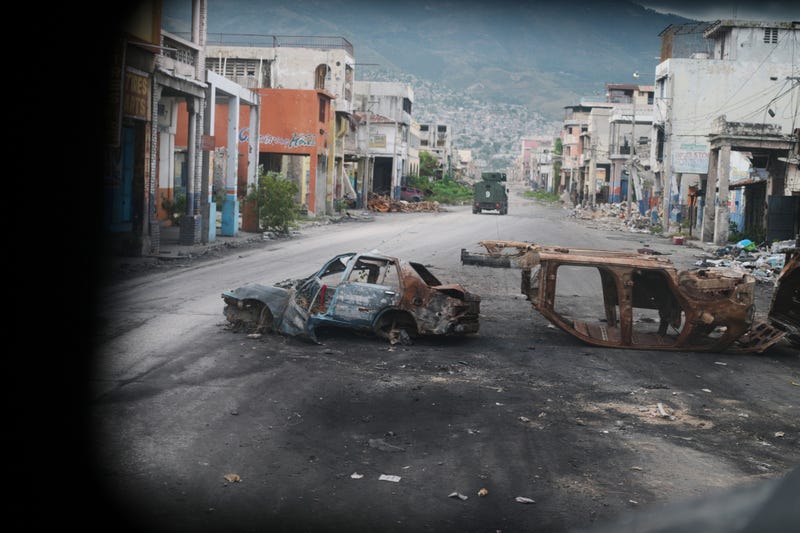
HAVANA (AP) — The number of sexual abuse cases being treated at a clinic in Haiti’s capital has tripled in the past four years as gang violence surges across the troubled Caribbean country, a health charity warned Wednesday.
Doctors Without Borders said it was “alarmed and outraged” by the overwhelming level of sexual and gender-based violence.
“The extent to which numbers have increased, it has shocked us,” Diana Manilla Arroyo, the group’s head of mission in Haiti, said in a phone interview. “It is not only the numbers, but the severity.”
More than half of the patients being treated at the Pran Men’m clinic, which opened a decade ago in Port-au-Prince, were attacked by multiple members of armed groups, the charity, also known as Médecins Sans Frontières, or MSF, said in a new report.
“Over 100 individuals were attacked by 10 or more perpetrators at a time,” it said, noting an average of three perpetrators per case.
The clinic has treated nearly 17,000 patients in the past decade, including 2,300 alone in the first nine months of last year. More than 350 of those patients are boys and men, MSF said.
The demographics of those being attacked has also changed. Prior to 2022, half of all cases at the clinic involved patients younger than 18, compared with 24% today. The number of cases in the 50-80 age range has increased sevenfold, according to MSF.
Control and power
Gangs control an estimated 90% of Port-au-Prince, with many resorting to sexual abuse to instill fear, experts say.
The abuse occurs during kidnappings, territorial takeovers and to control humanitarian aid, according to MSF.
“Armed groups are using sexual violence to terrorize, control and subjugate communities,” Manilla said.
The report citied one unidentified woman, aged 53, who said she was raped by three men young enough to have been her children.
“They beat me and broke my teeth,” she was quoted as saying. “After raping me, they also raped my daughter.”
At particular risk are those living in makeshift shelters, with gang violence displacing a record 1.4 million people across Haiti in recent years, according to the United Nations.
A 34-year-old woman quoted in the report noted that young women and boys are mixed together at shelters.
“Mothers are forced to stay close because when a child begins to grow, they can become a target for rape at any moment,” she said.
Nearly 70% of people who sought help between January and September 2025 after being sexually abused were displaced, according to the U.N.
Meanwhile, MSF said its clinic is struggling to find shelters willing to accept patients, and it noted that women with children or those who are pregnant or need medical care are often rejected.
“The lack of available services leaves survivors exposed to the same risks that led to their initial trauma,” MSF said. “Without safe shelter or relocation options, MSF discharges its patients straight back into the nightmare they came from, just to see them return another day after being violated again.”
'It can be difficult'
Fear over reporting sexual abuse cases persist because of ongoing stigma and a lack of faith in Haiti’s police and justice system.
Another reason for avoiding medical care is to preserve one’s life; civilians have been beaten or killed by vigilante groups if they live in a neighborhood controlled by a gang since they’re automatically associated with the armed group.
Since 2022, the proportion of survivors who sought help at the Pran Men’m clinic within three days of their attack dropped by half, from almost two-thirds to one-third, according to MSF. As a result, nearly 70% of them arrived too late to receive post-exposure prophylaxis for HIV, the group said.
In addition, the proportion of patients who sought care within five days of their attack dropped by nearly half, from 72% to 41%. That meant that nearly 60% of them missed the opportunity to prevent unwanted pregnancies, MSF said.
To fight stigma, one local nonprofit organization reaches out to women using arts, theater and music, with survivors writing and talking in focus groups about their experiences in a safe place.
“They find a way to understand their own reality, their own experiences,” said Pascale Solages, the coordinator of an independent Haitian feminist group, Nègès Mawon. “It can be difficult,” she said.
MSF called on Haiti’s government to allocate more funds to free health care and services for sexual abuse survivors.
“One immediate and practical measure it could implement is a 24/7 government-operated hotline to provide confidential guidance and connect survivors to critical resources,” MSF said. “Many lack access to medical care, are displaced from their homes, and face immense barriers to finding support and rebuilding their lives.”
___
Follow AP’s coverage of Latin America and the Caribbean at https://apnews.com/hub/latin-america