


One day, Todd McLellan figures he might be able to sit down and enjoy a hockey game. The 57-year-old coach isn't there yet. As he watched the NHL from home at the start of this season, he found himself cursing at teams and players he didn't really know.
"When you're still interested in working, you're watching it ultra interested, analyzing, trying to figure out what's working, what isn't working. My wife would say, 'Why are you swearing at the TV?' She could hear me downstairs, because I'm mad something happened or I'm happy something happened," McLellan said Friday on 97.1 The Ticket. "I think later on in life I'll be able to sit back and just enjoy them."
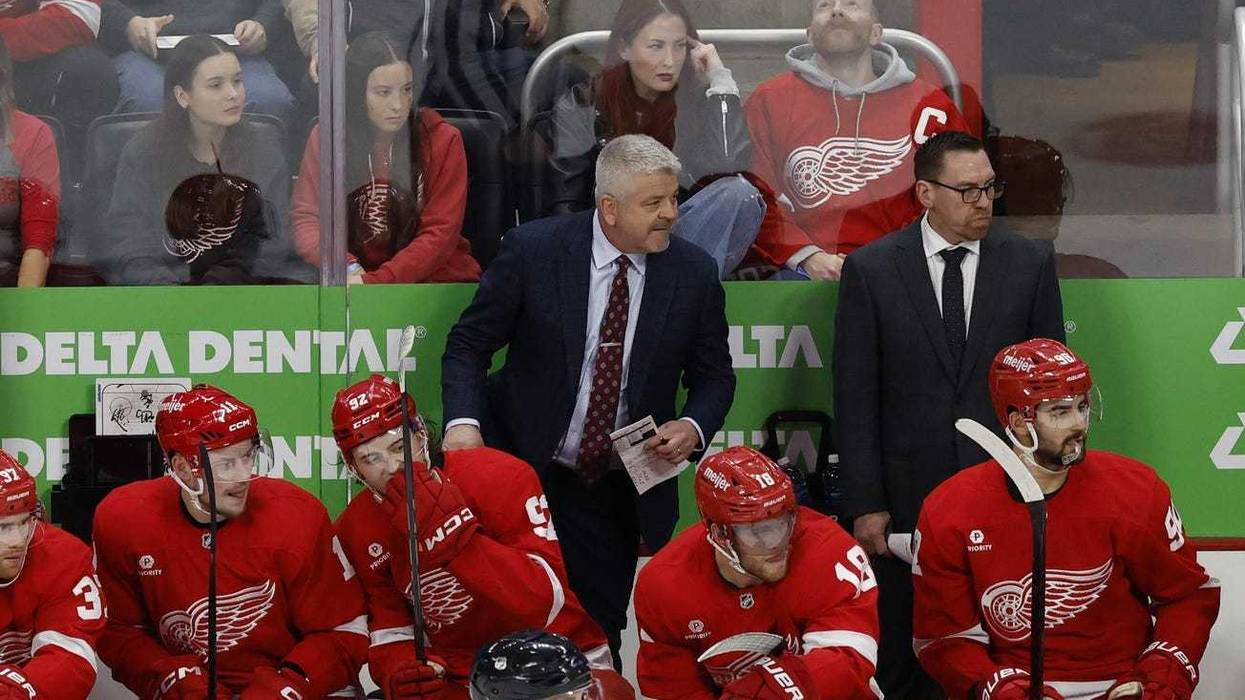
In Detroit, the swear jar was overflowing by Christmas. The Red Wings were second to last in the East, in year three under Derek Lalonde. With the talent to push for a playoff spot, they were sinking into the abyss. Having finally seen enough, Steve Yzerman sent out Lalonde and brought in McLellan, who brought trusted assistant Trent Yawney with him. The Wings are 15-4-1 since.
They'll put their second seven-game win streak under McLellan on the line Saturday against the Lightning after sweeping a four-game swing out West.
"Coming in, I wasn't sure what to expect," McLellan said. "I was sitting at home watching the Wings play on TV. You think you know the team and the players, and then when you get here you quickly figure them out. You understand their personalities, how they react to certain situations, how they interact with each other.
"And what I've found is, this group has been really hungry. They've been willing to learn, willing to work, accept new ways. That's probably been the biggest difference, is their willingness to take new things on."
McLellan credits a combination of strategic adjustments and a strengthened "belief system" for the team's turnaround. The Red Wings, for one, have been more efficient at clearing their own zone, which has led to significantly more shots -- and more goals -- at the other end.
"From a tactical or structure point, we have changed some things, there's no doubt about it," McLellan said. "But we haven't just blown everything up and said, 'Here's how we're doing it.' We've changed small things, we've changed some big things, players have been real receptive.
"The mental part, the believing, the energy level, the camaraderie has been real important for this group. And I give the players credit, they've pulled themselves through in that area. They care about each other and they're playing for each other."
Since their first win under McLellan -- over the NHL-leading Capitals -- on Dec. 29, the Red Wings lead the NHL in points. For perspective, they've collected points at about the same pace as the '95-96 team that broke the NHL record for most points in a season. They've scored the most power play goals in the league over this stretch. The unit has clicked at a rate of 36.2 percent, bested only by the Jets. It was at about 22 percent before McLellan took over.
The penalty kill has made less drastic, but similarly important strides. Under Lalonde, Detroit had allowed the most power play goals in the NHL. The unit was toward the bottom of the league at 68.8 percent. It has jumped to 72.2 during the aforementioned timeframe, in the middle of the league in goals against.
And for the Wings to continue their winning ways, McLellan will be the first to tell you, "our special teams have to stay or get better than the level they're at right now."
"The power play was on fire for a while," he said. "It disappeared for three- or four-game segments, but we were able to win with our penalty kill. As long as one of them is running at a real high level, we'll be fine. The penalty kill will continue to be a focus. That was probably the weakest area of the game when we got here. We've spent a lot of time on it, I think the guys understand what we want to do and why we want to do it."
"But there are other parts of the game," McLellan added, "that we haven't even talked about yet that we have to introduce to them at some point."
The Wings' surge has been fueled by several young players, Lucas Raymond and Moritz Seider the headliners. Others have also raised their games, like Marco Kasper, Elmer Soderblom and Jonatan Berggren up front, and Simon Edvinsson and Albert Johansson on the back end. McLellan called the 24-year-old Johansson "the biggest surprise" to date, a rookie who's given the team solid top-four minutes for the better part of a month.
"He was a player I didn't know much about, wasn't even in the lineup when we got here. We didn't put him in, injury allowed him an opportunity and he's taken advantage of it," McLellan said.
Johansson's emergence reflects the larger youth movement in Detroit, but McLellan is careful not to take too much credit here.
"They're talented players," he said. "They have the skill, the ability and the will to go out and do it each night, and they needed an opportunity, somebody to believe in them a little bit. Maybe that's where we were able to help them, somewhat."
But the veterans, said McLellan, deserve just as much credit as the coaches for helping the young players along.
"They've been real supportive, they've allowed them to be a big part of the team, and in the meantime the veterans have played really well," McLellan said. "The balance has been real good. We're not a young team or an old team -- we're just a team. Any time you can formulate that, you have a way bigger chance of success."