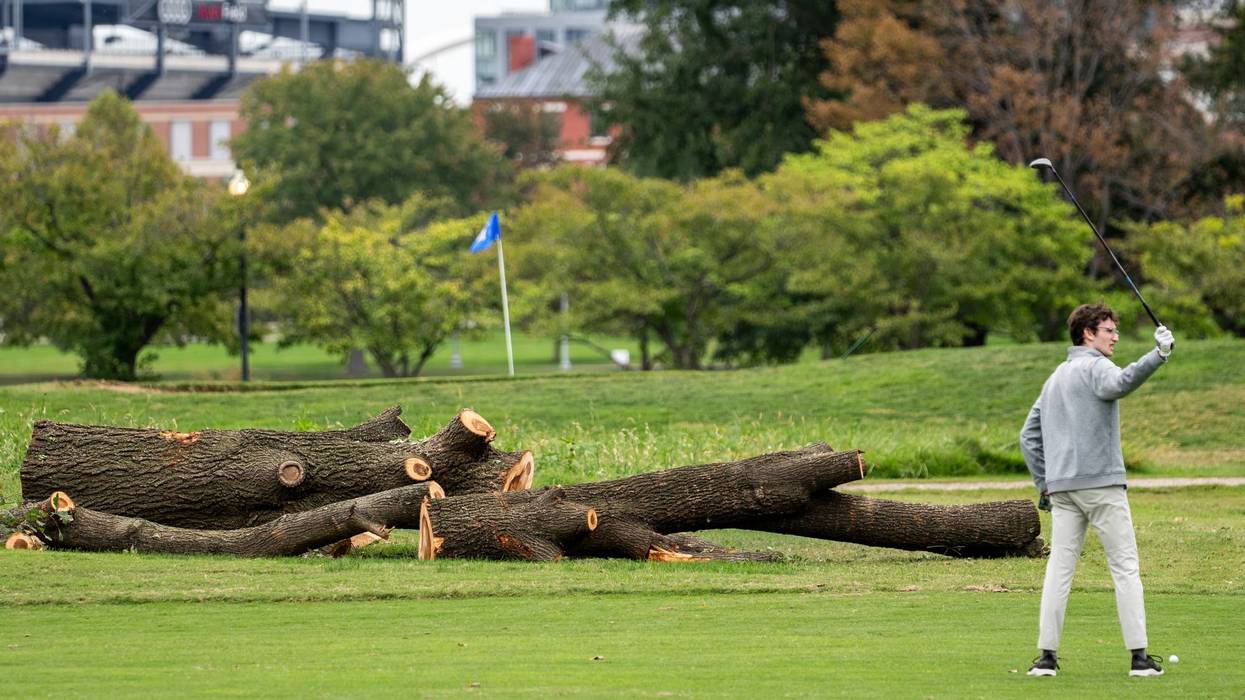


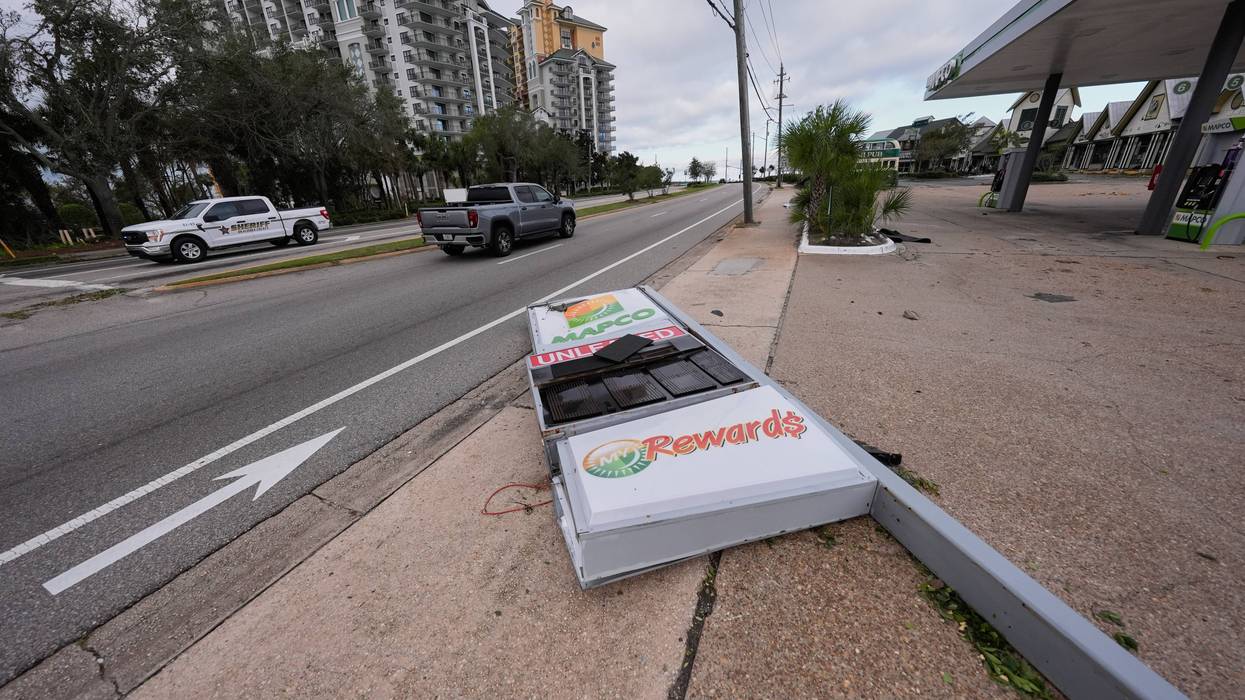

Isaias weakened after making landfall on the U.S. Gulf Coast near Destin, Florida, as a Category 2 hurricane Friday evening. Its powerful winds left hundreds of thousands of people in Alabama and the Florida Panhandle without power early Saturday. It was the first hurricane of the Atlantic season.
Here's the latest:
Federal government addresses disruptions in oil supply due to Isaias
The Energy Department announced Saturday it has authorized emergency exchanges of as much as 4 million gallons of crude oil from the nation’s strategic petroleum reserve.
Exxon Mobil and BP America — each authorized for up to 2 million barrels — will have to return more barrels in 2027 than they withdrew, the department said in a statement.
Energy Secretary Chris Wright said the goal is “to help maintain refinery operations, limit disruptions to fuel supplies and ensure American families and businesses continue to have access to affordable, reliable and secure energy.”
The Blue Cross NC 300 in Charlotte has been postponed
The race will now take place on Sunday at 8 p.m. due to the storm, officials with the Charlotte Motor Speedway announced Saturday.
It will follow the NASCAR Cup Series Bank of America 400 at the track in Concord, North Carolina.
Forecasters are predicting 3 to 6 inches (7 to 15 centimeters) of rain in parts of Georgia and North and South Carolina due to Isaias, with 10 inches (25 centimeters) possible in some areas.
Isaias has been downgraded from a hurricane to a post-tropical cyclone.
Isaias creeps north with heavy rains expected from Alabama to the Carolinas
Isaias is moving into northern Alabama, still dishing out heavy rains and strong wind gusts.
The National Hurricane Center says flood watches remain for parts of the southeastern U.S. and southern Appalachians.
Forecasters say parts of Georgia and the Carolinas could see up to 10 inches (25 centimeters) of rain though totals are likely to be 3 to 6 inches (7 to 15 centimeters).
2 deaths reported in the aftermath of Isaias
Two deaths, one in Alabama and another in Florida, have been reported in the aftermath of Isaiah.
One person died when a tree fell on their house in a neighborhood of Birmingham, according to Shea Hess, an emergency management officer with the Jefferson County Emergency Management Agency. She had no further details.
In Florida, Escambia County, Sheriff Chip Simmons said in a video posted on his Facebook page that one woman died after a tree fell on her home. He did not provide additional details.
Storm surge warnings are discontinued, but high winds remain a threat
That is according to Robbie Berg, a warning coordination meteorologist with the National Hurricane Center in Miami.
“All tropical storm surge warnings have been discontinued as of this morning, but there are still high wind warnings for portions of the Southeast,” Berg said. “So even though it has become post-tropical, it still does remain a wind threat, as well as a heavy rainfall threat. We could see some areas of significant flash flooding over the next couple of days.”
Hurricane Simon strengthens as it approaches Mexico
Simon has strengthened into a powerful Category 4 hurricane as it barrels toward Mexico’s coast.
The National Hurricane Center in Miami said early Saturday Simon’s maximum sustained winds increased to 150 mph (240 kph). A storm of that strength or greater is considered a major hurricane. Simon could bring as much as 10 to 20 inches (25-50 cm) of rain over parts of southwestern Mexico, with some areas receiving up to 30 inches, the center said.
The bulletin also urged residents to take immediate action to prepare, saying the hurricane will make landfall early Sunday, but tropical storm-strength winds could arrive much sooner.
Simon is expected to bring heavy rainfall to parts of southwestern Mexico, possibly concentrated along Jalisco’s coast and in parts of Michoacan, Colima and Nayarit.
Isaias weakens overnight but is still considered a flood threat
Isaias weakened overnight and was no longer considered a hurricane, but flash flooding threats and the potential for tornadoes persisted Saturday as the storm moved inland across Alabama.
The storm, now considered a post-tropical cyclone, made landfall Friday as a Category 2 hurricane, then quickly moved north through Alabama as its wind speeds dropped sharply to 35 mph (55 kph). But the possibility of life-threatening storm surges still loomed for parts of the Florida Panhandle.
Hundreds of thousands of customers are without power
Parts of southern Alabama also were flooded, with officials in Mobile reporting downed trees and power lines. Roads in Houston County, which is in the southeastern corner of the state, were closed because of similar conditions.
More than 911,000 customers in Florida, Alabama and Georgia were without power early Saturday, according to poweroutage.com.
One Floridian describes intense winds, impassable roads
Tim Mowry rode out the storm from his home in Pensacola, Florida. He says the wind was so intense it sounded like a train whistle as it whipped through a crack on his patio door.
He said overall the storm wasn’t as bad as he expected. He had standing water in his backyard and parts of a fence were ripped down. He also lost power but was able to rely on a generator. Mowry said his son, who lives nearby, was unable to drive to Mowry’s house due to downed trees and power lines blocking the roads.
“As far as Pensacola-wise we really got fortunate,” Mowry said.
Pensacola mayor says airport sustained some damage
Pensacola Mayor D.C. Reeves said on his Facebook page that the airport “took some damage.” Some power was out downtown, he said, and there were trees and power lines down in some areas.
Meanwhile, strong winds blew the roof off a hotel in the city.
Gov. Ron DeSantis warns that flooding threat persists in the wake of Isaias
Florida Gov. Ron DeSantis says there were no confirmed reports of fatalities from Isaias and that all state-owned bridges and major thoroughfares in the state are now open.
DeSantis warned that flooding dangers persist, especially in areas far east of the storm where it will continue raining.
“The risk of flooding is still high,” DeSantis said. “Sometimes these things happen a day or two days after the storm goes through. So the flooding story is not over.”