

With spring right around the corner, it’s almost time to start restoring your outdoor garden space. Now is a perfect time to put your wasted food scraps to good use.
Turn your kitchen food scraps into compost is an easy way to add key nutrients to your backyard soil. Compost helps plants retain moisture and suppress plant diseases and pests, keeping your backyard looking green without the expensive landscaping price.

Composting can not only help keep your garden healthy, it has important benefits to the environment. Using organic materials to breakdown waste limits the production of methane, a potent greenhouse gas that forms when food decomposes in landfills.

Based on suggestions from the World Wildlife Federation (WWF), are 5 easy tips to supercharge your garden soil this spring and reduce your carbon footprint at the same time.
Create a foodscraps pile
 Getty Images
Dedicate any unused space in your backyard as a designated compost area. Start by layering dried leaves and shredded paper with vegetables, eggshells, coffee grounds, and grass clippings. Add other items lying around your house like used firewood, shredded newspaper, and old household plants. The brown materials provide carbon for your compost, and the green materials provide nitrogen. Avoid using meat, grains, and dairy to avoid curb odors and bugs.
Use a proper container
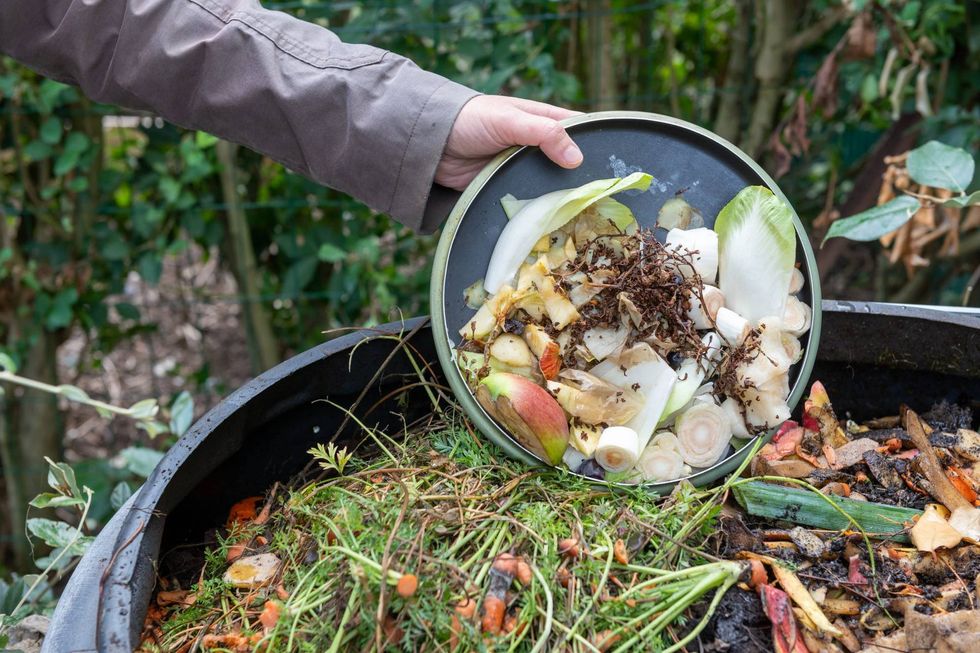
Compost is most effective when it is stored in a closed container. Proper bins that allow for air ventilation and moisture retention can be encouraged through the use of a reusable plastic storage container. Cut holes in the lid to create ideal conditions that promote the activity of aerobic organisms. Keeping your food scraps in a container will help speed up the decomposition process, and keep the process tidy.
Worm your way in
 Getty Images
The slimy little critters are easier to find than many think. Head to the nearest pet shop to try vermicomposting, or composting with earth worms. Worms in your soil speed up the process of breaking down food waste to increase the quality of your fertilizer. To keep your worms happy, stay away from salty snacks, spicy foods, oily sauces, and meat scraps. Allow them to flourish by placing the composting bin out of direct sunlight, and in temperatures below freezing. Once the compost is ready to be placed in your garden, the worms will continue to help your plants and soil thrive.
Keep track
 Getty Images
Maintaining your composting bin is a quick and easy activity the entire family can be a part of. Spend only minutes each week watching your food bin evolve into a highly complex food source for your plants. Keeping a proper moister level is important for healthy growth and decomposition. Use an online calculator to determine how much water your bin needs for its size. Also make sure your food scraps are occasionally mixed to allow for plenty of aeration.
Outsource
 Getty Images
If your municipality doesn’t pick up food waste, you may be able to find a private composting service, or drop off scraps at farmers' markets. Research what local resources are available to help manage your next composting project. Unused compost can also be donated to neighbors and friends to improve the curbside appeal of the entire block. You can also offer to donate your compost to local schools to help teach kids about sustainability and soil science.
For more ideas on how you can save the planet, visit 1Thing.
LISTEN NOW on the RADIO.COM App
Follow RADIO.COM
Facebook | Twitter | Instagram