


Willibald Bianchi was born into a family of Minnesota farmers in March 1915. He had humble beginnings; his father dying during a farming accident while he was in high school forced him to forgo his education to help out around the farm. Later, he attended South Dakota State University, where he majored in animal science while being active in ROTC and playing college football. He paid for school by working as a janitor and a furnace mechanic.
In 1940, he was commissioned as a second lieutenant, and, in 1941, his request to be deployed was granted and he was sent to the Philippines to serve with the 45th Infantry and the Philippine Scouts. By 1942, the Japanese had invaded the Philippines and U.S. and allied forces were pushed into the Bataan Peninsula. When one of the platoons in his unit was ordered to destroy two enemy machine gun nests, Bianchi volunteered to lead some of the men.
As the battle began, Bianchi was shot twice in the hand, so he discarded his rifle and fired his pistol with his uninjured hand until he was close enough to wipe out one of the machine gun nests with hand grenades. Bianchi was then shot twice in the chest, but refused first aid and jumped onto a tank and commandeered its machine gun to hammer the second enemy position. He was then shot once more and fell off the side of the tank. He recovered from his wounds and was promoted to Captain.
When the Philippines fell to the Japanese in April 1942, Bianchi was one of some 75,000 Prisoners of War who were forced into the infamous Bataan death march, in which the Japanese forces terribly mistreated and even murdered many prisoners. Throughout the ordeal and their subsequent internment in a POW camp, Bianchi demonstrated leadership, working to galvanize his fellow service members and attempting to get more food for them.
In 1944, the Japanese hold on the Philippines was deteriorating and the decision was made to transfer all POWs to mainland Japan. Bianchi was put on a ship called the Oryoku Maru, but after it was attacked by Allied aircraft, he was transferred to the Enoura Maru. These POW ships were not marked, and the allies had no idea there were prisoners on board when they dropped a 1,000-pound bomb on the Enoura Maru, which killed Bianchi and other POWs.
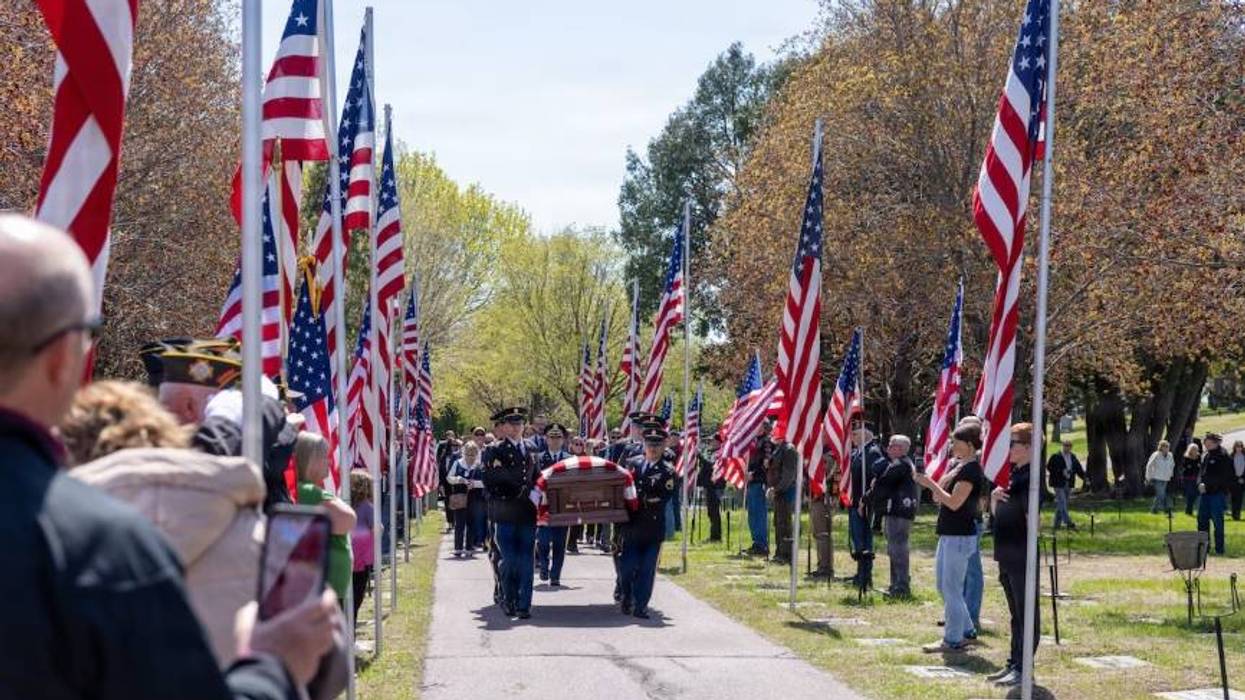
In 1945, Bianchi's mother was presented with his posthumous medal of honor, but for 80 years, his remains were unidentified. In August 2025, the Defense POW/MIA Accounting Agency (DPAA) successfully identified Bianchi after the remains of some 430 unidentified service members at the National Memorial Cemetery in Honolulu were exhumed and subjected to DNA testing. This May, Bianchi was laid to rest in his hometown alongside his parents and sisters.