


While serving in Iraq, Denita Oyeko’s Army unit was ambushed and her vehicle was propelled into another, leaving her with a traumatic brain injury, cracked ribs and tailbone. What she didn't know immediately was her injuries would not just cost her Army career, but her ability to have a family.
In the blast, Oyeko’s fallopian tubes were damaged and she was unable to conceive. When she asked the Department of Veterans Affairs for help, since her injuries were connected to her military service, she was turned away, another Army veteran, Maureen Elias, shared with members of Congress Tuesday.
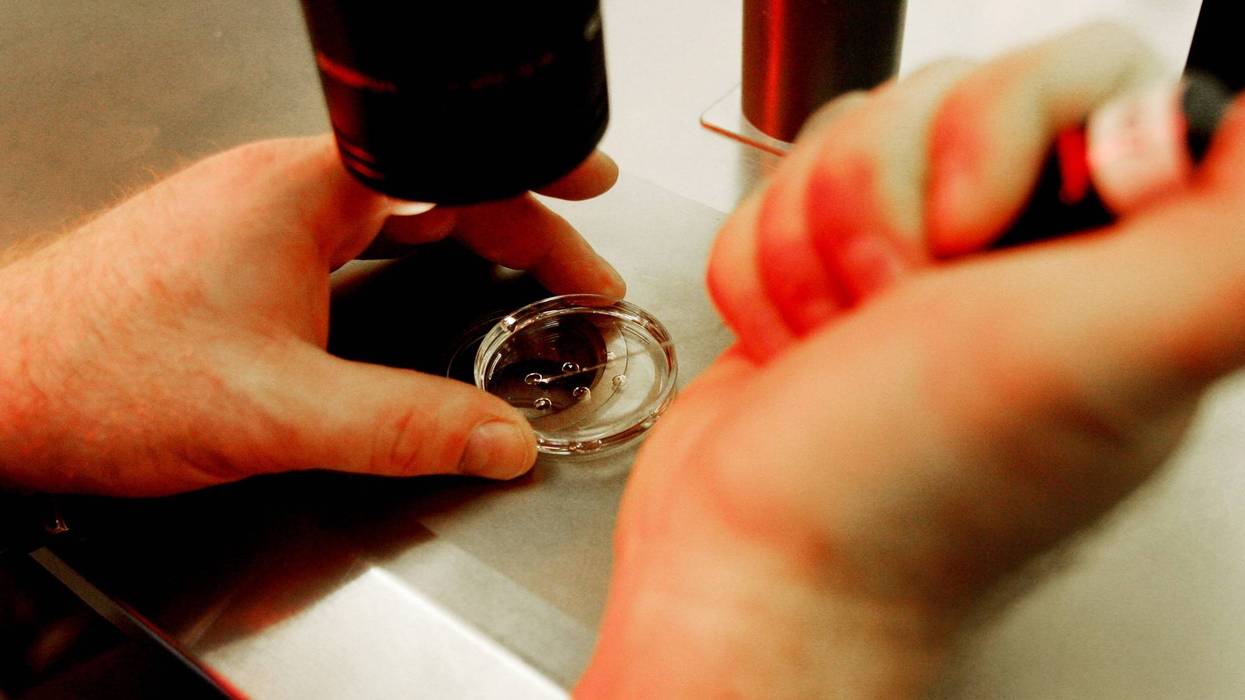
Oyeko and her husband took thousands from their retirement account to pay for in vitro fertilization and are now parents to twins, and now they are hoping to have another baby using treatment now available at VA, “so they do not have to further degrade their retirement or take from their children’s college funds to grow their family,” said Elias, associate legislative director for Paralyzed Veterans of America, during her testimony before a House Appropriations subpanel.
Oyeko’s story is just one out of many veterans who have sustained injuries that have harmed their abilities to have families and who often must carry that burden alone.
“Veterans should not have to risk future financial stability in order to have a family,” Elias said. “They protect our families. It is our responsibility to ensure the men and women who experience infertility due to injuries or illness incurred in service to this country are able to have families of their own."
Oyeko’s story, Elias said, highlights “the sacred responsibility Congress has in restoring to veterans what has been lost in service, to the fullest extent possible.”
The issue is also far from a new one, though women veterans make up a greater percentage of the military than ever before and are now the fastest-growing group of veterans. But fertility services remain out of reach or limited, and aren't a permanent fixture at VA.
Among post-9/11 veterans alone, a 2013 VA study found that nearly 16% of women and nearly 14% of men reported experiencing infertility.
Barbara Collura, president and CEO of the National Infertility Association, said she gave similar testimony before Congress nearly nine years ago, and “while much has been accomplished in that time to help our veterans build their families, much is still left to be achieved.”
Currently, VA has a temporary authorization to provide IVF services to veterans with severe service-connected conditions that prevent conception, and those services are limited to veterans who are married, opposite-sex couples who are not using donated eggs or sperm and who do not require a surrogate. That temporary authorization must be re-approved each year, and while some lawmakers have made an effort to change that, so far those attempts have fallen short.
It’s unclear how many veterans have already had to bear the full cost of such treatments on their own before fertility services such as IVF were made available at VA, but Elias said as many as 500 veterans and their spouses have used the services at VA since they became available in January 2017. Congress temporarily reauthorized the program, but it can only continue if lawmakers continue to fund it specifically.
But that uncertainty can be harmful for veterans and their families undergoing such treatments, which often take time and could be interrupted by a single year of congressional budget change.
“Veterans should not have the additional anxiety of rushing to have a family out of fear this service might not be funded,” Elias said. "When it comes to planning your family, the federal budgetary cycle shouldn't be part of that." She and other veteran advocates called on Congress to make IVF a permanent part of the VA healthcare benefits for veterans eligible because of injuries or illnesses preventing them from conceiving a child without it.
Veteran advocates also called for Congress to repeal a restriction on the use of donated sperm or eggs for IVF, since some veterans’ injuries may have destroyed their ability to provide their own, thus making them ineligible for the treatment. There is no such restriction when veterans pursue artificial insemination.
“This is an unexplainable requirement that only harms those who need this service the most,” Elias said.
For veterans whose service-connected injuries or illnesses prevent them from carrying a full-term pregnancy, advocates pushed Congress to authorize VA to offer surrogacy in such limited instances.
“Can you imagine being injured in service to our country, having many of your needs met by the VA, then being told the one thing that will make you whole – a family – is out of reach?” Collura said.
For more information: VA fertility services.
—
Reach Abbie Bennett: abbie@connectingvets.com or @AbbieRBennett.
Sign up for the Connecting Vets weekly newsletter to get more stories like this delivered to your inbox.