

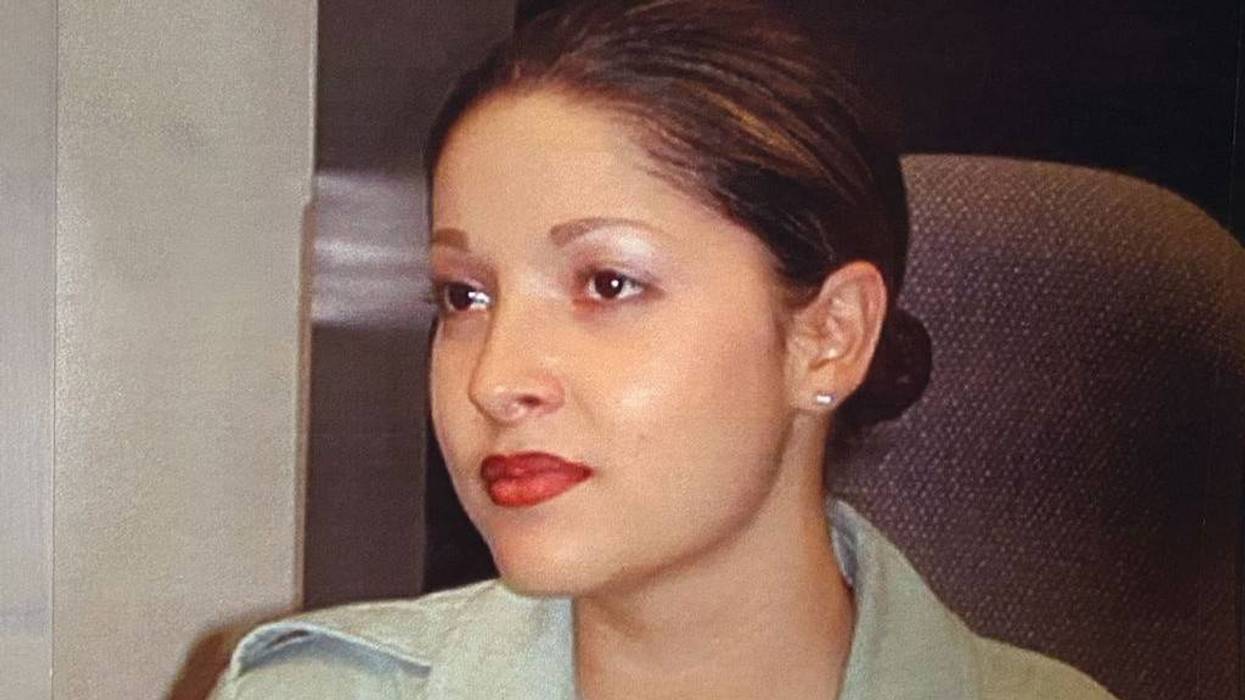

For most of her 16 years with the New Mexico Army National Guard, retired Master Sgt. Crystal Romero loved with her job and the opportunities that came with it. She worked in logistics, public affairs, human resources and homeland security. She supported relief efforts for three major hurricanes and the space shuttle Columbia disaster.
She loved the people she worked alongside and felt like a respected part of a team.
“It was just a great experience,” Romero said, “until it wasn’t.”
Romero was working as a victim advocate and suicide prevention coordinator. It was meaningful work she believed in. So when she saw a counterpart neglecting responsibilities in ways that put vulnerable service members at risk, she reported it to her supervisor. The supervisor said the person in question was related to someone high up.
“I am not going to bite the hand that feeds me,” Romero said she was told.
Not long after she filed a formal complaint, Romero said, her support staff was reassigned, leaving her isolated. Colleagues told her she’d “poked the bear” and ruined her career. When Romero sought mental health support, she said her personal information was circulated around the office. It felt like retaliation.
“It was humiliating,” Romero said. “Everything that I believed in was betrayed, and it just killed a big part of me.”
Romero was ultimately taken off active duty and separated for post-traumatic stress disorder due to a hostile work environment. It was years before she learned about the real wound she was living with: moral injury.
Inspired by Homer’s “Iliad,” a psychiatrist first coined the term “moral injury” in 1994 as a way to describe what Vietnam veterans experienced during combat. It’s now generally understood as the result of witnessing, experiencing or perpetrating something that violates a person’s sense of right and wrong. When that violation negatively affects how a person views themself or the world and impairs how they function, it can be considered a moral injury.
In a 2025 study, nearly 6% of more than 3,000 veterans surveyed screened positive for moral injury. Comparatively, the overall lifetime prevalence of PTSD among veterans is 7%, with the rate for post-9/11 veterans reaching nearly 30%, according to the Department of Veterans Affairs.
Moral injury is often mistaken for PTSD. Experts agree there’s overlap, but PTSD diagnosis and treatment don’t necessarily account for an injury to someone’s values and identity, leaving the resulting shame, grief and apathy unaddressed. When moral injury goes unidentified or isn’t uniquely addressed, the results can be devastating.
‘The wrong injury’
In the wake of losing the career she loved, Romero said she became “extremely suicidal.”
Combat veteran and retired Army Sgt. Eric Donoho found himself in a similar position but for very different reasons.
Donoho lost 17 friends in combat and survived two improvised explosive devices. But his first experience with moral injury came after he landed in Kuwait and was informed that his wife, who was seven months pregnant, had miscarried their son, David. Donoho returned home for the funeral and was told he could take more time with his family. Donoho decided to go back to war instead.
“I can still remember looking back up the ramp as I was walking down to the plane in Anchorage and seeing her at the gate crying,” Donoho said. “And I didn’t have to put her through that.”
Donoho was medically retired in 2009. By 2015, his marriage was in bad shape. He had been undergoing PTSD treatment in an attempt “to get back to who I was before war,” but by the end of that year, Donoho attempted suicide.
“I was treating the wrong injury,” Donoho said.
He said his PTSD diagnosis and treatment didn’t account for the fact that he didn’t believe he was a good person worthy of good things.
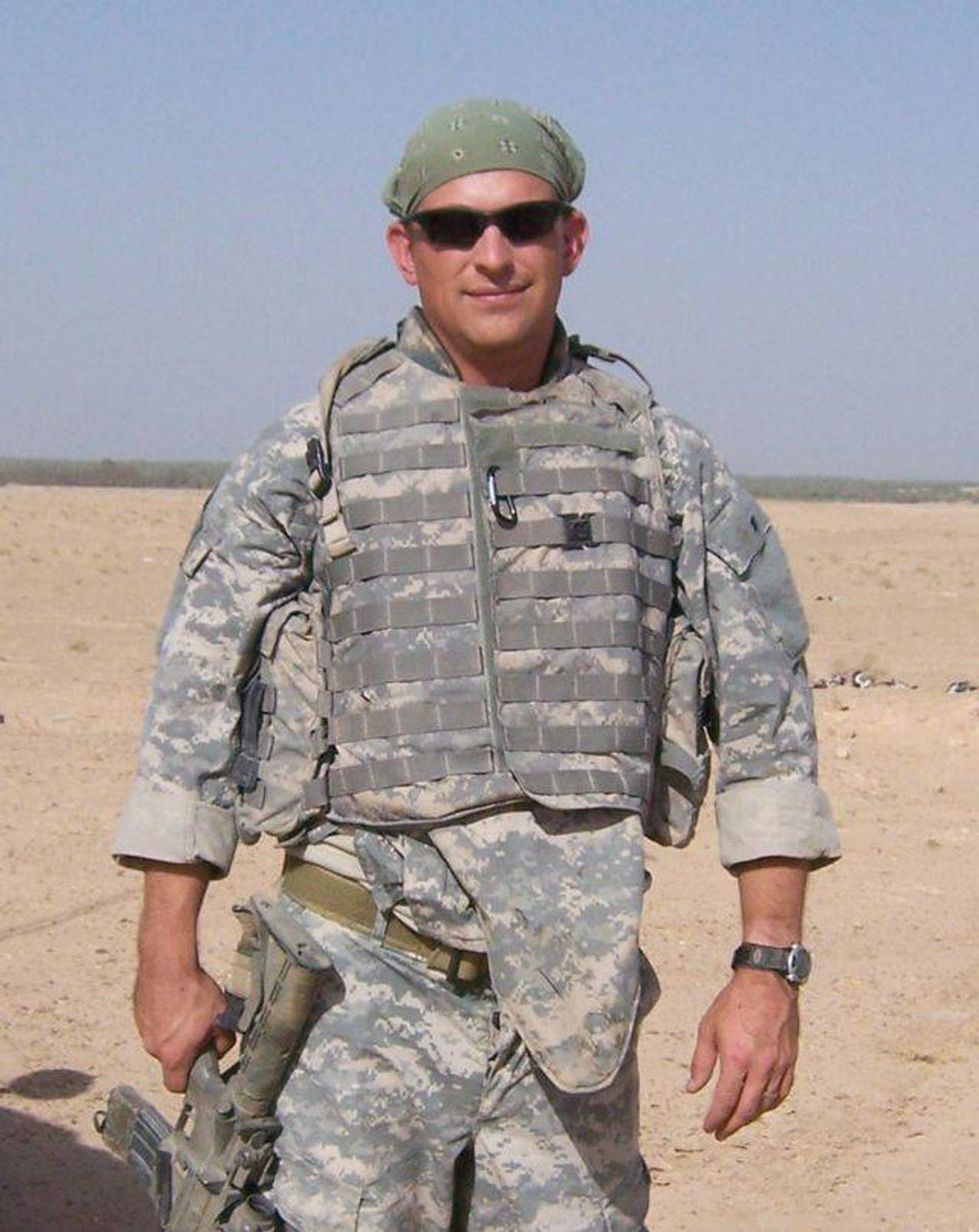 Retired Army Sgt. Eric DonohoDisabled American Veterans
“How can you use the tools that are given to you for PTSD when you’re not even strong enough some days to get out of bed, because you don’t feel like you deserve to live?” he asked.
According to data from the VA, 6,398 veterans died by suicide in 2023. Limited research shows that moral injury is an independent risk factor for suicide, with one study reporting that, of the surveyed veterans, health care workers and first responders who screened positive for moral injury, over 60% reported suicidal ideation and over 40% said they had attempted suicide in their lifetime.
“If you want to really affect suicide prevention,” said moral injury expert Dr. Carter Check, “you’ve got to get into the arena that I think matters the most, which is moral health.”
Check is a chaplain and suicide prevention specialist with the VA Eastern Oklahoma Health Care System. His unique role is indicative of the kind of approach veterans and experts say is needed to heal from moral injury. That’s because, Check said, the experience of moral injury is “super subjective,” so healing will look a bit different for everyone.
All hands on deck
Romero learned about moral injury and began to heal after attending Save A Warrior, a DAV partner program that hosts 72-hour retreats using a holistic approach to suicide prevention. She also found help through psychedelics and psychotherapy.
For retired Army Sgt. 1st Class Constance Cotton, a Gulf War veteran, healing comes from breaking her silence. Her moral injury began with recruiters sexually harassing her. As a Black service member, she also witnessed and experienced racism. Through it all, she felt silenced and betrayed by leaders who were supposed to uphold values like respect, honor and integrity.
Cotton learned about moral injury during a three-day workshop hosted by a chaplain at the Philadelphia VA.
“It’s just amazing how, when you can name what happened in a safe space and with the right language, how much healing that brings to people,” she said.
Cotton is now part of the Philadelphia VA’s moral injury leadership group and dedicates much of her advocacy to giving others a safe place to talk about moral injury.
Donoho said two things have been essential for him: faith and service. His faith is rooted in God, but Donoho said that doesn’t have to be the case for everyone. Meanwhile, service, he said, gets veterans out of their heads and reprograms negative narratives about themselves. That method tracks with what experts have found.
“We need to help people correct the harm that’s done to them or the harm that they’ve done to others by being different in the world,” said Dr. Brett Litz, a professor of psychiatry at the Boston University School of Medicine and a researcher who has been instrumental in shaping how we understand moral injury.
Litz said that for someone who has harmed others and is grappling with guilt or shame, healing can include reestablishing their value in their community, like by serving others. For someone who has been victimized by or witnessed harm, making room for others to show their goodness can help change their negative beliefs about humanity.
While a VA flyer describes moral injury interventions as being “in their infancy,” significantly more is understood than when the term was first coined in 1994. The challenge, Litz said, is getting providers and the wider community on the same page about how to define, assess and treat moral injury. The same thing was true of PTSD in the 1970s and ’80s.
“Right now, we’re at the cusp,” Litz said, adding that there’s plenty of reason to be hopeful.
Litz noted that the VA has good tools to assess moral injury and that clinicians can use existing trauma-informed care to help veterans. If they incorporate what’s known about moral injury, “they can improve the lives of veterans, right now,” Litz said.
VA chaplains also provide moral-injury resources, and Check noted that the care doesn’t depend on religious beliefs. Having care that includes practitioners from various backgrounds is “nonnegotiable,” he added.
“We need all disciplines on deck to solve the problem,” Check said.