


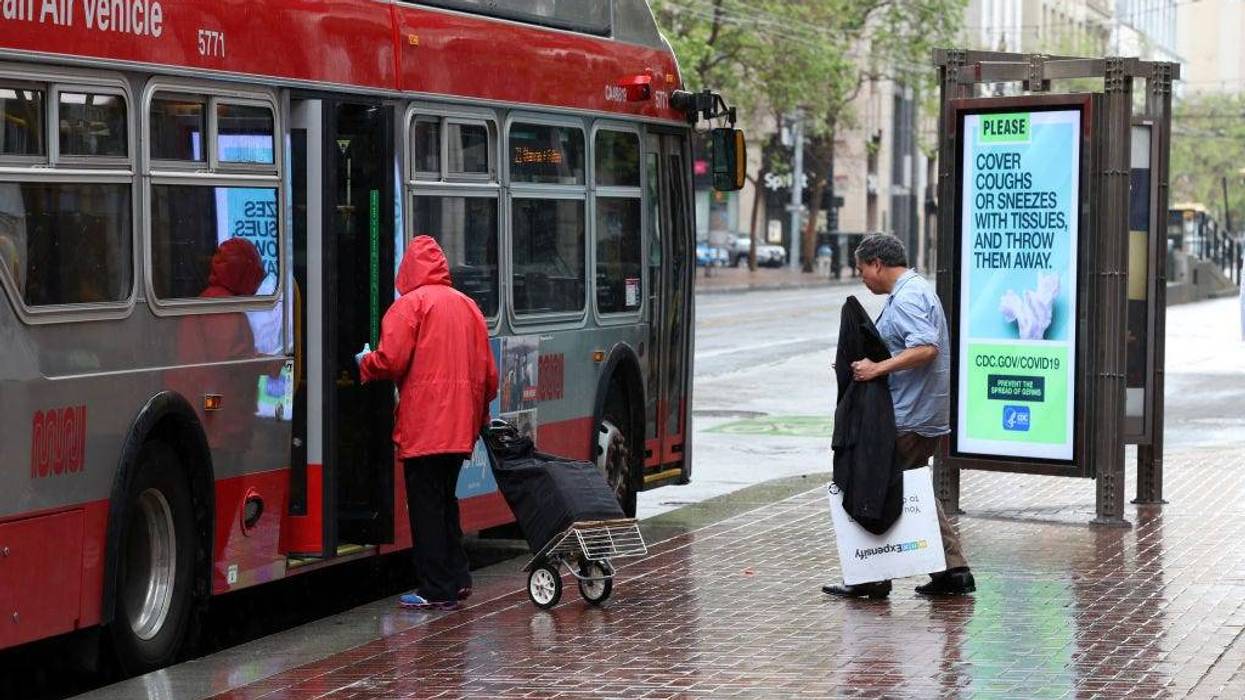

San Francisco Supervisor Dean Preston on Tuesday insisted the San Francisco Municipal Transportation Agency restore all of its transit lines and service hours to pre-pandemic levels by the end of this year.
In March 2020, Muni suspended several routes, including underground rail lines and cable car service in response to low ridership.
Underground rail returned in May and cable car service is returning soon, 12 bus lines are still not running.
"MTA has provided no timetable for actually restoring service on many of these lines," said Preston.
At Tuesday's Board of Supervisors meeting, Preston, who represents District 5, introduced a resolution to urge Muni to reinstate all transit lines and restore pre-pandemic service hours fully by Dec. 31, 2021. The resolution also calls for Muni to put forth a plan to restore the lines by the end of August.
Preston said he’s heard from people all over the city, and in his district, which includes Haight Ashbury, Japantown, and the inner Sunset, on how the lack of bus lines has affected their ability to work and go about their daily lives.
"A lot of these lines that I think the MTA has been pretty slow to restore are really key for people getting around," said Preston. "It’s a particularly big issue, as the economy reopens and you have more and more workers who are trying to get to and from their job, particularly in the evening hours."
Preston's resolution comes after the Metropolitan Transportation Commission last Thursday announced the release of federal funding for Bay Area transportation agencies. The latest funds total around an additional $700 million to the amount that SFMTA was already expecting from the federal government, Preston said.
In total, the agency will be receiving $1.1 billion.
Despite the funds, the SFMTA has still been dragging its heels. And the agency hasn’t always been clear as to why, said Preston.
"It's been hard to get answers, there's been a whole range of reasons provided and what we try to follow up," he said. For a long time, the argument was that there were not the funds to restore service, but with the new federal assistance, that argument is likely to be put to rest, he said.
In the past, they’ve argued that they don’t have enough staffing to adequately meet the standard of service, said Preston. They submitted a memo on this issue to the Board of Supervisors recently that will be discussed in a hearing next Friday.
According to SFMTA Director Jeffrey Tumlin, the agency is caught in a delicate balance. "We know that we need to restore service ahead of economic recovery," he said. "If we restore too slowly, then we become the obstacle to people being able to get to offices, as offices reopen. But our other challenge is that if we restore service too quickly, then we'd run out of money in 2023."
The funds that SFMTA received from the government recently area meant to help recoup their losses from the pandemic, not necessarily fund any anticipated losses over the next few years, he said.
Their primary obstacle right now, he said, is hiring. "We are down about 15% of our workforce overall," he said. In some units, their staffing is down as much as 50%. "We are hiring as quickly as we can, which in city government is pretty slow, but we're doing that very quickly."
Preston has his own theories as to what the agency’s issue is. "Unfortunately, I believe part of what's happening here is that the reluctance to bring these lines back may be related to the longer-term vision about whether these lines should come back at all," he said.
Which is a fundamental problem, he added. "If MTA wants to have a conversation about particular lines and what their future is, they need to talk to the communities impacted and develop a plan together with the communities, and not just keep extending the temporary suspension of these key lines," he said.
The restoration can’t happen overnight, Preston acknowledged. He hopes a plan will be formulated by August.
"I just would urge the MTA board and MTA leadership to really join in the effort to fully restore Muni service by the end of the year," said Preston. "I don't think this is something the Board of Supervisors should have to lead on, I don't think this is something I should have to do a resolution on, I don't think residents of the city should have to be protesting to demand their bus line back."
Ultimately, though, Tumlin said it’s unlikely they’ll be able to restore full service by the end of the year. It’s more likely they’ll reach 85% of their service levels by the beginning of next year.