Donald Trump’s administration said Tuesday it will end Temporary Protected Status for immigrants from Somalia, the latest move in the president's mass deportation agenda.
The move affects hundreds of people who are a small subset of immigrants living in the United States with TPS protections. It comes during Trump’s immigration crackdown in Minneapolis, where many native Somalis live and where street protests have intensified since a U.S. Immigration and Customs Enforcement agent killed a U.S citizen who was demonstrating against federal presence in the city.
The Department of Homeland Security said in a statement that affected Somalis must leave the U.S. by March 17, when existing protections, last extended by then-President Joe Biden, will expire.
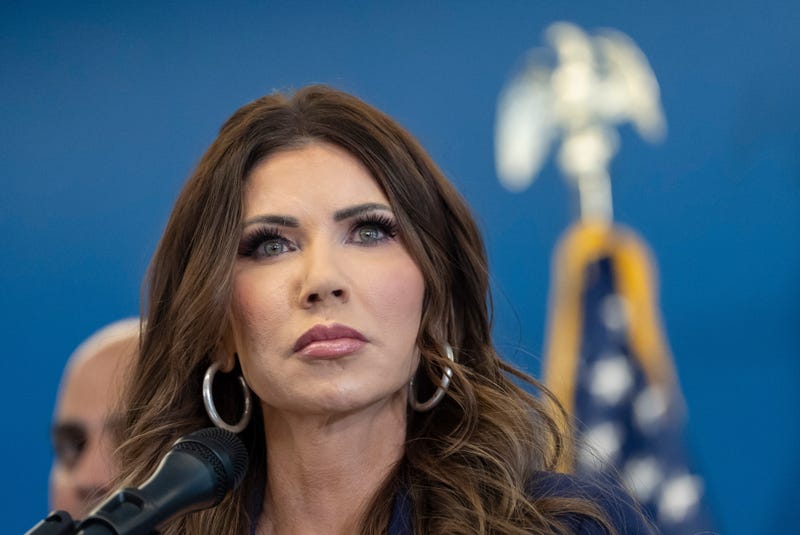
“Temporary means temporary,” said Homeland Security Secretary Kristi Noem, adding that the decision puts “Americans first.”
The Congressional Research Service last spring said the Somali TPS population was 705 out of nearly 1.3 million TPS immigrants. Trump has ended protections across multiple countries in his second presidency.
Homeland Security secretary says conditions in Somalia have changed
Noem insisted circumstances in Somalia “have improved to the point that it no longer meets the law’s requirement for Temporary Protected Status.”
But the Council on American-Islamic Relations, which advocates for fair treatment of Muslims in the U.S., criticized the latest rollback as a “bigoted attack” that will send some Somalis back to a war-torn, unstable nation.
“This decision does not reflect changed conditions in Somalia,” CAIR said in a statement released jointly with its Minnesota chapter. “By dismantling protections for one of the most vulnerable Black and Muslim communities, this decision exposes an agenda rooted in exclusion, not public safety.”
Located in the horn of Africa, Somalia is one of the world’s poorest nations and has for decades been beset by chronic strife exacerbated by multiple natural disasters, including severe droughts. Al-Qaida affiliate al-Shabab controls parts of the country and has carried out truck bombings and other assaults in the capital, Mogadishu, in recent years that killed dozens of people.
Congress established the Temporary Protected Status program in 1990 to help foreign nationals who've fled unstable, threatening conditions in their home countries and are living in the U.S. It allows the executive branch to designate a country, generally in 18-month increments, for the protected status. Citizens of that country who are already in the U.S. and qualify for protection can apply with Homeland Security for the designation.
If approved, recipients can legally work and are protected from deportation but there is no pathway to a green card or U.S. citizenship and they are reliant on the government renewing the TPS designation every few years.
Critics say that while these designations are supposed to be temporary, they are renewed so often that they essentially become permanent.
Somalia designation traces to the elder Bush's administration
Somalia first received the designation under President George H.W. Bush amid a civil war in 1991. The status has been extended for decades, most recently by Biden in July 2024.
The 2025 congressional report stated that Somalis had received more than two dozen extensions because of perpetual “insecurity and ongoing armed conflict that present serious threats to the safety of returnees.”
Trump has targeted Somali immigrants with racist rhetoric and accused those in Minneapolis of massively defrauding federal programs, charges he renewed again Tuesday speaking in Michigan. He promised, without a clear legal basis, to “revoke the citizenship of any naturalized immigrant from Somalia, or anywhere else who was convicted of defrauding our citizens.”
In December, Trump said he did not want Somalis in the U.S. at all, saying they “come from hell” and “contribute nothing.” He made no distinction between citizens and non-citizens or offered any opinion on immigration status.
Temporary status widened during Joe Biden's presidency
Biden's administration broadly expanded the number of people covered by Temporary Protected Status but the Trump administration has steadily sought to strip protections away from various nationalities including 600,000 Venezuelans and 500,000 Haitians. The actions have prompted multiple court challenges but the U.S. Supreme Court has twice issued emergency rulings, last May and again in October, that allowed the Venezuelan revocations to continue as court cases proceed.
It’s not immediately clear how quickly those Somalis covered by TPS could be removed from the country once their protections expire. Most attempts by the administration to end a TPS designation have ended up in the courts. And people covered by TPS can also apply for asylum or other immigration avenues to stay in the U.S., although the Trump administration has made those options more difficult as well for Somalis as well as other nationalities.
—— Associated Press journalist Cara Anna in New York contributed.