


HAVANA (AP) — Cuba prepared Monday to receive a sanctioned Russian tanker carrying roughly 730,000 barrels of oil, the first such fuel delivery this year to the island that has been brought to its knees by a U.S. oil blockade.
It comes a day after U.S. President Donald Trump told reporters he had “no problem” with the Russian oil tanker delivering relief to Cuba.
There were conflicted reports about the exact location of the Russian-flagged Anatoly Kolodkin. While the Russian Transport Ministry and the state-run news portal Cubadebate said the vessel had already arrived, ship-tracking data showed it was still navigating Cuban waters with an estimated docking time of Tuesday.
Kremlin spokesperson Dmitry Peskov said Monday that Russia had previously discussed its oil shipment to Cuba with the United States. “Russia considers it its duty not to stand aside, but to provide the necessary assistance to our Cuban friends,” he told reporters.
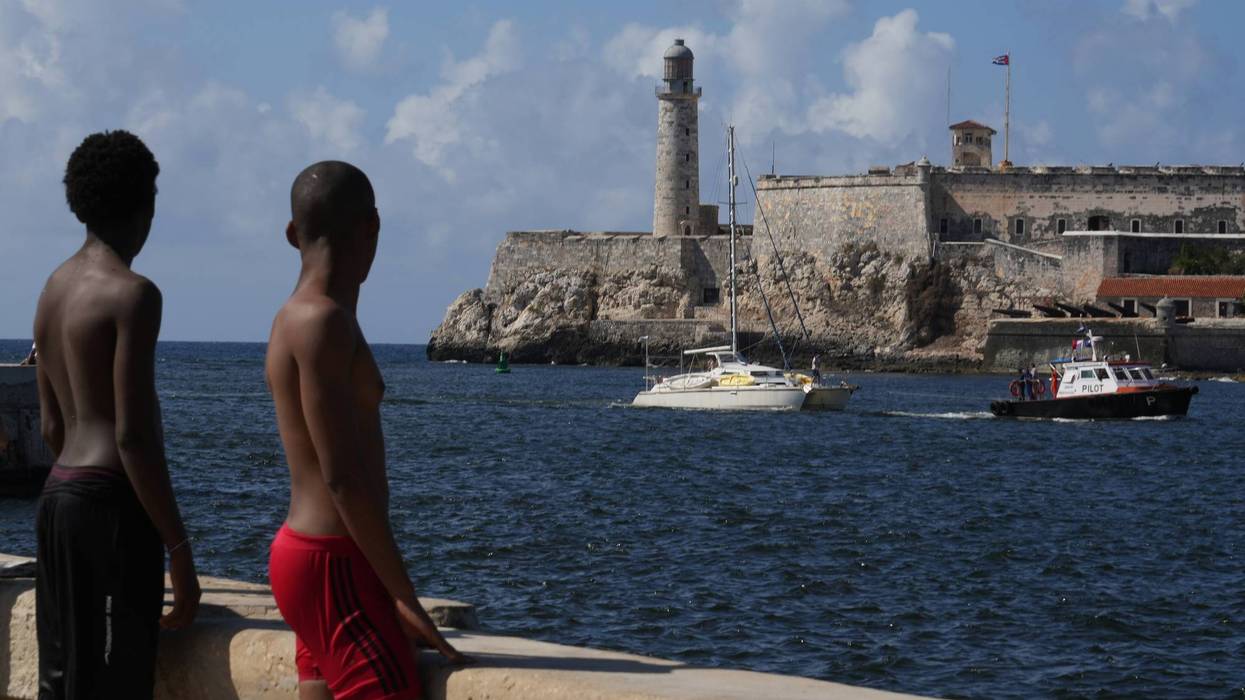
The tanker's final destination is the port of Matanzas, a strategic hub for an island that produces barely 40% of its required fuel and relies on imports to sustain its energy grid. Experts say the anticipated shipment could produce about 180,000 barrels of diesel, enough to feed Cuba’s daily demand for nine or 10 days.
Asked about Trump’s decision to allow the Russian oil tanker and not ones from other nations, White House press secretary Karoline Leavitt on Monday called it "a decision that will continue to be made on a case-by-case basis for humanitarian reasons or otherwise," adding that “there’s been no firm change in our sanctions policy.”
Trump, whose government has come at its Caribbean adversary more aggressively than any U.S. government in recent history, has effectively cut Cuba off from key oil shipments in an effort to force regime change.
The blockade has had devastating effects on the civilians Trump and U.S. Secretary of State Marco Rubio say they want to help. The Trump administration is demanding that Cuba's government end political repression and liberalize its economy in return for a lifting of sanctions.
Islandwide blackouts have roiled Cubans who have grappled with years of crisis, and a lack of gasoline and basic resources has crippled hospitals and slashed public transport.
For years, Mexico sent oil to Cuba in solidarity as the island struggled with an energy crisis, but it was effectively forced to halt the shipments under the threat of U.S. tariffs. Mexico pivoted to sending humanitarian aid, including food and hygiene products.
Asked about Trump's comments on allowing the Russian vessel through, Mexican President Claudia Sheinbaum told journalists that her country will continue sending aid and that “work was underway" with Cuban authorities to trade oil in the future.
Sheinbaum, who has walked a fine line with Trump to offset threats of tariffs and military action against cartels, provided few details.
She noted that private companies in Cuba, including hotels, “are looking for private entities willing to supply them with fuel,” and that they have approached Mexico's state-owned oil company to purchase crude oil, adding that these requests are being reviewed.
In a separate but related matter, the U.S. State Department said Monday that it had reached an agreement with the Cuban government to supply fuel for its generators at the U.S. Embassy in Havana, which at least temporarily removes the possibility that staff at the diplomatic mission would have to leave.
“We have received assurances from the Cuban regime that they will honor their obligations under the Vienna Convention to allow the U.S. Embassy in Havana to make timely diplomatic shipments, including of energy supplies," the department said.
Cuba has been at the heart of a geopolitical tug-of-war between the U.S. and Russia that dates back decades.
Trump on Sunday dismissed the idea that allowing the boat to reach Cuba would help Russian President Vladimir Putin.
“It doesn’t help him. He loses one boatload of oil, that’s all it is. If he wants to do that, and if other countries want to do it, it doesn’t bother me much,” Trump said. “It’s not going to have an impact. Cuba’s finished. They have a bad regime. They have very bad and corrupt leadership and whether or not they get a boat of oil, it’s not going to matter.”
The U.S., the European Union and the United Kingdom sanctioned multiple vessels, including the Anatoly Kolodkin, used to carry Russian oil following Russia's full-scale invasion of Ukraine.
___
Associated Press writer Matthew Lee contributed from Washington, D.C.
___
Follow AP’s coverage of Latin America and the Caribbean at https://apnews.com/hub/latin-america