SURIN, Thailand (AP) — Cambodia said Thailand launched more airstrikes Thursday, as heavy fighting flared along the two countries' border and both sides accused the other of violating their sovereignty along the contested border region.
The latest large-scale fighting was set off by a skirmish Sunday that wounded two Thai soldiers and derailed a ceasefire pushed by U.S. President Donald Trump that ended five days of combat in July over longstanding territorial disputes.
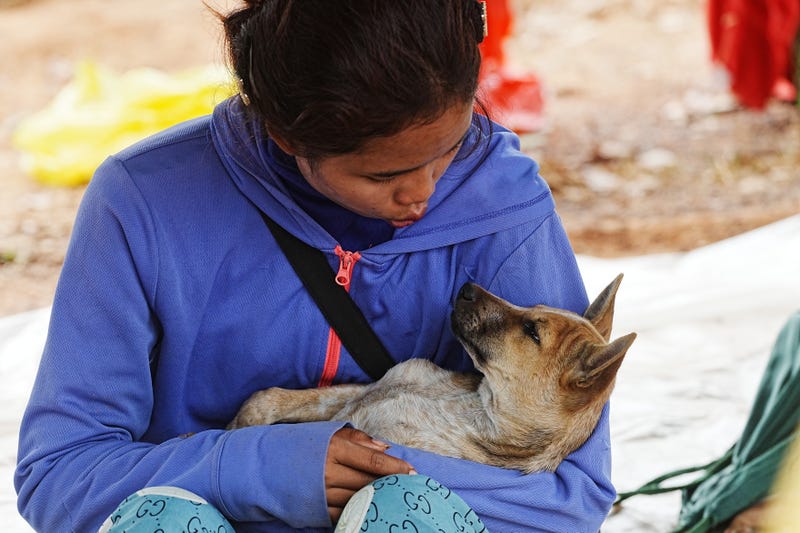
About two dozen people were reported killed in the fighting this week, while hundreds of thousands have been displaced on both sides of the border.
The Cambodian Defense Ministry said in a statement Thursday that a Thai military fighting jet dropped three bombs in the border area. Ministry spokesperson Maly Socheata accused Thailand of violating international laws by the use of “all kinds of heavy weapons and the deployment of large number of troops to encroach the Cambodian territory.”
Earlier, the Thai Army said Cambodia launched an attack on Wednesday night with artillery and mortars against Thai positions.
The Thai Army said it responded with the same kinds of heavy weapons, causing damage including “the destruction of enemy trucks.” But Air Force Spokesperson Air Marshal Jackkrit Thammavichai did not confirm nor deny that airstrikes took place on Thursday.
The Thai air force would “continue its air operations until the opposing side ceases all efforts that threaten Thailand’s sovereignty, security, and the safety of the Thai people,” he said in a televised speech.
The combat has drawn international concern, including from Pope Leo XIV, who told an audience at the Vatican on Wednesday that he was “deeply saddened by the news of the renewed conflict.”
“There have been casualties, including among civilians, and thousands of people have been forced to leave their homes," Leo said. “I express my closeness in prayer to these dear peoples.”
Trump says he will urge sides to return to ceasefire
The original ceasefire in July was brokered by Malaysia and pushed through by pressure from Trump, who threatened to withhold trade privileges unless Thailand and Cambodia agreed. It was formalized in more detail in October at a regional meeting in Malaysia that Trump attended.
Despite the deal, the two countries carried on a bitter propaganda war and minor cross-border violence continued. Cambodia complained that Thailand did not return 18 soldiers it captured as the ceasefire was coming into effect, while Thailand protested after soldiers patrolling the frontier were wounded by land mines, which it alleges were newly laid by Cambodia. Cambodia insisted that the mines were left over from its decades of civil war that ended in 1999.
Trump said he expects to speak by phone with the two leaders on Thursday, and expressed confidence that he would persuade the two sides to stop the fighting.
“I think I can get them to stop fighting. Who else can do that?” Trump said on Wednesday in an exchange with reporters, in which he also repeated his exaggerated claim of settling eight wars around the globe since his return to the White House. “Every once in a while, one will flame up again and I have to put out that little flame.”
The U.S. had yet to contact Thailand following Trump’s latest remarks, Thai Prime Minister Anutin Charnvirakul told reporters in Bangkok on Thursday.
Anutin, reflecting nationalistic public sentiment, has repeatedly vowed to continue fighting until Thailand's sovereignty and security are assured.
Rivals exchange strikes
Thailand has deployed jet fighters to carry out airstrikes on what it says are military targets. Cambodia has deployed BM-21 rocket launchers with a range of 30-40 kilometers (19-25 miles).
According to data collected by public broadcaster ThaiPBS, at least six of the Thai soldiers who were killed were hit by rocket shrapnel.
The Thai army’s northeastern regional command said Thursday that some residential areas and homes near the border were damaged by BM-21 rocket launchers from Cambodian forces.
The Thai army also said it destroyed a tall crane atop a hill held by Cambodia where the centuries-old Preah Vihear temple is located, because it allegedly held electronic and optical devices used for military command and control purposes.
Thailand’s military announced Thursday that nine of its soldiers have been killed since Monday. Officials said four civilians have also died, but not as a direct result of the clashes; they had underlying health issues and most died while they were being evacuated. The military also said that more than 120 troops have been wounded.
Cambodia said Thursday that 11 civilians on its side have died and 74 others have been wounded.
An ancient temple sits at the heart of the dispute
The U.N.’s cultural agency, UNESCO, on Wednesday expressed its “strong concern” over fighting in the vicinity of the Preah Vihear temple, which it has designated a World Heritage site.
“UNESCO stands ready to provide the necessary technical assistance to ensure the protection of cultural property and implement any necessary safeguarding measures as soon as conditions allow,” it said.
The roots of the Thai-Cambodian border conflict lie in a history of enmity over competing territorial claims. These claims largely stem from a 1907 map created while Cambodia was under French colonial rule, which Thailand maintains is inaccurate. Tensions were exacerbated by a 1962 International Court of Justice ruling that awarded sovereignty to Cambodia, which still riles many Thais.
___
Sopheng Cheang in Srei Snam, Cambodia, Wasamon Audjarint in Bangkok and Matthew Lee and Aamer Madhani in Washington contributed to this report.