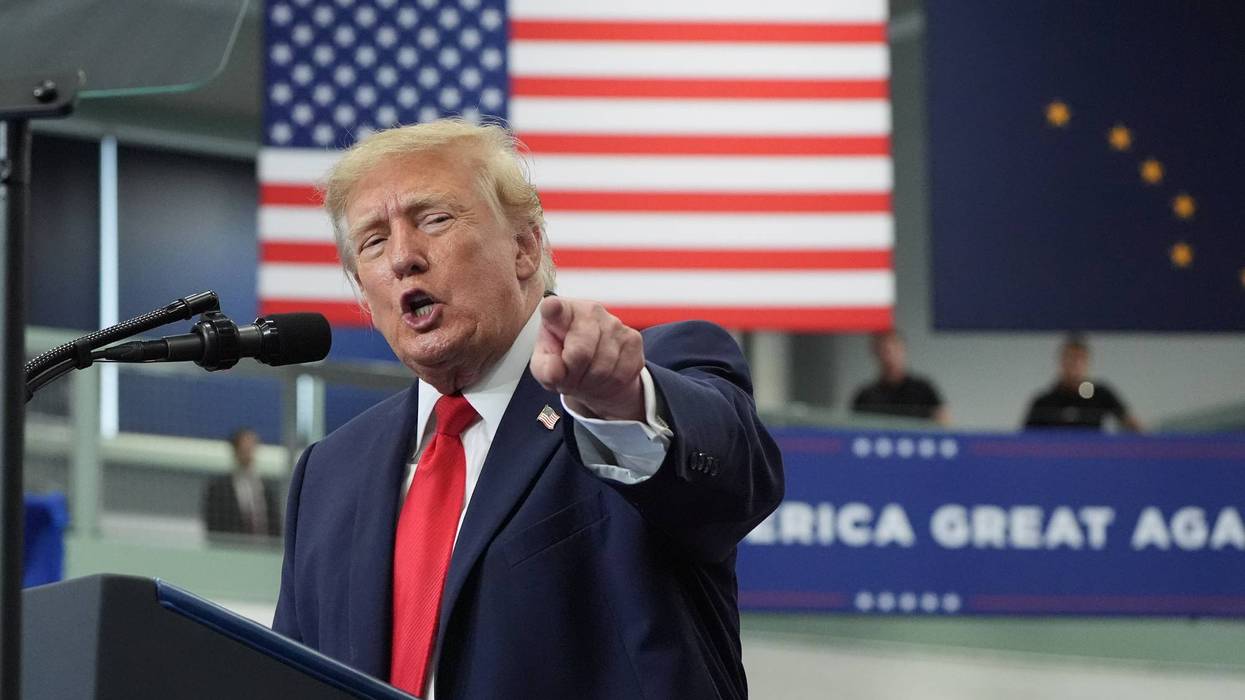



WASHINGTON (AP) — The White House on Monday said it’s partnering with North American Blue Energy Partners as part of President Donald Trump ’s push to tap into Venezuela’s oil industry, setting up a deal that will give the Pentagon a stake over roughly a fifth of the country’s vast oil reserves.
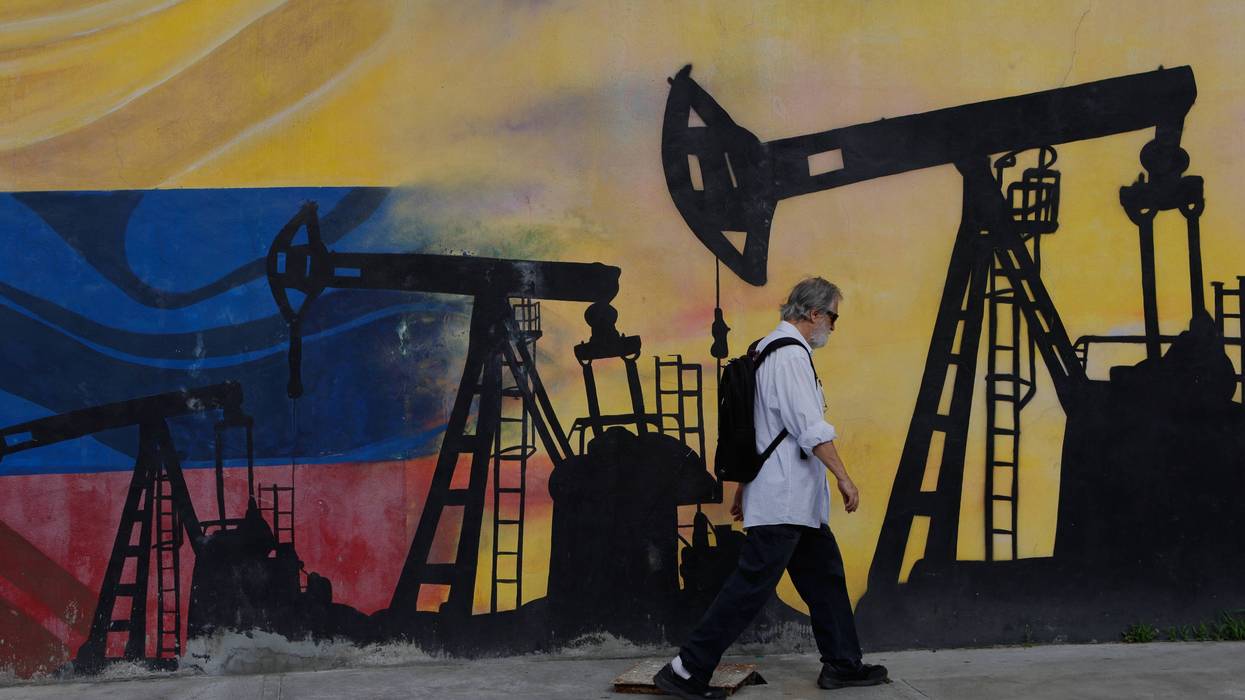
The Trump administration released more details on Monday night, days after Trump announced what he described as the biggest oil deal in history. The sweeping agreement has been met with skepticism from analysts who say it will take years to revive Venezuela's production, but Trump and his aides are pitching it as a chance to develop a new oil giant in the Western Hemisphere.
As part of the deal, the U.S. is creating a private company as a joint venture with NABEP — a detail the White House had withheld for days. NABEP, owned by Venezuelan businessman Alejandro Betancourt, is already the second largest operator in Venezuela, behind Chevron.
Venezuela’s acting President Delcy Rodríguez is giving the company 100-year rights over 17 oil fields with proven reserves of 65 billion barrels. Many of those fields were previously owned by Russian or Chinese firms, the White House said.
In a statement Monday, Betancourt said Venezuela is “blessed with an abundance of natural resources, hardworking people and untapped potential,” adding that the deal will “unleash that potential to the great benefit of both Venezuelans and Americans.”
The company said Betancourt had been involved in the Venezuelan oil industry for more than 15 years and said the company has more than 5,000 employees and more than 10,000 contractors.
The deal will give the Pentagon's Office of Strategic Capital a 35% ownership stake in the company, the White House disclosed Monday. The U.S. will also be guaranteed a right to purchase 20% of the output at cost, orchestrated through the State Department.
The agreement was signed by Defense Secretary Pete Hegseth and Secretary of State Marco Rubio.
Betancourt’s company has agreed to put up $100 billion in new oil infrastructure investments.
The deal won't affect US gas prices anytime soon
Trump has been pushing to boost oil production in Venezuela since the January military mission that captured then-President Nicolás Maduro on federal narcoterrorism and drug trafficking charges.
The White House claimed the deal would be “at zero cost” to the U.S., and said the government would have veto power on board members — the majority of whom would be U.S. citizens.
“NABEP will have reputable U.S. auditors, lawyers, and advisers and the U.S. government’s agreement with NABEP is governed by U.S. law and is subject to the jurisdiction of U.S. courts,” the White House said in a fact sheet about the deal.
Former U.S. government energy advisers have cautioned that the deal comes with political risk, since future administrations in Venezuela or the United States could challenge the deal. Even if the agreement holds, analysts say it could take years to turn around Venezuela's dilapidated energy sector.
Trump, who says the plan will reduce gas prices, acknowledged Monday that Americans won't see change right away. Asked about a timeline at the White House, Trump said “it could be a little bit” for prices to fall, and he played down analyst predictions that it could take years.
“If it was two years, you know, that’s a short period of time,” he said.
Trump said the deal will provide a source to help refill America's strategic oil reserves, which have been drawn down as the Iran war chokes global oil shipments. He added that Venezuela's heavy oil will also go toward producing asphalt and other goods.
“It was this unbelievable value that was sitting dormant,” Trump said of Venezuelan oil. “But we’re going to be taking all of that.”
Rodríguez has also spoken in favor of the deal, describing it as a chance to modernize the Venezuela's oil industry and accelerate its revival. Facing criticism that the deal cedes Venezuelan resources to the U.S., Rodríguez insisted her country's sovereignty remains secure.
Questions remain on Capitol Hill
Lawmakers on Capitol Hill said Monday that they were looking for more information about the agreement.
Rep. Rick Crawford, the Republican chairman of the House Intelligence Committee, said he wanted to hear details from the Trump administration “hopefully sooner rather than later.”
Sen. Jack Reed, the top Democrat on the Senate Armed Services Committee, said a deal that uses the military to boost a private oil venture should be rejected and said he wanted a full accounting of the legal authority for the agreement.
“President Trump’s effort to turn the U.S. military into an investor in Venezuelan oil is a blatant abuse of power and taxpayer dollars,” Reed said in a statement.
The new details were released a day before Trump plans to meet with a group of large and small oil refiners to discuss ways to increase America’s capacity to refine oil into gasoline.
The meeting occurs as the Iran war has driven prices at the pump to a national average of $4.08, a 28% increase over the past year, according to AAA.
The White House has said that increasing the number of refineries and expanding the capacity at existing facilities would eventually reduce prices for consumers. The administration also sees the need for more refineries to process oil from Venezuela.
Also attending the meeting will be Interior Secretary Doug Burgum, Energy Secretary Chris Wright and Jarrod Agen, the director of the White House National Energy Dominance Council.
___
AP Congressional Correspondent Lisa Mascaro contributed to this report.