


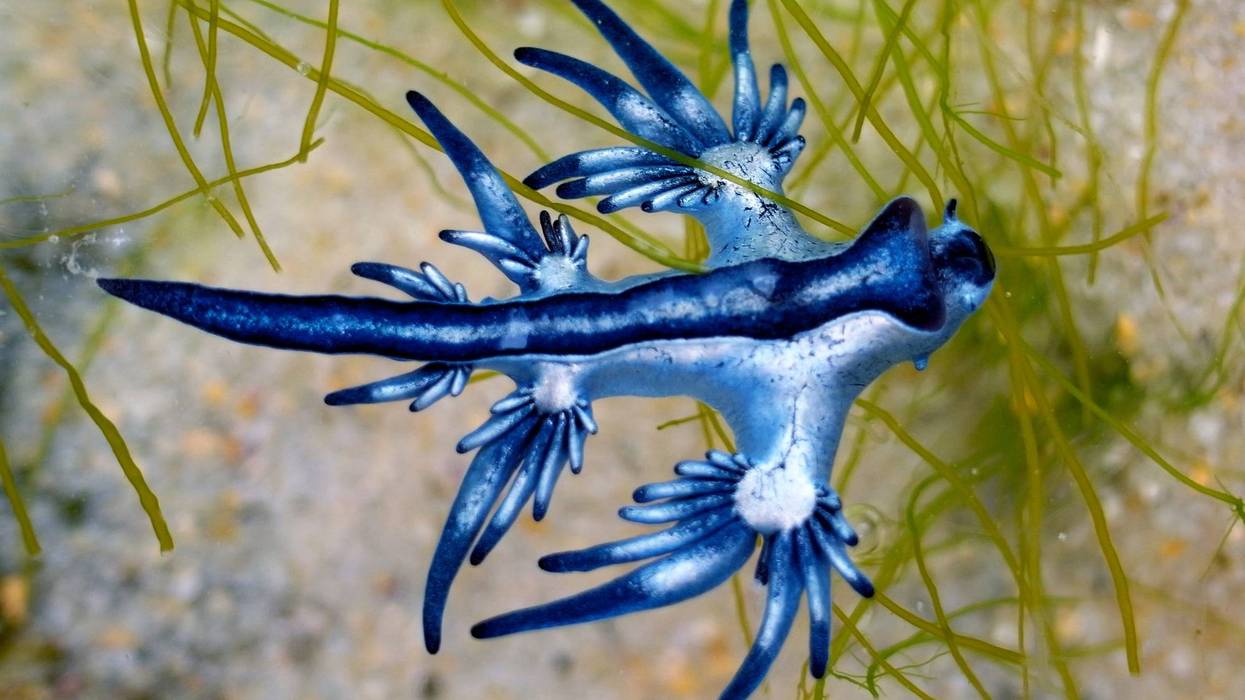

CORPUS CHRISTI, Texas — Beachgoers along the South Texas coast are being warned to look but absolutely not touch after dozens of rare, brilliantly colored sea slugs known as blue dragons washed ashore on North Padre Island and Mustang Island this week - right as spring break crowds descend on the Gulf Coast.
Jace Tunnell with the Harte Research Institute posted images of the blue dragons on Facebook on Tuesday, saying he found around 20 in a short stretch of beach at North Padre Island and Mustang Island. "These tiny creatures are absolutely stunning - but do NOT touch them," the post reads. Additional sightings were reported on Surfside Beach as well.
The creatures, known scientifically as *Glaucus atlanticus*, measure between 1 and 3 centimeters long - barely bigger than a quarter - but pack a sting wildly disproportionate to their size. Blue dragons feed on Portuguese man o' war tentacles and store those stinging cells in their appendages. When agitated, stepped on, or picked up, they release those concentrated cells all at once - delivering a sting that can be three times as intense as a man o' war sting and last for hours.
In very rare cases, severe allergic reactions to a blue dragon sting have proved fatal, Tunnell warned, adding that anyone stung should seek immediate help from a lifeguard or medical personnel. Pouring vinegar or applying warm water can help relieve mild sting pain.
Tunnell pointed to the region's strong seasonal southeast winds as the culprit behind the sightings - those winds push the surface-drifting slugs and their food sources, the man o' war, toward shore each spring. Blue dragons are typically found across the Atlantic, Pacific, and Indian Oceans, and their small size - combined with how quickly they dry and become unrecognizable in the sun - means they often go unnoticed even when present.
Even when washed up and dead on the beach, blue dragons can still sting, Tunnell noted. His advice for anyone who spots one: photograph it, admire it from a safe distance, and leave it alone. If you want to move it toward the water, use a shovel - not your hands.
No injuries from the current wave of sightings have been confirmed.