


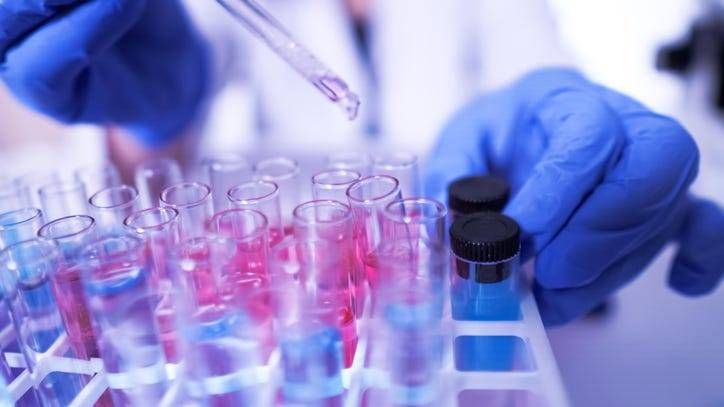
Governments around the world have been forced to take strong, quick measures to stem the spread of the coronavirus.
But the impacts of the virus could last much longer than the strong orders in place now.
Here's what the world could look like for months or even years in the future.
The virus will continue to circulate for a year … or two
 Coronavirus could hang around for yearsLucaLorenzelli / Getty Images
Until scientists can develop a vaccine or treatment for COVID-19, the coronavirus will remain in the world. Adam Kucharski, an epidemiologist at the London School of Hygiene & Tropical Medicine, told Vox, "this virus is going to be circulating, potentially for a year or two, so we need to be thinking on those time scales."
Social distance could become the new norm
 Physical touch could be taboofizkes / Getty Images
According to Deborah Tannen, a professor of linguistics at Georgetown, the social distancing habits people are forming now in response to the virus could stick around after a vaccine is developed. More meetings could be digital in the future, while physical touch could even become taboo to some groups.
Collectivism could trump individualism
 Collecting around shared valuesRawpixel / Getty Images
Rampant individualism may have helped the coronavirus spread, as individuals act with their own best interest in mind rather than the collective good of society, forgetting they are responsible for helping protect at-risk groups. Eric Klinenberg, a professor of sociology and director of the Institute for Public Knowledge at New York University, posits that this crisis could inspire people to come together, especially in their demands for public goods and services, like accessible health care.
Class inequality may become more extreme
 Homeless people will be even more at riskSrdjanns74 / Getty Images
Many experts agree the poorest and most vulnerable groups will suffer the coronavirus crisis more than their privileged peers, but Lichfield suggests this disparity could continue into the future, as the threat of contagion hangs over them. He writes, "People with less access to health care, or who live in more disease-prone areas, will now also be more frequently shut out of places and opportunities open to everyone else. Gig workers—from drivers to plumbers to freelance yoga instructors—will see their jobs become even more precarious. Immigrants, refugees, the undocumented, and ex-convicts will face yet another obstacle to gaining a foothold in society."
Governments will deploy technological defenses to future outbreaks
 Smartphones could help governments track outbreakslzf / Getty Images
Editor in chief of the MIT Technology Review, Gideon Lichfield suggests government response forces will be prepared for future outbreaks, relying on advanced surveillance technology like tracking suspected infections through cell phone location data. The outbreak may bend our aversion to these sorts of surveillance state techniques, at least when it comes to public health.
We'll dial in the right level of caution and health measures
 Grandparents reuniting with familymonkeybusinessimages / Getty Images
Peter Hotez, the dean of the National School of Tropical Medicine at Baylor College, says that society needs to proceed with as much caution as possible right now while experts are still figuring out the virus, but at some point authorities can relax some protective measures that prove to be ineffective.
Get the latest coronavirus updates on RADIO.COM.
LISTEN NOW on the RADIO.COM App
Follow RADIO.COM
Facebook | Twitter | Instagram