


NEW YORK (AP) — Oil prices are climbing Monday following the latest rise of tensions between the United States and Iran, but the moves are more modest than they were earlier in their war. U.S. stocks, meanwhile, are giving back only a bit of their record-breaking rally.
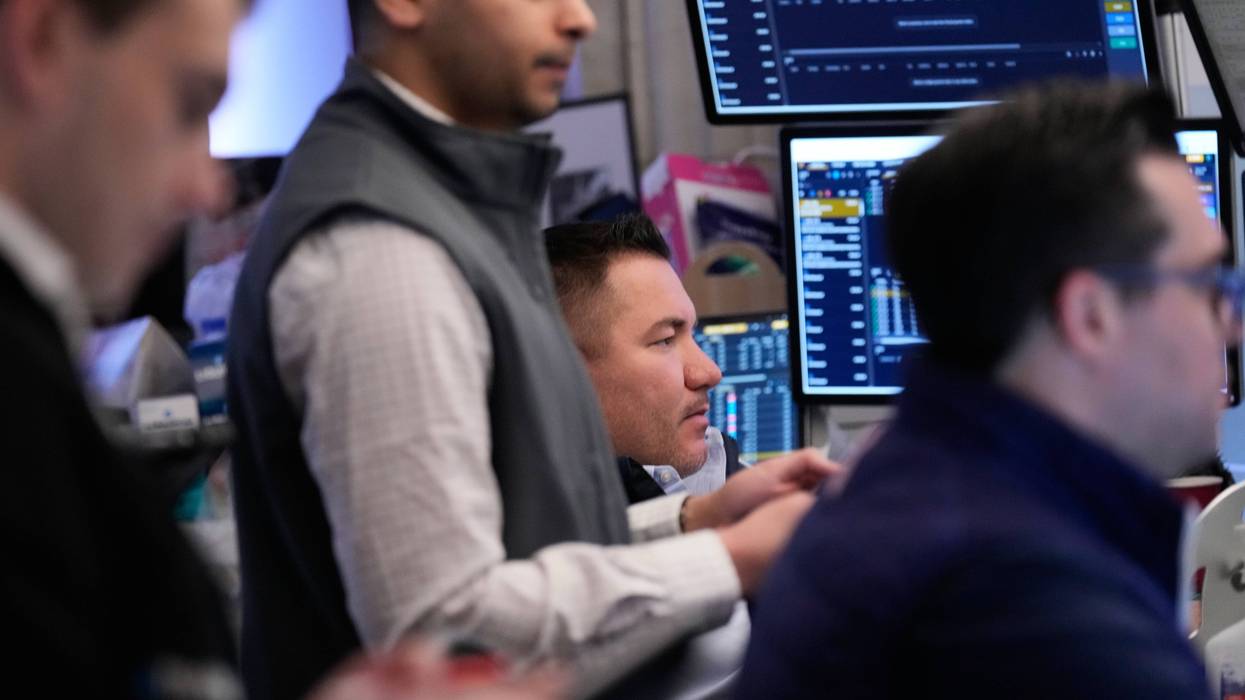
The S&P 500 edged down just 0.1% from its all-time high after the United States attacked and seized an Iranian-flagged cargo vessel over the weekend that it said had tried to evade its blockade of Iranian ports. The Dow Jones Industrial Average was up 2 points, or less than 0.1%, as of 10 a.m. Eastern time, and the Nasdaq composite was 0.2% lower.
The price for a barrel of Brent crude oil, the international standard, climbed 3.5% to $93.51 on worries that Iran could keep petroleum pent up in the Persian Gulf if it continues to block tankers from exiting the Strait of Hormuz.
It’s a turnaround from the last trading day on Wall Street, when stocks soared and oil prices tumbled Friday after Iran said it was reopening the strait to commercial traffic. That enthusiasm vanished quickly, after Iran closed the strait again Saturday following the U.S. decision to press ahead with its blockade of Iranian ports.
The next big deadline is looming on Tuesday night at 8 p.m. Eastern time, which is early Wednesday Tehran time, when a ceasefire agreement between the United States and Iran is scheduled to expire.
Companies with big fuel bills fell to some of Wall Street’s larger losses following the rise in crude’s cost, as they have through much of the war. Norwegian Cruise Line Holdings dropped 5.4%, and Carnival lost 1.5%.
United Airlines slipped 1.6%, and American Airlines fell 4.4% after American said it’s not interested in a merger with United. Airline stocks had flown higher last week following a report saying United wanted to combine with its rival.
Still, oil prices remain well below the high points reached so far in the war. Brent crude’s price briefly got above $119 per barrel when fears were at their highest. And the S&P 500 is still above where it was before the war.
The muted moves suggest investors still see a possibility of a U.S.-Iranian agreement that could get oil flowing again from the Middle East to customers worldwide. It would be in both countries’ economic interests to end the war.
Another big reason for the U.S. stock market's strength is the big profits that U.S. companies have been reporting for the first three months of 2026, as well as expectations for continued growth.
While reporting stronger profits for the latest quarter than analysts expected, several of the biggest U.S. banks said they see the U.S. economy remaining resilient, particularly because of solid spending by U.S. consumers.
“Despite geopolitical risks, the earnings recovery remains intact,” according to Morgan Stanley strategists led by Michael Wilson. It’s remained so solid that analysts have even raised their profit expectations for the spring of 2026 since the war began.
Along with JPMorgan Chase, Bank of America and other big banks, about 10% of companies in the S&P 500 have already reported their results for the start of 2026. Nearly nine out of 10 have delivered a bigger profit than analysts expected, according to FactSet.
If the rest of the companies just match analysts' expectations, overall earnings per share for S&P 500 companies will end up 13% higher than a year earlier, according to FactSet.
That's big because stock prices tend to follow the path of corporate profits over the long term. Other big companies scheduled to report their results this week include UnitedHealth Group on Tuesday, Tesla on Wednesday and Procter & Gamble on Friday.
On the winning side of Wall Street was TopBuild, a distributor of insulation and building products, which jumped 16.3%. QXO is buying it in a deal valued at roughly $17 billion.
QXO said the deal would make it the continent’s second-largest publicly traded building products distributor, and its stock fell 7.9%.
In stock markets abroad, indexes fell in Europe following a better finish in Asia. Germany’s DAX lost 1%, and Hong Kong’s Hang Seng added 0.8% for two of the world’s bigger moves.
___
AP Business Writers Matt Ott and Elaine Kurtenbach contributed to this report.