

Trump muses that anyone reacting to Iran attacks with gas price worries is 'a fool'

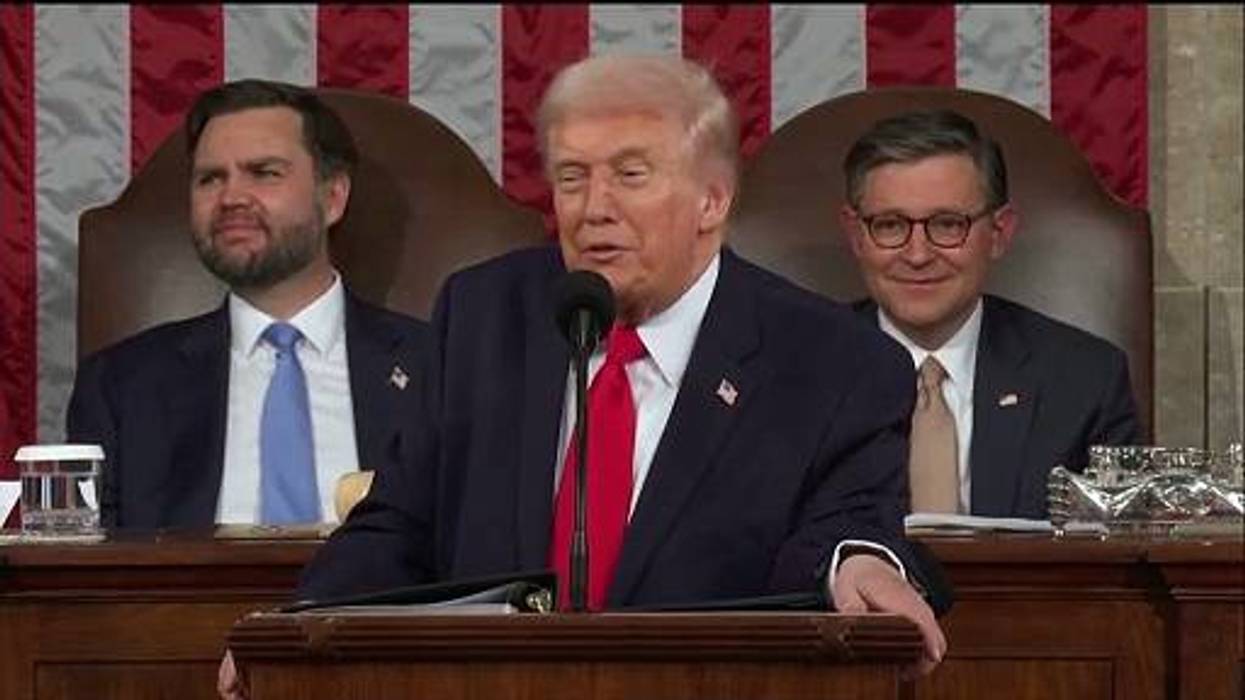
"Short term oil prices, which will drop rapidly when the destruction of the Iran nuclear threat is over, is a very small price to pay for U.S.A., and World, Safety and Peace. ONLY FOOLS WOULD THINK DIFFERENTLY!" said President Donald Trump in a Sunday Truth Social post.
As of Wednesday, gas prices were still climbing higher and there wasn't much clarity about when the military action in Iran might end. Trump made a surprise announcement on Feb. 28 that the U.S. and Israel had joined forces to strike Iran.
Although the strikes on Iran – a backer of terrorist military groups such as Hamas and Hezbollah in the Middle East – resulted in the death of the country's supreme leader, Trump has said the new leader is "unacceptable." Experts cited by Audacy last month said that totally dismantling the leadership of Iran that took hold decades ago during an Islamic revolution would be a challenge. Iran also did not seem willing to totally give up its nuclear program during negotiations with the U.S. held before the strikes.
Over the weekend, Trump said that he expects Iran to completely surrender or collapse and called the country "the loser of the Middle East."
For now, and the foreseeable future, the Strait of Hormuz, located along the Iranian coastline between the Persian Gulf and the Gulf of Oman, is blocked due to the risk of Iranian airstrikes. That's a big problem when it comes to oil and gas prices, Patrick De Haan of GasBuddy told Audacy station WWL's Tommy Tucker this week.
"The Strait of Hormuz is probably the world's most vital waterway when it comes to shipping crude oil, De Haan, the chief petroleum analyst for GasBuddy, explained. "Twenty million barrels a day normally flow through the Strait of Hormuz."
Instead of flowing through that straight, ships carrying oil are now essentially parked. De Haan said that's causing a "massive tilt" in global oil supply and demand balance.
Even though prices at the pump have been climbing higher, per AAA data, De Haan said consumers in the U.S. haven't yet seen the impact of this tilt.
"It's not showing up yet in your gas tank, but it's starting to manifest in countries that aren't getting deliveries," he told Tucker. "The Trump administration is now allowing Russia to sell oil and… and re-profit from oil that is now 90 dollars a barrel. So, the world is really bent on its hinges right now."
As Russia makes a profit on its gas, it is still engaged in an invasion of Ukraine that the U.S. has been helping fight off for years. De Haan said its war machine is now profiting from the conflict in Iran.
What the oil market wants when it comes to the Strait of Hormuz is clarity, De Haan said. He also said that it's not getting it.
"It's reacting harshly and wildly because we're getting a bit more desperate in what the situation is looking like," he said. "China is cutting off exports of refined products that it traditionally sends – gasoline, diesel and jet fuel – all over the place, because China has a lot of refining capacity, but they don't have a lot oil. So, China's cut that off and that's caused diesel prices to spike even more. It's just a tremendous mess."
Trump has proposed an insurance plan to get ships through the strait, per CBS News, but De Hann said companies with tens of millions of dollars' worth of oil at risk will likely see it as "lip service."
"If it gets a lot worse, if ships can't travel through there for another couple of weeks, we could go back, we could see prices go beyond the $4 gallon mark," in New Orleans, La., De Haan said.
According to AAA, gas prices in Louisiana were over $3 per gallon as of Wednesday, but lower than the national average of $3.578. In California, they were already over $5 per gallon. Audacy station KCBS Radio in Bay Area noted that prices there jumped 62 cents in just one week.
"While it lasts, I think that you should be prepared to just pay higher prices," CBS News Jill Schlesinger told Audacy station WBEN in Buffalo, N.Y., this week of the conflict in Iran. "I don't know how to sugar coat that. Already we're seeing the price of gas up by 48 cents a gallon in one week. That is enormous, right?"
These hikes come as gas prices were falling lower in the U.S. Now, the increased gas prices could influence other parts of the economy, adding to inflation that Americans are already concerned about. You Gov polling data updated this Wednesday showed that inflation was still the top issue facing the country.
"Groceries, you know, you have to get groceries from one place to another," Schlesinger explained. "We also get most of our fertilizer... from the Middle East, so that could actually impact the farmers out there. So, all in all, I think it's probably wise to just count on some short term. I say short term, I don't know what that's gonna mean, but I think is going to be a short-term period of time where we're gonna have higher prices."
Katherine Thompson, a senior fellow in defense and foreign policy studies at the libertarian Cato Institute, told WWL's Tucker something similar.
"Eventually, it's going to hit cost at the dinner table and that's what's going to affect every day Americans quickly, and certainly for the middle-class Americans who may have voted for President Trump because he was going to keep us out of foreign entanglements and fix the economy," Thompson said. "This certainly is not, I think, the plan that most folks voted for."
Reuters/Ipsos poll results released this week showed that most Americans expect gasoline prices are going to rise in coming months following the strikes on Iran. Many also expect a "protracted conflict."
Overall, 67% said they think gas prices will get worse over the next year. Democrats were more likely to think so at 85% compared to 44% of Republicans. Just 29% of Americans approve of the strikes on Iran, according to the poll results. Quinnipiac University polling also found low support for the military actions in Iran.
ABC News even reported this week that the Federal Bureau of Investigation "warned police departments in California in recent days that Iran could retaliate for American attacks by launching drones at the West Coast."