

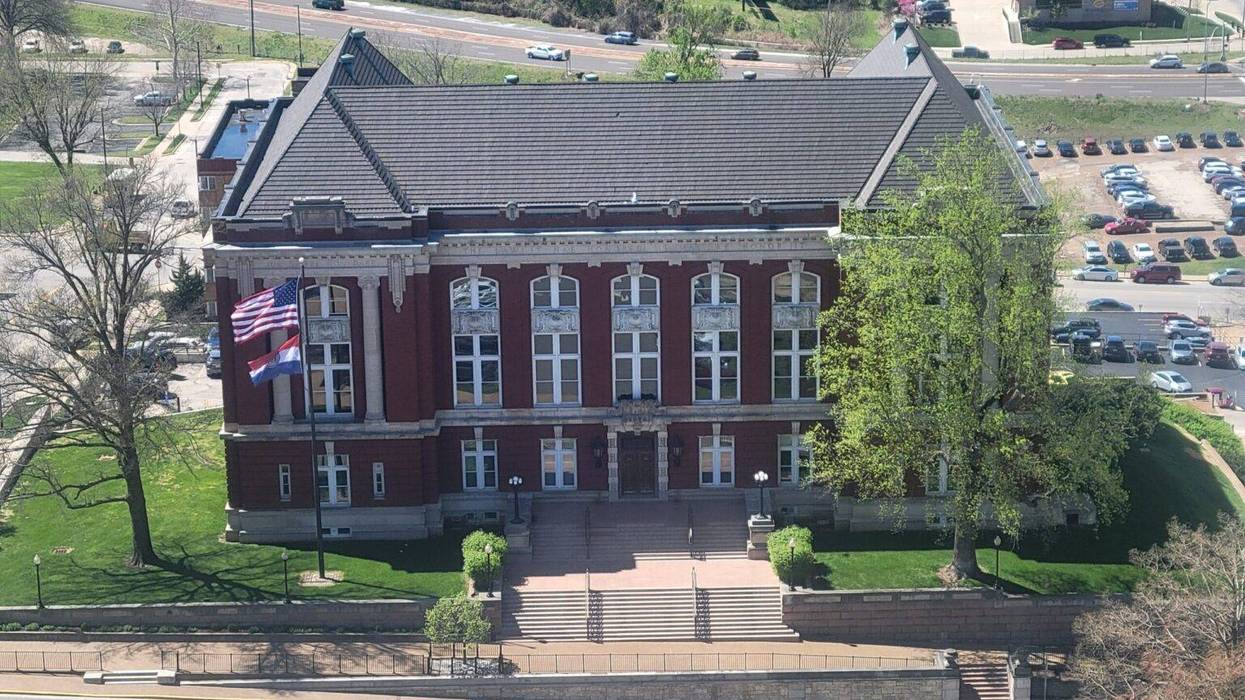

The Missouri Supreme Court handed down three rulings Tuesday that could shape the 2026 election, saying lawmakers had the authority to pass a new congressional map last year, leaving intact the state’s photo-ID requirement for voters and striking down limits on voter-registration and absentee-ballot outreach.
The decisions gave Missouri Republicans a major win in the fight over congressional redistricting and preserved one of the state’s most contested voting laws, even as the court drew a constitutional line around how far Missouri can go in restricting civic groups trying to get people registered and to the polls.
On redistricting, in a 4-3 ruling, the court rejected arguments that the Missouri Constitution allows lawmakers to redraw congressional lines only once a decade, after a new census. Instead, the majority said the constitution requires the legislature to act after each census but does not expressly bar it from returning later to pass another map.
Missouri Republicans pushed through the new congressional plan last year after pressure from President Donald Trump and allies eager to make Missouri’s Kansas City-area district more winnable for the GOP.
But the political fight over the map is not over. The campaign behind a referendum seeking to overturn it, People Not Politicians, said Monday that updated data showed it has enough valid signatures in the required congressional districts to qualify for the November ballot.
The referendum effort got another boost last week when a Cole County judge ordered changes to the ballot summary written for the measure, finding parts of it tilted in favor of the new map.
Writing for the majority in the redistricting case, Judge Zel Fischer said the constitution tells lawmakers when they must redraw districts, but not the only time they may do so. Judge Paul Wilson, in dissent, said the language and history point the other way — that the constitution was written to require one redistricting after each census, not to invite mid-decade do-overs whenever the party in power sees an advantage.
The voter-ID ruling turned more on who could sue than on the law itself.
In that case, the court left intact Missouri’s 2022 law requiring voters casting a regular ballot in person to show a government-issued photo ID. But the judges split over why.
A four-judge majority said the individual voters and civic groups challenging the law had not shown that the requirement had actually kept them from voting, so the courts could not decide the broader constitutional question. Three other judges disagreed, saying the challengers had shown enough to sue but still would have lost on the merits.
The case centered on stories that opponents said showed the burden of the law. One voter testified that a seizure disorder made travel difficult and left her worried a signature mismatch could sink a provisional ballot. Another said she feared trouble because her first name was spelled differently on her identification and voter registration.
The court’s majority said those concerns were too speculative because both had successfully voted since the law took effect.
The photo-ID requirement was part of a wide-ranging 2022 elections bill that also created two weeks of no-excuse early in-person voting before Election Day. Republicans had spent years trying to enact a strict photo-ID requirement in Missouri. Earlier versions had been struck down or tied up in court before voters approved a constitutional amendment in 2016 allowing such a law.
In another 4-3 decision, the court affirmed a lower-court ruling that blocked several provisions governing voter-registration and absentee-ballot outreach.
The judges struck down the ban on paying people to solicit voter-registration applications, the requirement that people who solicit more than 10 registration applications register with the state, the requirement that those solicitors be Missouri voters and at least 18 years old and the ban on soliciting voters to obtain absentee-ballot applications.
Judge Mary Russell, writing for the majority, said those provisions swept too broadly into protected political speech and went too far in criminalizing voter-registration and absentee-ballot outreach by civic groups. The state argued the rules were aimed at fraud prevention, privacy and election integrity. The majority said those interests were not enough to justify such broad restrictions.
That ruling means groups such as the League of Women Voters of Missouri and the Missouri NAACP can continue the kinds of voter outreach they said the 2022 law chilled. A lower court had already blocked those provisions, first before the 2022 election and then permanently in 2024. Tuesday’s decision keeps that relief in place.
Judge Ginger Gooch, in dissent, would have upheld three of the four challenged outreach restrictions and struck down only the ban on soliciting voters to obtain absentee-ballot applications.
Missouri Independent is part of States Newsroom, the nation’s largest state-focused nonprofit news organization.
The court also struck down parts of a 2022 law limiting voter-registration and absentee-ballot outreach by civic groups