

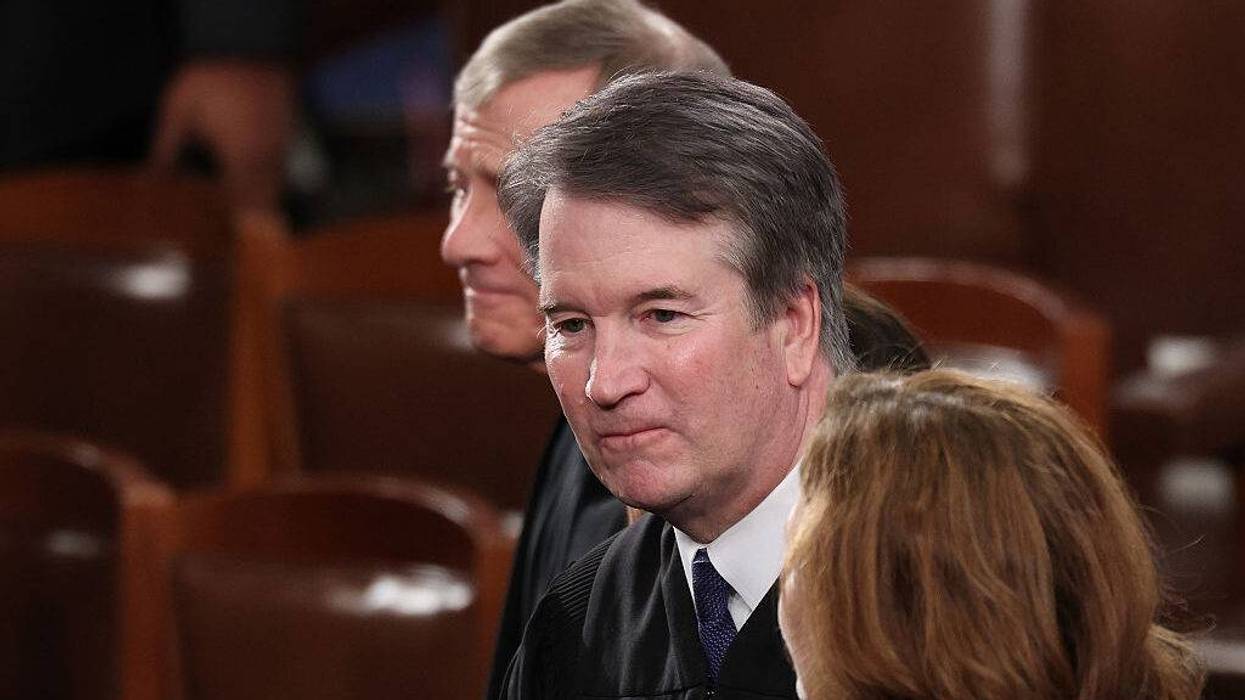

U.S. Supreme Court Justice Brett Kavanaugh on Tuesday rejected Missouri Republican officials’ last-chance appeal to salvage a congressional district map favoring the GOP, closing out the months-long legal saga over the referendum that will appear on the Nov. 3 ballot as Proposition A.
Kavanaugh’s ruling upholds a Missouri Supreme Court decision that enjoined Secretary of State Denny Hoskins from using the gerrymandered congressional map drawn during a 2025 special session. The Missouri court ordered Hoskins to use the map in place in 2022 and 2024 because the bill creating the new map, now subject to a statewide vote, had never legally taken effect.
Other cases are pending over side issues. But Kavanaugh’s decision leaves the 2022 map in place as Tuesday’s ballot deadline arrives, dealing a potentially final blow to efforts to use the 2025 districts in November. While opponents of the plan lost most major decisions, they won the ones that counted most — whether a redistricting plan is subject to a referendum and whether a legal referendum petition stops enforcement of a new state law.
The ballot to be finalized at 5 p.m. Tuesday will have the referendum as Proposition A and a congressional election based on a map drawn in 2022 that is expected to return a delegation of six Republicans and two Democrats to Washington.
Kavanaugh did not elaborate on his decision.
In turning down the emergency application for a stay, Kavanaugh created no precedent on the issues raised by the state. But the decision does show that he did not find enough convincing argument that the state would likely prevail in a hearing by the full court or that the state would suffer “several irreparable harms” as claimed in the application.
People Not Politicians, the political action committee that submitted the referendum petition, on Sunday urged Kavanaugh to reject the state’s application and uphold both parts of Thursday’s ruling from the state Supreme Court.
People Not Politicians is represented at the Supreme Court by attorney Abha Khanna of Seattle, working with a six-member team that included the four Jefferson City attorneys, led by Chuck Hatfield, who represented People Not Politicians in the state court actions.
In the opening paragraphs of the filing, the attorneys write that the only reason the case is at the nation’s highest court now is the decisions to delay made by Hoskins during the signature verification process.
Hoskins “waited as long as possible to manufacture the present dispute” and held the congressional primary using the 2025 map, they wrote, “in the hopes of running out the clock on the judiciary’s tolerance for a last-minute reversion to the 2022 districts.”
Now, they wrote, Hoskins wants “this court to deliver him the political victory to which he was never entitled under the Missouri Constitution. This court cannot and should not reward the secretary’s scheme to outsmart Missouri voters, Missouri law, and the Missouri Supreme Court by granting applicants the extraordinary relief they seek.”
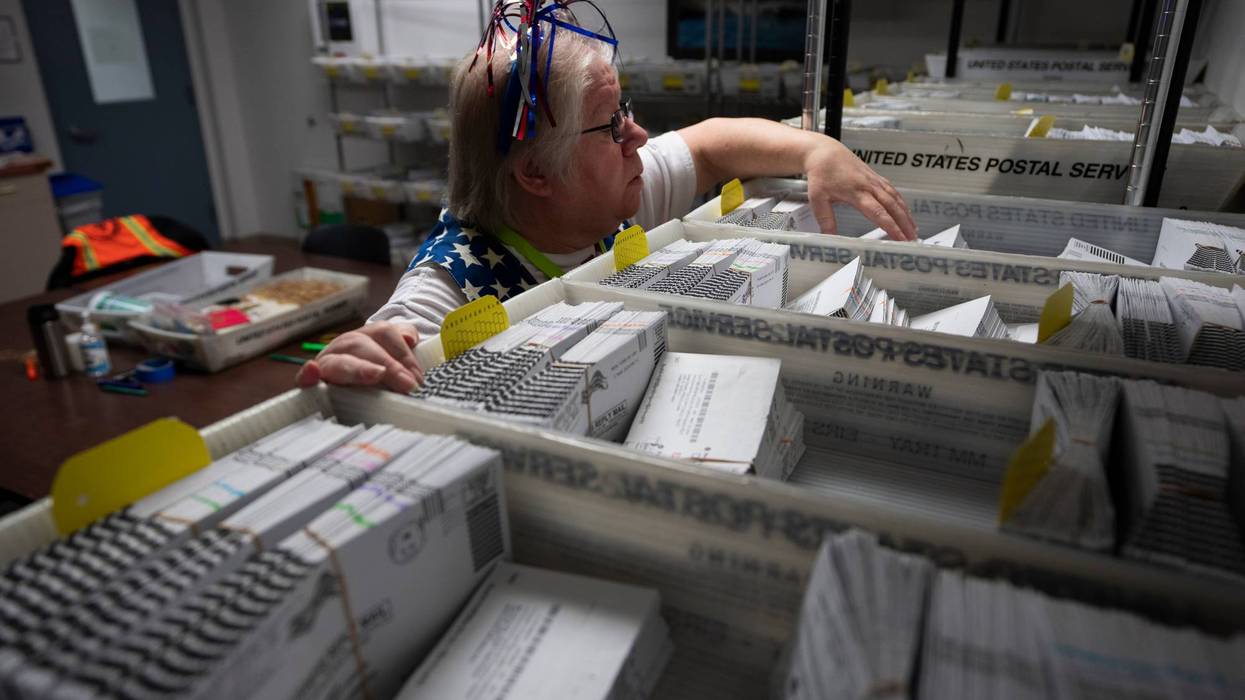
A key point made by Missouri Solicitor General Lou Capozzi in the state’s appeal to the U.S. Supreme Court was that the mechanism for changing between districts is too time consuming and difficult to complete before ballots must be delivered starting Sept. 19.
County clerks, however, told the Missouri Supreme Court that switching voters to the map used in 2022 and 2024 is a relatively simple process. And the Jackson County Board of Elections told the Kansas City Star it would be ready to hold the election in the 2022 boundaries.
There was no decision as of late Tuesday afternoon in a separate case filed in St. Louis federal court by U.S. Rep. Bob Onder, state Sen. Rick Brattin and two voters.
The redistricting story began in the summer of 2025, when Onder, of Lake St. Louis, got the ear of President Donald Trump to tell him that Missouri, like Texas, could provide additional GOP seats to bolster the party’s thin majority in Congress.
Since Missouri lost a seat after the 2010 census, it has sent six Republicans and two Democrats to the U.S. House each election.
Onder won his seat in 2022, the year he and other members of the state Senate’s conservative caucus were outmaneuvered as they tried to force a congressional map that would tilt the 5th District, based in Kansas City, to the GOP.
And, despite initial misgivings, Republicans got in line behind Trump. Gov. Mike Kehoe called a special session inflamed with partisanship, including a state Senate rule change that effectively silenced Democrats, that forced through what the GOP majority wouldn’t do in 2022.
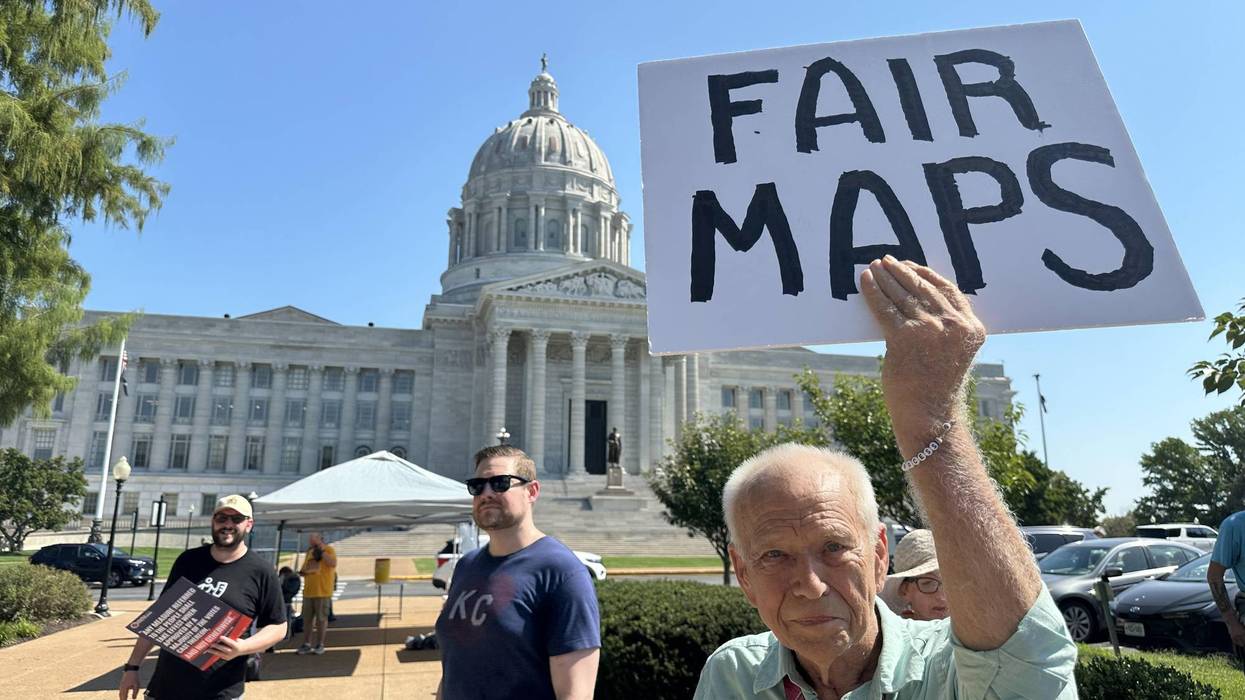
The legal and political backlash that followed has not yet spent its full force. It began when People Not Politicians began circulating the referendum petition and intensified as it became clear there would be more than enough signatures to qualify for the ballot.
Legally, the battle has upended the consensus on the effect that filing a referendum petition has on legislation as well as delivered strong new precedent upholding the governor’s power to select subjects for a special session and the General Assembly’s power to redistrict at any time.
Politically, the climax will be written in November, when voters decide on both the referendum and the congressional candidates selected in the primary.
The flurry of filings over the weekend shows the intense national interest in the outcome of the Missouri case.
Republican attorneys general from Florida, Texas and 18 other states filed in support of Missouri, arguing it is not legal to change voting districts between the primary and the general election.
Meanwhile, in Texas, that state’s Supreme Court is deciding whether local voting districts can be changed after the primary to dilute voting strength of minorities.
The American Center for Law and Justice also sent a brief to the court urging it to rule for Hoskins.
On the other side, the Campaign Legal Center, the American Civil Liberties Union of Missouri Foundation and the American Civil Liberties Union Foundation joined forces to file a brief supporting People Not Politicians, as did the two Missouri voters who tried to get the 2025 map suspended while signatures were being checked.
A key point made by Missouri Solicitor General Lou Capozzi is that the mechanism for changing between districts is too time consuming and difficult to complete before ballots must be delivered starting Sept. 19.
County clerks, however, told the Missouri Supreme Court that switching voters to the map used in 2022 and 2024 is a relatively simple process. And the Jackson County Board of Elections told the Kansas City Star it would be ready to hold the election in the 2022 boundaries.
Missouri Independent is part of States Newsroom, a nonprofit news network supported by grants and a coalition of donors as a 501c(3) public charity. Missouri Independent maintains editorial independence. Contact Editor Jason Hancock for questions: info@missouriindependent.com.
Justice Brett Kavanaugh dismissed the final bid to hold the Nov. 3 election on lines designed to aid Republicans. The decision fixes the state ballot as the deadline for changes passes
Justice Brett Kavanaugh dismissed the final bid to hold the Nov. 3 election on lines designed to aid Republicans. The decision fixes the state ballot as the deadline for changes passes