


A recent drug bust involving multiple law enforcement agencies is raising new questions about marijuana laws in New Orleans.
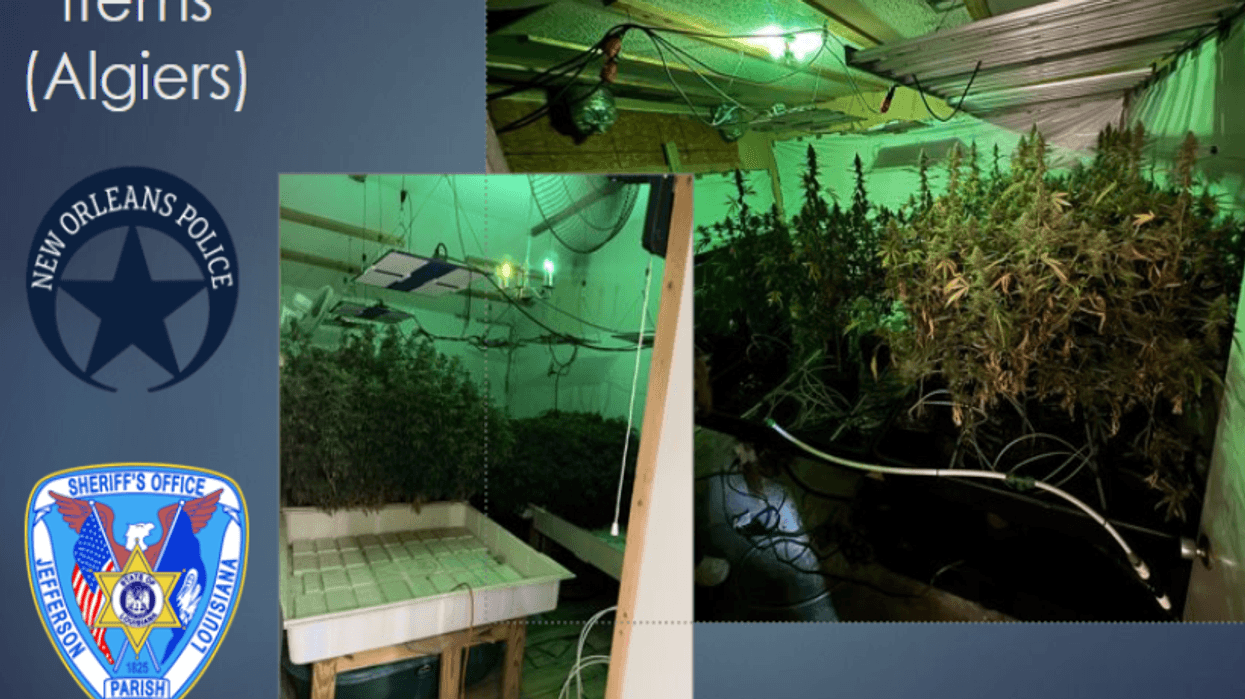
Officials with the New Orleans Police Department and the Jefferson Parish Sheriff's Office announced the seizure of hundreds of marijuana plants, along with guns and other drugs, including hallucinogenic mushrooms.
But with marijuana decriminalized in small amounts in the city, some residents are wondering why a marijuana-related bust is still considered significant.
Loyola criminology professor Dr. George Capowich says the confusion comes from a misunderstanding of what decriminalization actually means.
“Those two ideas, decriminalization and legality, don’t necessarily go hand in hand,” Capowich said. “What’s happening on the street doesn’t always align with what the law allows.”
Capowich explains that decriminalization was never intended to legalize marijuana, but rather, in one way, to reduce the strain on the criminal justice system.
“Prosecutors were in favor of decriminalizing small amounts because it helped unclog the courts,” he said. “We’re talking about cases involving very small quantities, sometimes just enough for a single use.”
He says that shift does not extend to production or large-scale distribution.
“It didn’t mean marijuana became legal or that people could start growing it,” Capowich said.
As for legal access, options remain but are limited.
“Typically, legal use is tied to medical marijuana programs or hemp-based products,” he said. “But outside of that, marijuana is still illegal.”
Capowich says that’s why large seizures like this one still draw attention from law enforcement.
“The fact remains, if you’re growing it or distributing it, enforcement is going to follow,” he said.
The case serves as a reminder that while policies around marijuana may be evolving, the legal boundaries, especially when it comes to production and distribution, remain firmly in place.